
Imagine stepping onto a marae, the cries of kuia calling and answering in welcome. After duly pausing to acknowledge those who have come before you, you step out of your shoes and cross the threshold of the wharenui, where a respected elder, born and raised in local tikanga, waits to greet the guests.
“Chur, bro. Good to see you. Thanks for coming. Hope you have a good time!”
This may sound amusing in English, but speaking generic and accent-less Māori in the regions is an uncomfortable experience for those who aspire to authenticity. It illustrates a growing problem on marae up and down Aotearoa. Over time, the different dialects of te reo Māori have been eroded by growing urbanisation, centralised language resources and the age-old desire to sound a certain way to fit in. The result has been hearing local stories or whakatauki pronounced in an accent or dialect from another region, or in a way that sounds exaggerated to the point of ridiculousness.
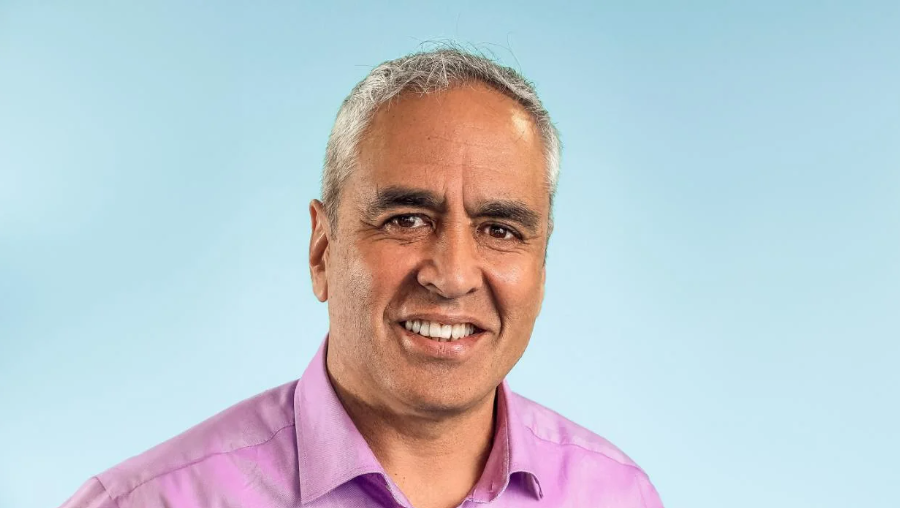
“Young speakers tell me they want to sound like their grandfathers. But a lot didn’t have the benefit of hearing native speakers of their dialects growing up, so they’re basing their pronunciation on an exaggerated form of the language, “dressed up” with flourishes,” explained Barry Soutar (Ngāti Porou, Ngāti Awa, Ngāi-Tai-ki-Tāmaki, Ngāti Kahungunu), co-founder and executive director of Toro Technology.
“The number of confident orators and dialect speakers on our marae is a very small and reducing in number. The challenge is scaling the ability to teach across 75 different marae on the East Coast alone.”
And it’s artificial intelligence that could provide the solution.
In March, Stuff announced a partnership with Microsoft and digital translation specialist Straker to enable more content from its news platforms to be translated into te reo Māori at scale using the latest generative AI tools. Soutar is one of the others leading the exploration into what the technology can do to enhance and preserve language and tikanga.
In Gisborne, Soutar is part of a group working to revitalise the orator’s bench on marae across the East Coast using the latest technologies, with support from Datacom’s Futures + Insights team. Using around 10,000 written or printed sentences, along with 500 spoken phrases, the group is training Microsoft Azure AI tools to not only translate but speak the local Nāti dialect.
By the end of the next five-week trial, the AI will be ready to coach humans on the correct pronunciation. Soutar intends it as a test case to prove Azure and AI’s capability, with broader applications for speakers of the other five main dialects of te reo Māori, as well as other languages around the world.
“It’s just a matter of time until Azure AI becomes proficient in Nāti,” Soutar said.

Why is this important? Dan Te Whenua Walker (Ngāti Ruanui), is hoping his own AI project will help young members of his iwi who have been struggling with feelings of disconnection and other mental health challenges.
Te Rau o te Huia is a custom AI that Walker, a Partner Development Manager for Microsoft ANZ, developed in honour of his nana. He deeply valued the wisdom she passed on to him during her life, and designed the virtual kuia to help others access local mātauranga in the same warm and slightly cheeky way.
“She has aroha for those who interact with her. She provides that point of connection and now young people can kōrero to her,” Walker said.
He and Soutar agree the number one role of Māori culture is to connect.
“By acknowledging whakapapa between visitors and your own hapū as they visit a marae, you’re paying the highest respect, because you’re acknowledging you know they come from somewhere, from respected people. You should not do that without the right dialect. Your dialect identifies you and your ancestors. It’s strange to speak about your own history in someone else’s voice,” Soutar said.
He doesn’t agree with those who are concerned that big global AI learning models could lead to the homogenisation of culture, when his daily reality is showing the opposite.
“You tell me to be concerned about using AI? Well, I need to perform a karakia at an opening in a couple of weeks. I wanted to use an appropriate foundational blessing from our Hawaiki ancestors grounded in the creation times, but it’s hard to understand the exact meaning of some of the old karakia, which helps me learn and retain the words. One obscure phrase I found in an old Taranaki waiata, and ChatGPT translated the song precisely in seconds. I use it every day,” Soutar said.
He said AI should be thought of like a car, simply a tool to make life more productive and efficient, and get you where you need to go faster.
“I can imagine a time when you have an intelligent assistant giving you coaching in what is your own language and culture, adapted to your own learning style and pace. We’re getting ready for the arrival of even more advanced AI platforms, and preparing other Māori to do the same.”