
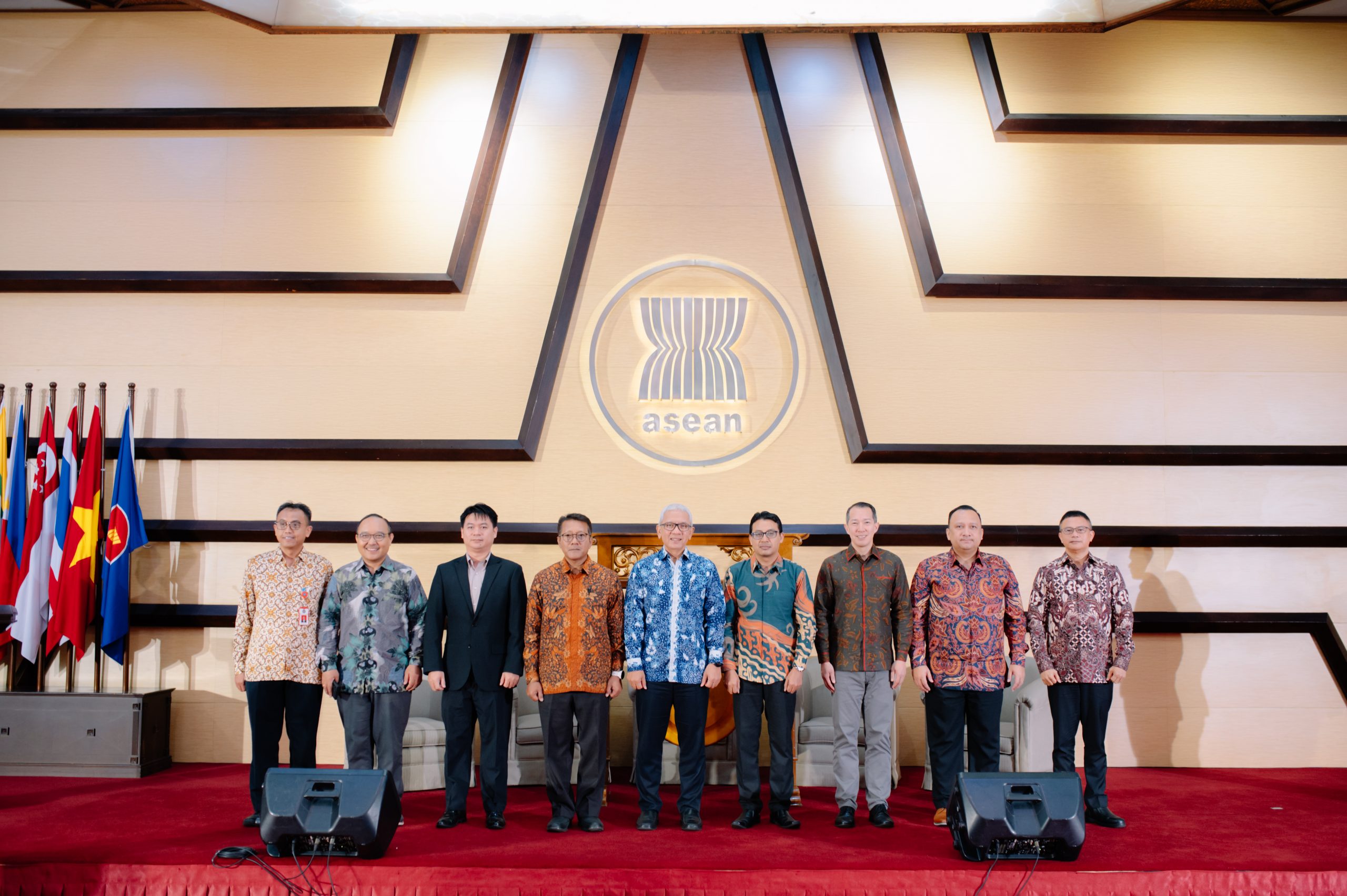
Depok, 24 May 2023 – Digital technology plays an essential role in achieving the Sustainable Development Goals (SDGs) in ASEAN (Association of Southeast Asian Nations) and the Global South. Although digital technology has immense potential to support the achievement of the SDGs, challenges such as access gaps, underdeveloped ICT infrastructure, and susceptibility to cyberattacks need to be addressed.
In response to the forgoing concern, the Universitas Indonesia Faculty of Law (FHUI), with aim to become “a prominent law faculty” in Southeast Asia, together with Microsoft and ASEAN Foundation and supported by the Coordinating Ministry for Economic Affairs of the Republic of Indonesia, organized Policy Dialogue on “Digital for Development in ASEAN and the Global South: Unlocking the Potential of Technology for Sustainable Growth and Inclusion” which held at ASEAN Hall, ASEAN Heritage Building, Jakarta. The dialogue was attended by the Dean of FHUI, Dr. Edmon Makarim, S.Kom, S.H., LL.M., Deputy for Coordination of Digital Economy, Manpower, and MSMEs Coordinating Ministry for Economic Affairs of the Republic of Indonesia, Dr. Ir. Mohammad Rudy Salahuddin, M.E.M., President Director of Microsoft Indonesia, Dharma Simorangkir, and Regional VP and Chief Legal Counsel of Microsoft Asia, Mike Yeh.
In his opening remarks, the Dean of FHUI, Dr. Edmon Makarim, S.Kom., S.H., LL.M. expressed his pleasure on standing in front of the speakers and participants of the event. He stated that the dialogue raises a very actual matter to be discussed and necessary to view from a legal perspective.
President Director of Microsoft Indonesia, Dharma Simorangkir pointed in his remarks that ASEAN, as part of the Global South, has excellent potential to grow sustainably and inclusively, and become one of the balancing powers in the world. This sustainable growth can be achieved by harnessing the digital economy that is based on technology.
In the following remarks, ASEAN Foundation Executive Director, Dr. Piti Srisangnam said that digital technology has become indispensable for today’s development.
“Digital technology has transformed how we conduct business and improve communication. However, this progress has not been maximized, ASEAN and the global south region has not fully realized this potential for sustainable growth and inclusion. In the current context of ASEAN, digitalization remains a significant issue,” he said.
He noted that around half of ASEAN’s population is currently not connected to technologies, with a higher proportion in rural areas, due to limited infrastructure and resources. This is an issue that is not only affected by access to communications, but also has more enormous political implications that are involved in it.
“Digitalization should be supported by digital literacy, especially in rural areas, making it more affordable to the marginalized and disadvantaged – to ensure they participate in the digital economy. Improving digital literacy and skills in underserved communities will ensure all will participate and help boost the digital economy,” he added.
The policy dialogue raised three main topics which the speakers discussed. The first topic was “The Role of Digital Technology in SDGs Implementation” which was delivered by speakers Mike Yeh, Regional Vice President and Chief Legal Counsel, Microsoft Asia, Dr. Rizal Edwin Manansang, Ak., M.Sc, Expert Staff for Digital Transformation, Creativity, and Human Resources, Coordinating Ministry for Economic Affairs, Dr. Ir. Bonifasius Wahyu Pudjianto, M.Eng., Director of Informatics Empowerment, Ministry of Communication and Informatics, and Dr. Anna Bon, Researcher in ICT4D, Vrije Universiteit Amsterdam. Mike Yeh highlighted the role of AI as powerful tool for driving progress towards the SDGs. AI is expected to contribute up to $1 trillion to Southeast Asia by 2030, hence it’s important to implement the principles of ethical and generative AI.
The second topic was “The Role of Generative AI and Cybersecurity in SDGs Implementation,” presented by Prof. Dr. Ir. Hammam Riza, President of Collaboration in Research and Industrial Innovation in Artificial Intelligence, Dwi Kardono, S.Sos., M.A., Directorate of Local Government Cyber and Signals Security, National Cyber and Crypto Agency, Dr. Brian Amy Prastyo, S.H., M.L.I., LL.M., Lecturer at Universitas Indonesia Faculty of Law, Panji Wasmana, Director of National Technology, Microsoft Indonesia, and Ms. Genalyn Macalinao, Member of the Board of Trustees, CyberguardiansPh.
The third and final topic was “SDGs Implementation Challenges and Strengthening Partnership in the ASEAN and Global South,” discussed by Dr. Jasmine Begum, Regional Director Corporate External and Legal Affairs Microsoft Asia Pacific, Arie Afriansyah, Ph.D., Lecturer at Universitas Indonesia Faculty of Law, Endah Kartika Lestari, Directorate of Employment, Ministry of National Development Planning/National Development Planning Agency, and Rashvin Pal Singh, Group CEO of Biji-biji Initiatives.
Countries in the Global South require more in order to harness the potential of digital for development, especially in implementing SDGs. The gap that entails must be narrowed and closed in near future. Digital technologies can promote SDGs implementation and at the same time the SDGs help bring the gap closer. The World Bank report emphasizes the importance of better understanding how digital technologies interact with other factors critical to development. There are also several studies on utilization of technology to support and align with the SDGs.
The dialogue aims to provide a platform for policymakers, practitioners, civil society organizations, academia, and industries to discuss and exchange ideas on the role of digital technology in achieving the SDGs in ASEAN and the Global South. The dialogue explored key policy issues, opportunities, and challenges associated with digital for development and identified strategies to harness the potential of technology to promote the SDGs. The outcome of the dialogue will be outlined in policy recommendations intended to provide insight for policymakers in optimizing the opportunities offered by digital technologies for the betterment of communities in the Global South.
###