


Collaboration is Suppliers’ Most Powerful Tool Against Emissions
“Microsoft is not doing this work because decarbonization is easy; we are doing it because it is necessary.” – Will Hudson, Director of Energy & Sustainability Policy, Microsoft
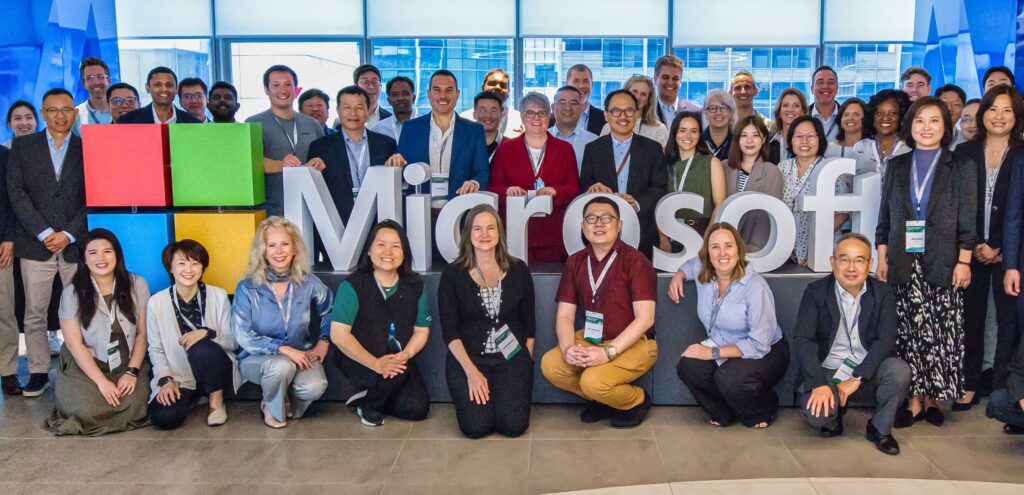
So began the Microsoft Global Supplier Sustainability Summit in Singapore this May, where the company gathered many of its major suppliers to discuss immediate and long-term solutions for reducing emissions throughout its value chain.
To achieve Microsoft’s ambitious Carbon Negative goal — to drive down Scope 1 and 2 emissions to near zero, reduce Scope 3 emissions by more than half, and remove more than it emits by 2030 — suppliers will play a critical role.
Now, Microsoft hopes to turn the global supplier sustainability summit, with this inaugural edition in Singapore, into a long-running forum where suppliers can collaborate, share solutions, and gain access to clean energy, helping all parties accelerate their own decarbonization pathways.
The supply chain challenge
The hardest emissions to reduce are often the furthest from a company’s direct operations. Microsoft’s emissions profile is typical of many global technology companies: Scope 1 accounts for 1.0 per cent of total emissions, Scope 2 for 1.7 per cent, and Scope 3 — those generated across the full value chain — make up 97.3 per cent of the total.
Since 2020, Microsoft’s Scope 3 emissions have risen by 26 per cent. Growth in datacenter infrastructure to meet demand for cloud services and AI computing has driven much of that increase, alongside emissions from the materials, components, and equipment used to build and operate them.
The scale of the challenge is clear. Purchased Goods and Services now account for 34.0 per cent of Scope 3 emissions, while Capital Goods contribute 40.8 per cent. Combined, these two categories — heavily driven by supplier activity — make up nearly three-quarters of Microsoft’s Scope 3 footprint.
“The consequences of doing nothing, or doing too little too late, are unforgiving,” said Melanie Nakagawa, Microsoft’s Chief Sustainability Officer, to summit delegates.
Emissions Hotspots in the Supply Chain
Focusing on emissions “hotspots” has become an essential strategy for Microsoft and its suppliers to accelerate meaningful decarbonization across the supply chain. These areas account for a disproportionate share of total emissions, making them strategic targets for impactful change.
Upstream semiconductor manufacturing is one such hotspot, driven by the energy-intensive production of bare wafers and the use of potent process gases and chemicals. Electrical and electronic components, including printed wiring boards, ICs, displays, and power systems, also contribute heavily due to complex fabrication and material use. Assembly and contract manufacturing adds further emissions through enclosure production, circuit board assembly, and energy use during integration and testing. Lastly, materials and mechanical parts—such as metals, plastics, and glass—carry a high carbon cost due to mining, smelting, and forming processes.
By concentrating efforts on these high-impact areas, suppliers can reduce emissions more efficiently and build a more sustainable supply chain from the ground up.
Supplier electricity: the power to cut emissions
One of the most significant levers for supplier decarbonization is electricity use. Many suppliers operate in markets where access to carbon-free electricity (CFE) remains limited or complex. Microsoft’s Supplier Code of Conduct, updated in 2024, requires suppliers, upon request, to transition to 100 per cent CFE for goods and services provided to Microsoft by 2030. This requirement is designed to stimulate new CFE supply. To count toward Microsoft’s carbon negative goal, CFE must be produced in the same market where it is consumed, and supplier CFE purchases must reflect new, additional generation rather than purchases from existing supply.
“This approach will drive new CFE generation into the grid and push down fossil in the power mix,” Will Hudson explained at the summit.
AI and decarbonization
AI technology is playing a growing role in optimizing energy systems and helping reduce emissions. AI models can forecast renewable generation, optimize grid transmission, and accelerate permitting timelines for new clean energy projects.
Microsoft’s $1 billion Climate Innovation Fund is actively investing in companies developing these tools. One portfolio company, LineVision, uses AI to unlock up to 50 per cent more capacity in existing transmission lines, allowing for greater renewable integration without new grid buildout.
AI is also helping inside Microsoft’s own supply chain. Calculating product-level emissions is complex — “There are tens of thousands of lines of calculations to calculate the carbon footprint of one device,” summit attendees heard from Leo Aspauza, Director of Cloud Supply Chain Sustainability at Microsoft. Today, 70 per cent of Microsoft’s product carbon footprints are calculated using primary data provided directly by suppliers, compared to an industry average of 20 per cent — improving accuracy and accountability across supplier emissions reporting. This efficiency allows sustainability teams at Microsoft to spend less time on manual data processing and more time identifying opportunities to increase efficiency and clean energy access across its supply chain.
The pressure of growing electricity demand
Even as more clean energy comes online, electricity demand continues to rise globally. Broader trends— including increasing heating and cooling supply, electric vehicles, heating electrification, datacenter buildout, including AI workloads, and industrial loads and electrification — are compounding the global strain on power grids today.
Microsoft’s decarbonization strategy remains focused on technologies scalable when increasing loads come online — before 2030 — wind, solar, nuclear, energy efficiency, and optimized grid infrastructure — while continuing to explore emerging solutions like hydrogen and ammonia technologies as they mature.
Decarbonization is a shared responsibility
Cutting emissions across the global technology supply chain requires partnership. Microsoft’s model emphasizes joint action — across suppliers, policymakers, utilities, and financial partners — to unlock investment, scale grid infrastructure, and accelerate deployment of low-carbon technologies.
The Global Supplier Sustainability Summit in Singapore is just one step toward that shared goal. As attendees heard repeatedly: collaboration remains suppliers’ most powerful tool against emissions.