

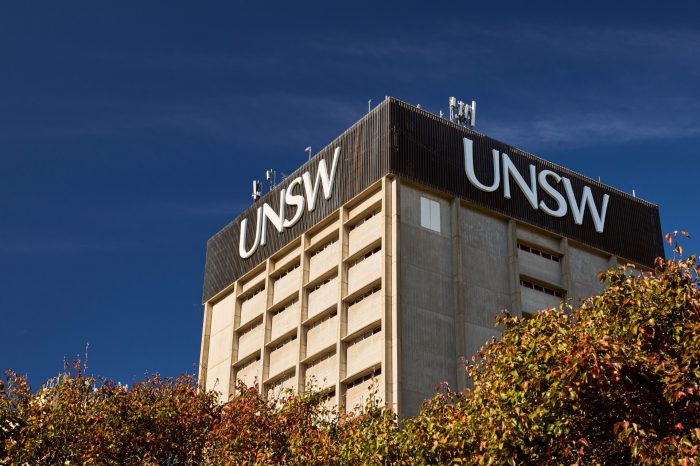
As a trusted tertiary education institution for more than 70,000 students, the University of New South Wales (UNSW) in Sydney, Australia, is steadfast in its mission to improve lives through innovative research, transformative education and a commitment to a just society.
Given the immense pressures on university staff and students, UNSW’s central Educational Technology Support team aims to remove roadblocks to accessing support and leverage new technologies to help students and staff focus on teaching, learning and fostering community.

As such, UNSW’s Manager of Educational Technology Support, Pradhiban Duraisamy, and his small team of ‘education technology enthusiasts’ have worked over many years on new solutions with the potential to reduce administrative burden, improve digital accessibility and enhance student and staff wellbeing.
Now, they’ve developed an agentic AI game changer. In line with the university’s Educational Technology Roadmap 2024-2028, Duraisamy’s team recently piloted an AI-driven agent named Scout, powered by Microsoft Azure OpenAI and built using Microsoft Copilot Studio and Microsoft Power Platform.
Complete with a yellow hoodie – a quiet nod to UNSW’s colours – and welcoming smile, Scout offers the 7,500 UNSW pilot program students the easiest entry point to find quick answers for common queries. In doing so, it enhances access to essential information, streamlining support, improving student confidence and giving educators more time for meaningful engagement.
Democratising access to critical information
Anyone who has studied at university knows how easy it is to feel overwhelmed by course outlines, tutorial and meeting schedules, and information about campus societies and exams.
“All the information is actually out there on university websites, but there are thousands of pages, and many students don’t know how to navigate them,” says Duraisamy. “What’s more, international students might not yet know the abbreviations and the acronyms we use, which can make it even harder for them.”
Through consultation with UNSW’s teaching cohort, the educational technology team noted that students ask the same questions each year. Among the most common are ‘When are the assessments for this course?’, ‘Where can I check on my enrolments?’ and ‘Are there any support services available to help with my studies?’
“The last thing many students want to do is go and search for this information independently. They don’t care which university team supports or owns our different online sources; they have a problem and need an answer. Scout can offer them a reliable and accessible solution,” explains Duraisamy.
Scout is housed within the university’s learning management system, Moodle, and hierarchically draws information from multiple knowledge sources.
“Think of it as a pyramid: at the top is niche information specific to each course, such as specific class guidelines and processes. Students can ask questions like ‘Which weeks will tutorial attendance be recorded?’ and the answer from our academics is available using a solution we built with Microsoft Power Apps,” says Duraisamy.
“The second layer is the publicly available course outline, which details relevant contacts, course learning outcomes and additional material like assessment guides and lecture slides. The third is our extensive UNSW websites, which provide information on the university’s policies, program information, clubs and societies, and student services.
“Lastly, Scout will use Azure OpenAI’s GPT capabilities if it cannot source an adequate response elsewhere.”
Scout’s responses include UNSW source links to help students validate the information.
The initial results have been promising, leading to the pilot’s expansion from an initial group of 1,000 to 7,500. Notably, 58 per cent of Scout usage occurs outside normal operating hours, demonstrating Scout’s value in filling service gaps and reducing pressure on staff. Duraisamy and his team have also been conducting tests to ensure that Scout does not provide incorrect information that could diminish the student experience. So far, no students surveyed have reported any such issues.
In fact, users are already excited about Scout’s potential capabilities and have been discussing their wish lists with the education technology team.
Some have requested that Scout provide course recommendations based on their career goals and past course history, like suggesting prerequisite or complementary subjects to support a future application to a Master’s program.
Helping lecturers focus on core teaching responsibilities
Scout’s positive impact is extending to UNSW’s teaching cohort. With pilot students enjoying easy access to answers for more general questions, academics speaking to Duraisamy’s team have noted that the queries directed towards them have become more sophisticated.
“Since Scout has taken over routine admin queries, we’ve seen a real shift in how pilot students engage with their lecturers. Instead of asking when an assignment is due, they now have questions about research topics or concepts discussed in class. That’s exactly what our academics are here for – their subject matter expertise,” he says.
These initial wins support UNSW’s vision to continue streamlining administrative tasks and elevating the quality of academic interactions. By handling routine enquiries about course logistics, support services and more, Scout ultimately enables lecturers to dedicate more time to what matters most – engaging students in meaningful academic discourse.
Demonstrating agentic AI’s potential to improve student wellbeing
As Duraisamy looks towards Scout’s future, he’s excited by the prospect of further enhancing student access to critical services, such as equitable learning support, through appointment booking capabilities and recollection of previous conversations. In this way, Scout could help improve students’ mental health and wellbeing.
“For example, a student seeking learning adjustments or additional support might ask Scout for guidance. We’ve designed the agent to respond empathetically; it acknowledges the student’s concern before offering information or options,” he explains.
“Because Scout operates within an integrated system, it could help the student book an appointment or follow up with relevant services. We’ve also noticed during peak periods, like exams, that students can feel more overwhelmed. In future, Scout could recognise this sentiment and point such conversations toward the university’s health, wellbeing and psychological services.”
Duraisamy predicts that Scout will be the first of many AI-powered agents deployed at UNSW to enhance students’ and academics’ experiences.
“There are so many smart people at UNSW. They know what they need, and they’re discovering what they can leverage from other agents,” he says. “Then, their knowledge doesn’t have to be managed by a central team like mine.
Expert teams can use Microsoft Power Platform’s low-code solutions to manage their information directly, and their agent can communicate from there.”
Improving the education landscape with agentic AI
For other education institutions considering deploying agentic AI solutions to improve student or teacher outcomes, Duraisamy suggests keeping most of the development in-house.
“Because this solution was locally produced, we had everything we needed to manage implementation and iteration,” he says. “The pilots were run during 10-week windows of a trimester, so it was critical for us to actively reflect on real-time student and staff feedback and act on it to improve the quality of support Scout provided.”
He advises those educational institutions sitting on the fence to take the leap and initiate or develop the agentic AI projects they have in mind. In doing so, they will come to appreciate the full breadth of possibilities. “Once you get started, you realise that it’s doable because it’s easy. From there, you can start to truly explore the different ways this new technology can be applied.”