

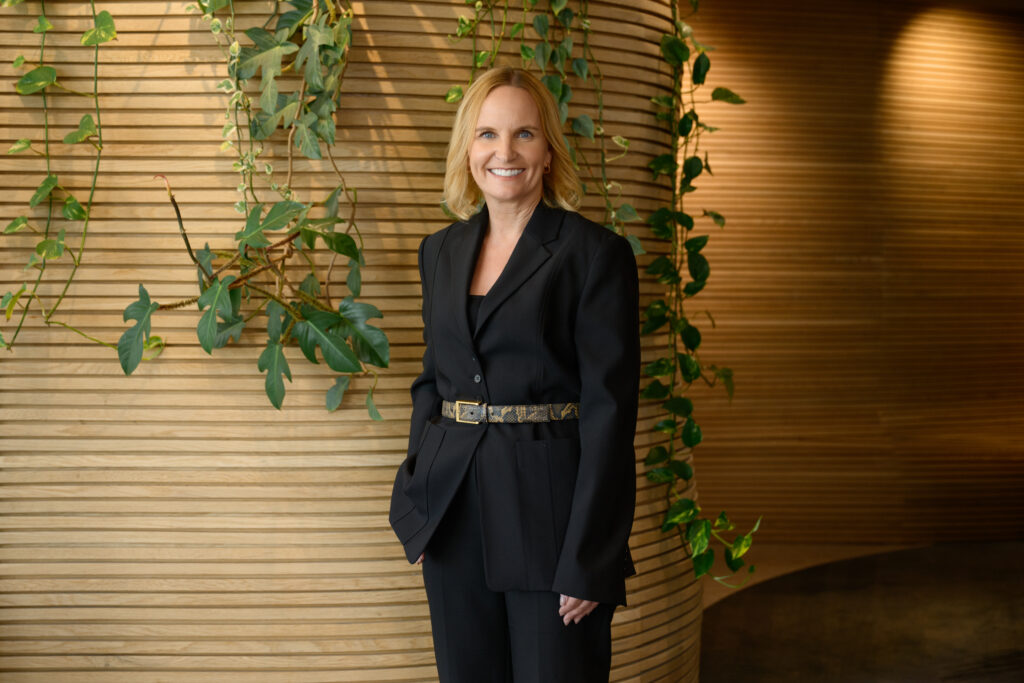
By Jane Livesey, President, Microsoft Australia and New Zealand
Every week, in boardrooms across Australia, I’m asked some version of the same question:
“Is AI actually delivering value, or are we all simply doing more work, faster?”
It’s a fair question.
Over the past two years AI has moved from curiosity to strategic priority. Leaders have invested heavily, employees have experimented enthusiastically, and organisations have launched hundreds of pilots. The excitement is real, but so is the pressure to demonstrate results. The encouraging news is that value is already emerging.
Australia has become one of Microsoft’s leading markets for Microsoft 365 Copilot. Eighteen of the ASX Top 20 now use it, along with 66 government agencies. Over the past year, Copilot adoption has accelerated dramatically, with 16 Australian organisations now operating at over 10,000 seats and research by EY-Parthenon estimating that it gives back around nine hours a month per user.
But focusing solely on productivity misses the bigger story.
The organisations creating the greatest value from AI have moved beyond asking what the technology can do. They are asking a more important question:
“How do we use AI to fundamentally improve the way we operate, serve customers and create advantage?”
That distinction is important. Productivity gains are valuable, however transformation is where enduring value is created.
The model is not the advantage
Much of today’s AI discussion still centres on models. Which model is best? Which is most affordable? Which is most capable?
Reasonable questions, but they’re difficult to build a strategy around. The reality is that model capabilities are advancing rapidly and becoming more widely available. What looks distinctive today will likely become commonplace tomorrow.
Organisations should therefore be careful not to confuse access to AI with competitive advantage. Competitive advantage comes from something far more enduring: your data, your processes, your expertise, your customer relationships and your ability to continuously learn.
The question leaders should ask is not whether they have access to the most advanced model. It is whether they are building capabilities that become more valuable over time.
Can your organisation take advantage of whichever model emerges next year without having to rebuild everything around it? Are your people becoming more effective with AI? Are your systems learning from every interaction? Are you capturing organisational knowledge rather than simply consuming somebody else’s intelligence?
The organisations answering “yes” to these questions are creating assets that appreciate over time.
It’s a shift from consuming AI to building it, and I think of it as two kinds of capital. Human capital is the knowledge, judgement and relationships your people hold. Token capital is the AI capability you build, own and govern. It’s the models, agents and workflows that become yours. One doesn’t replace the other. Human capital directs token capital, and token capital scales human expertise.
This reframes the cost debate. Early on, tokens buy learning, as teams get better at using AI. Later they buy impact, as workflows speed up and outcomes follow. At scale, they buy compounding advantage. The bigger risk is optimising for cost too early and undermining the behaviours you’re trying to build.
The model may change. The value you’ve built around it should not.
Value is engineered
This is where many organisations discover that AI transformation is less about technology deployment and more about engineering.
Technology can be purchased. Differentiation cannot.
The companies seeing the strongest results are building AI systems around their own data, workflows and expertise. They are redesigning processes, embedding knowledge into workflows and creating feedback loops that continuously improve outcomes.
Increasingly, we see organisations creating entirely new capabilities to support this work. Some are establishing dedicated AI value engineering functions focused not on deploying models, but on designing, testing, governing and continuously improving AI-enabled processes.
That capability may prove just as important as the technology itself.
Trust enables speed
One of the most persistent misconceptions in AI is that governance slows innovation. In practice, the opposite is often true. The organisations moving fastest with AI are typically the organisations with the clearest guardrails.
People know where they can move fast and where they need to stop and think. Decisions have clear owners. Risks are surfaced early and dealt with before they become problems.
Trust builds confidence, and confidence drives adoption.
This principle becomes even more important as AI agents begin handling increasingly sophisticated tasks across organisations. Not every application carries the same level of risk. Personal productivity tools require a different level of oversight from systems influencing customer outcomes, financial decisions or critical public services. The best governance frameworks recognise this reality. They apply controls proportionate to risk while still allowing experimentation and learning.
Importantly, trust extends beyond internal governance.
As Australia develops its national approach to AI, clear and predictable frameworks will play a critical role in maintaining momentum. Organisations invest most confidently when expectations are understood and responsibilities are clear.
The goal should never be innovation or regulation. It should be innovation that people can trust.
The Next Phase Is About Impact
Australia has earned an early leadership position in AI adoption. The next phase will be harder.
Success will no longer be measured by how many pilots are launched, how many licences are deployed or how many tools are available. It will be measured by whether organisations deliver better outcomes for customers, employees and citizens.
The leaders in this next chapter will not necessarily spend more than others.
They will simply be clearer about where they want AI to create value.
They will invest in capability, not just technology.
They will build skills, not just systems.
They will focus on outcomes, not activity.
That is why Microsoft’s investment in Australia extends beyond infrastructure. Whether it is expanding local AI and cloud capacity, strengthening cyber resilience or helping equip three million Australians with AI skills, our belief is simple: long-term prosperity depends on ensuring both organisations and people can participate fully in the AI economy.
An opportunity Australia should seize
Australia has every ingredient needed to succeed in the AI era. We have world-class institutions, highly skilled workers, sophisticated industries and a strong track record of adopting technology.
What happens next depends on execution.
The organisations that create lasting value will be those that combine technology with human expertise, trusted governance and a clear sense of purpose. The AI era will not be defined by who adopts the fastest. It will be defined by who learns the fastest, builds the smartest and creates the greatest real-world impact.
Australia has an opportunity not only to participate in that future, but to help shape it.