


Using AI to Protect Biodiversity: How Urbasolar Supports Sustainable Solar Development
As the expansion of renewable energy accelerates across Europe, solar developers face a dual responsibility: delivering clean energy at scale while protecting local ecosystems. For Urbasolar, the solar division of Axpo Group, biodiversity protection is not a secondary consideration, it is an integral part of how projects are designed, assessed, and approved.
“For us, biodiversity is not a box‑ticking exercise. It’s a core part of how we plan, build, and operate our solar plants,” says Julien Burato, Environmental Manager at Urbasolar. “That means basing decisions on evidence from the field, not assumptions.”
To support this ambition, Urbasolar has developed an internal AI‑powered chatbot that helps project teams and environmental experts better understand, document, and protect biodiversity across its solar power plants.
From data overload to actionable insight
Founded in 2006, Urbasolar has been part of Axpo Group since 2019 and today leads the group’s international solar activities. Urbasolar has more than 750 operational solar power plants, for which it has handled the design, engineering, development, construction and operation. Over the years, the company has accumulated a vast amount of ecological data from biodiversity assessments carried out at operational solar sites.
These reports are essential when applying for permits for new installations. Project managers must demonstrate that a planned site will not negatively affect protected species or ecosystems, often by referencing evidence from existing plants. In practice, however, this process can be time‑consuming: teams need to search through hundreds of highly technical, site‑specific reports to find precise ecological information.
“Before, answering a very specific biodiversity question could take hours or even days,” explains Julien Burato. “Now, we can access relevant observations across our portfolio in minutes, which makes a real difference in day‑to‑day project work.”
Since March 2025, Urbasolar has addressed this challenge with an AI chatbot built on the Microsoft Azure ecosystem. The tool provides centralized, rapid access to biodiversity and environmental data across Urbasolar’s portfolio, allowing users to retrieve relevant insights in seconds rather than hours.

“For us, biodiversity is not a box‑ticking exercise. It’s a core part of how we plan, build, and operate our solar plants. That means basing decisions on evidence from the field, not assumptions.” – Julien Burato, Environmental Manager at Urbasolar
Supporting biodiversity with evidence, not assumptions
The chatbot enables project teams and environmental specialists to ask natural‑language questions and receive contextualized answers based on existing biodiversity reports. This supports several critical use cases:
• Identifying protected species present at specific sites
• Analysing population trends, such as stability, decline, or growth
• Understanding how species use solar sites over time
• Identifying appropriate measures to actively promote biodiversity
Beyond efficiency gains, the tool plays an important role in grounding discussions about environmental impact in evidence.
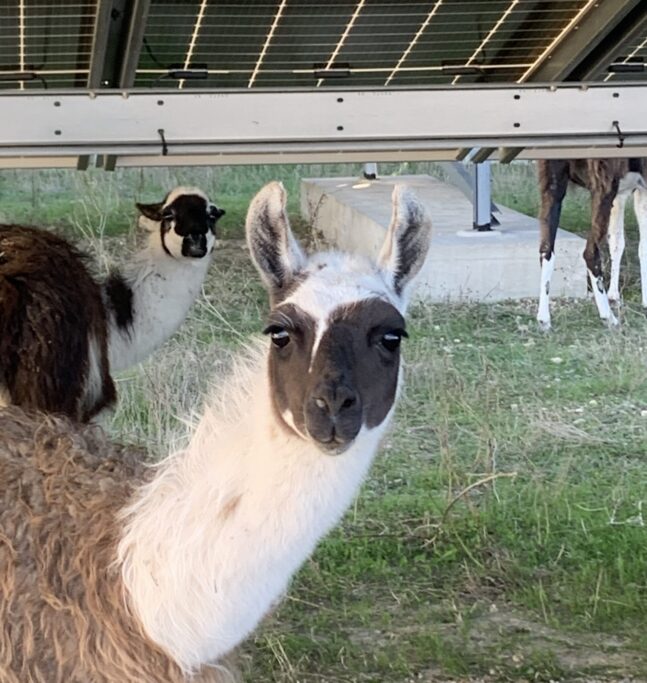
“In approval procedures, we’re sometimes confronted with concerns based on general perceptions of solar installations,” notes Julien Burato. “The chatbot allows us to point to concrete observations from operational plants for example, where species are present and reproducing successfully. That changes the quality of the conversation.”

“In approval procedures, we’re sometimes confronted with concerns based on general perceptions of solar installations. The chatbot allows us to point to concrete observations from operational plants for example, where species are present and reproducing successfully. That changes the quality of the conversation.” – Julien Burato, Environmental Manager at Urbasolar
Operational benefits for project development teams
For Urbasolar’s project developers and environmental department – the primary users of the chatbot – the benefits are both practical and strategic.
By significantly reducing the time spent searching and cross‑checking information, the tool supports faster, better‑informed decision‑making. It also allows teams to leverage feedback and lessons learned from existing projects, showing how solar infrastructure and biodiversity can coexist when projects are designed and managed responsibly.
“What’s powerful is not just speed, but consistency,” says Julien Burato. “We can demonstrate, across multiple sites, how biodiversity considerations are integrated into project development, using the same underlying data.”
Over time, this growing knowledge base supports continuous improvement across sites, helping Urbasolar strengthen its biodiversity approach as its solar portfolio expands.
“What’s powerful is not just speed, but consistency. We can demonstrate, across multiple sites, how biodiversity considerations are integrated into project development, using the same underlying data.” – Julien Burato, Environmental Manager at Urbasolar
A tool for transparency and knowledge sharing
While the chatbot is currently an internal solution, its existence also reflects a broader shift within Urbasolar and Axpo toward greater transparency on biodiversity topics. Interest in the tool extends beyond core project teams, with employees increasingly keen to understand how renewable energy projects interact with local ecosystems.
“We see a strong interest from colleagues who want to better understand our biodiversity approach,” says Tanguy Dorn, Generative AI Engineer at Urbasolar. “Having this knowledge accessible in one place helps embed environmental considerations more deeply into the organization.”
By consolidating ecological knowledge in one place, the chatbot helps make biodiversity a practical, data‑driven part of everyday workflows, not just a policy commitment.

“We see a strong interest from colleagues who want to better understand our biodiversity approach. Having this knowledge accessible in one place helps embed environmental considerations more deeply into the organization.” – Tanguy Dorn, Generative AI Engineer at Urbasolar.
Technology in service of sustainable energy
Built using Azure OpenAI Service, Azure AI Search, and SharePoint, the solution follows Urbasolar’s security and compliance requirements while ensuring that new reports are indexed and available quickly. As new biodiversity assessments are added, the chatbot’s knowledge base is automatically updated, keeping information current across teams.
For Urbasolar and Axpo, the project illustrates how digital technologies can support the energy transition beyond generation capacity alone by helping renewable energy projects respect, understand, and protect the environments in which they operate.