

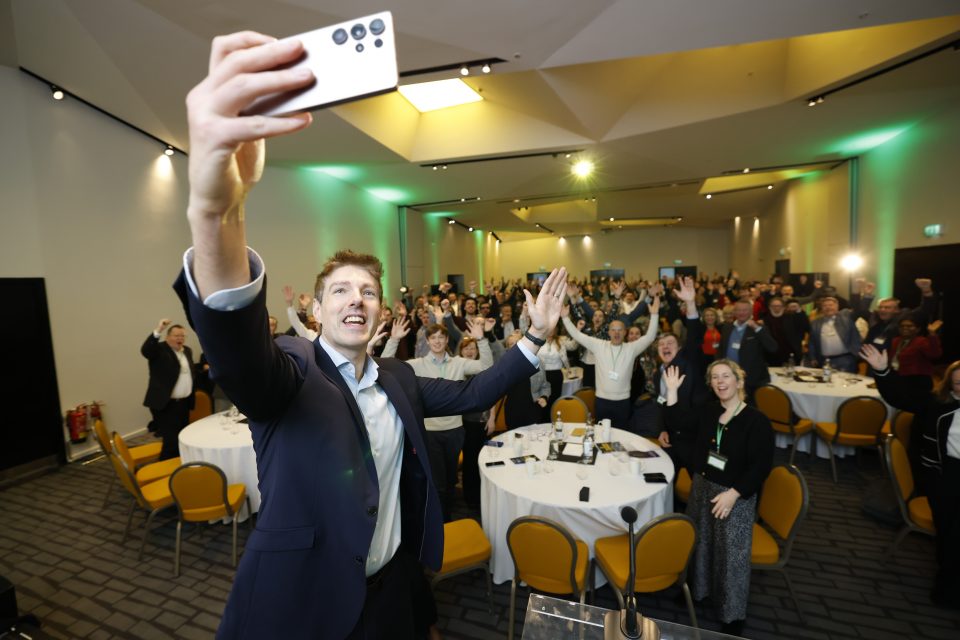
60 AI Applications Showcased Across Healthcare, Sustainability, Cybersecurity, Manufacturing and More
Dublin, 18th November 2025: Laya Healthcare’s automation software for outpatient claims were among some of the big winners at this year’s AI Awards, held at the Anantara Marker Hotel in Dublin this morning.
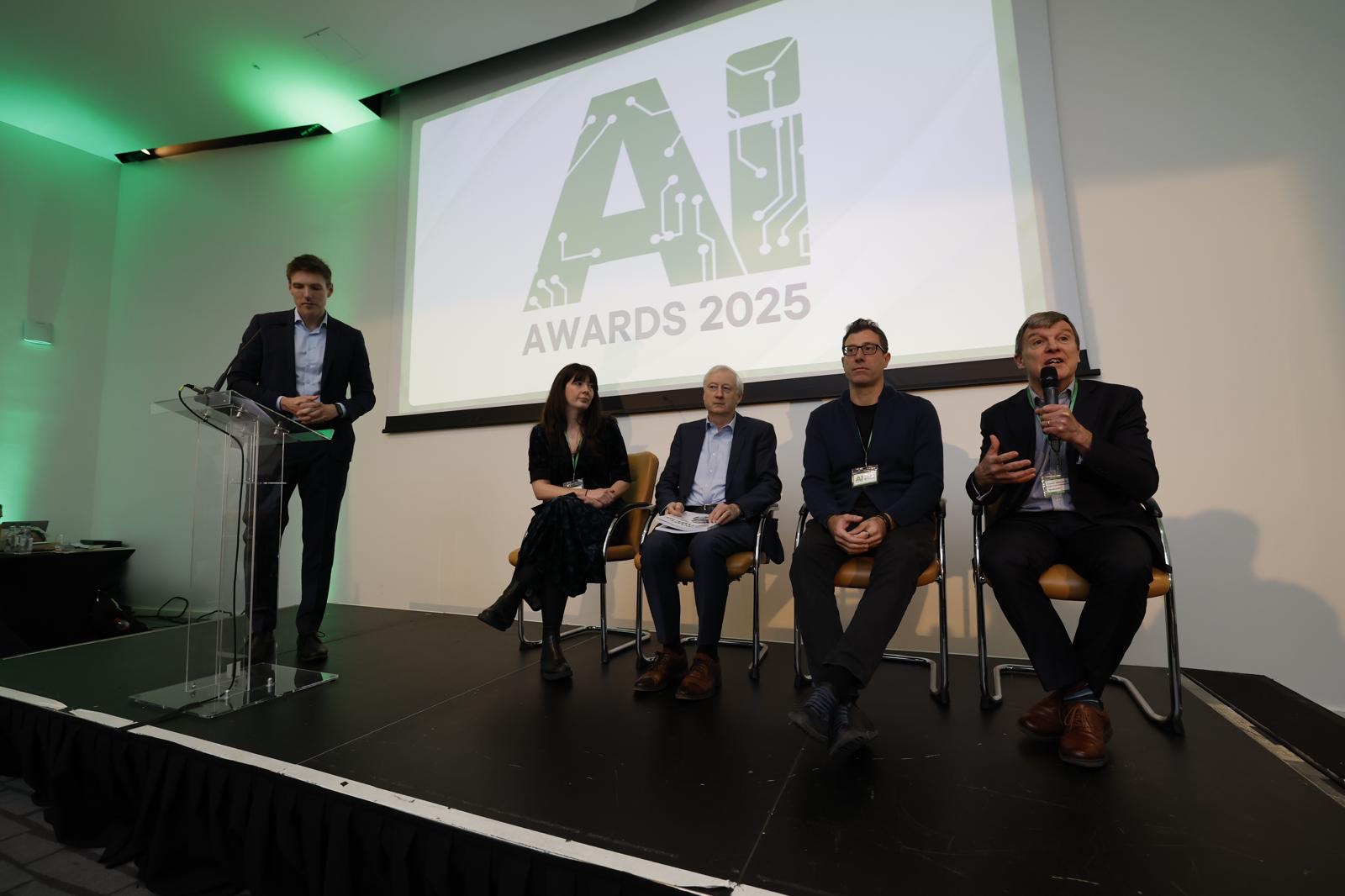
Other award-winning projects included enhancing workplace safety through smart CCTV monitoring, reducing food waste in commercial kitchens and protecting children from cyberbullying. Individual honours also recognised leaders driving responsible, inclusive and patient-centric AI across Ireland.
Powered by AI Ireland, in conjunction with principal sponsor Microsoft Ireland and supported by Meta and other partners, the awards celebrate the growth and development of artificial intelligence, machine learning and data science across Irish industries, from research and healthcare to social impact.
“The AI Awards celebrate more than technical excellence; they showcase Ireland’s leadership in applying artificial intelligence where it matters most. From transforming healthcare delivery to advancing sustainability goals, we’re recognising the organisations turning AI ambition into tangible results,” – Mark Kelly, Founder, AI Ireland.
Microsoft Ireland was once again the principal sponsor for the AI Awards, continuing their partnership since the inaugural awards in 2018.
“Congratulations to this year’s AI Awards winners. As a proud founding sponsor of the AI Awards since 2018, Microsoft Ireland is honoured to celebrate the people and projects shaping our AI future. With Ireland now ranking fourth globally for AI adoption, today’s achievements show how inclusive skilling and responsible deployment can turn that momentum into broad-based economic and societal impact.” – Catherine Doyle, General Manager, Microsoft Ireland
The 15 winners from the 2025 AI Awards are the following:
Young AI Role Model of the Year
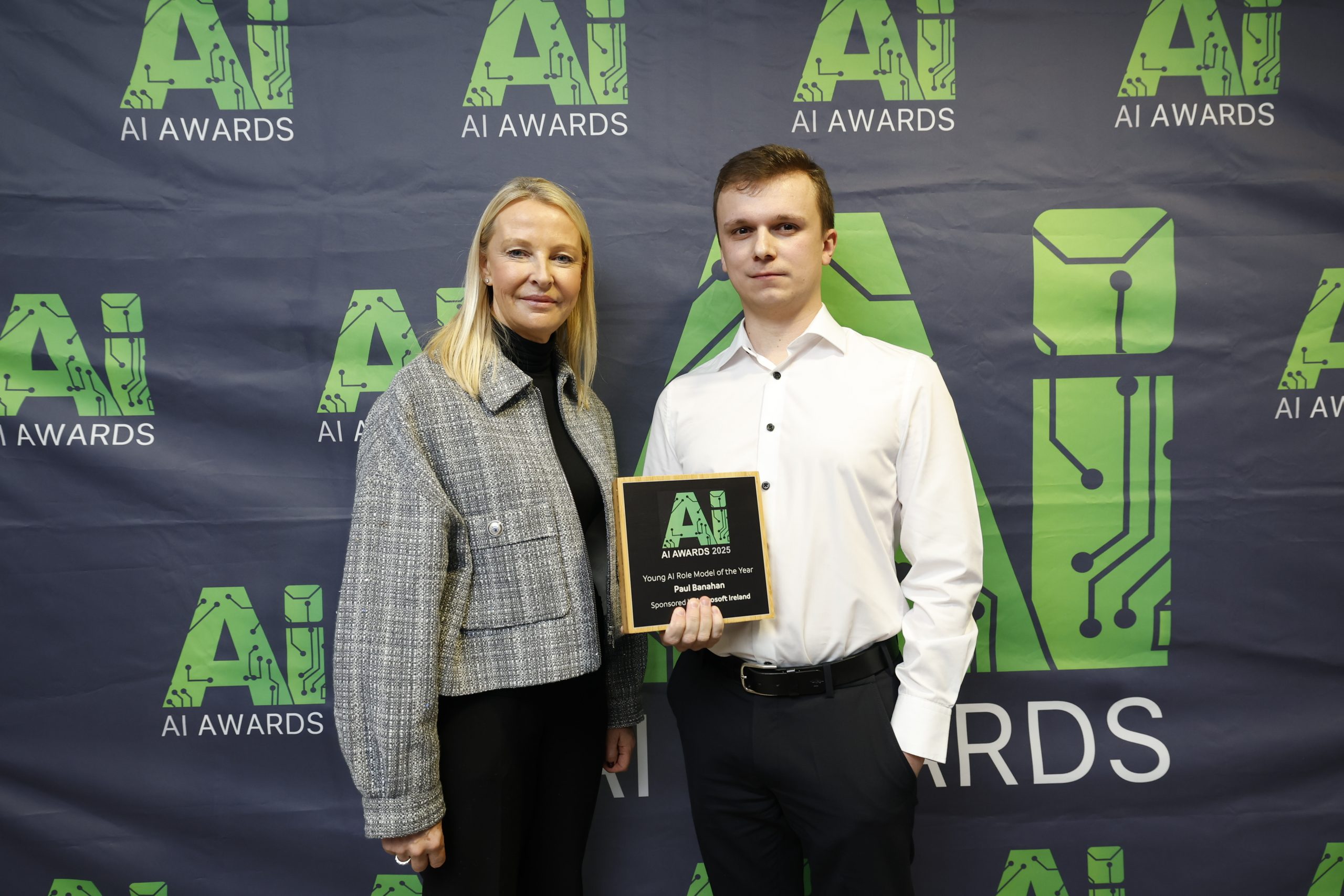
Paul Banahan – AI researcher at Mater Hospital, Paul develops generative AI for CT-to-MRI translation, improving emergency triage. Leading the Mater Center for AI and Digital Health, he advances patient-centric, accessible, and personalised healthcare through research, mentorship and cross-disciplinary collaboration.
Best Application of AI in Consumer/Customer Service
Laya Healthcare – for ORCA, which automates outpatient claims for 700k+ members using AI vision, OCR and ML. Reducing fraud, speeding reimbursements and providing real-time eligibility feedback, it saves millions annually and sets a scalable standard for healthcare AI.
Best Application of AI in a Large Enterprise
Marsh McLennan – for LenAI, an Irish-led AI assistant that is used by 70,000 employees across 130 countries, automates tasks, accelerates proposals and provides explainable insights. It saves time, boosts win rate and drives AI adoption across the firm.
Best Application of AI in Sustainability
Positive Carbon – for their AI system that monitors food waste in commercial kitchens using computer vision and depth sensors. By identifying discarded items and providing actionable insights, it reduces waste, saves money, cuts CO₂ emissions and supports ESG compliance.
Best Application of AI to achieve Social Good
MoonShot – for using AI to detect and prevent online threats, protecting public figures, athletes and at-risk communities. Its multi-layered system combines monitoring, context-aware models and human expertise to improve crisis response, scalability and digital safety.
Best Application of AI in Healthcare
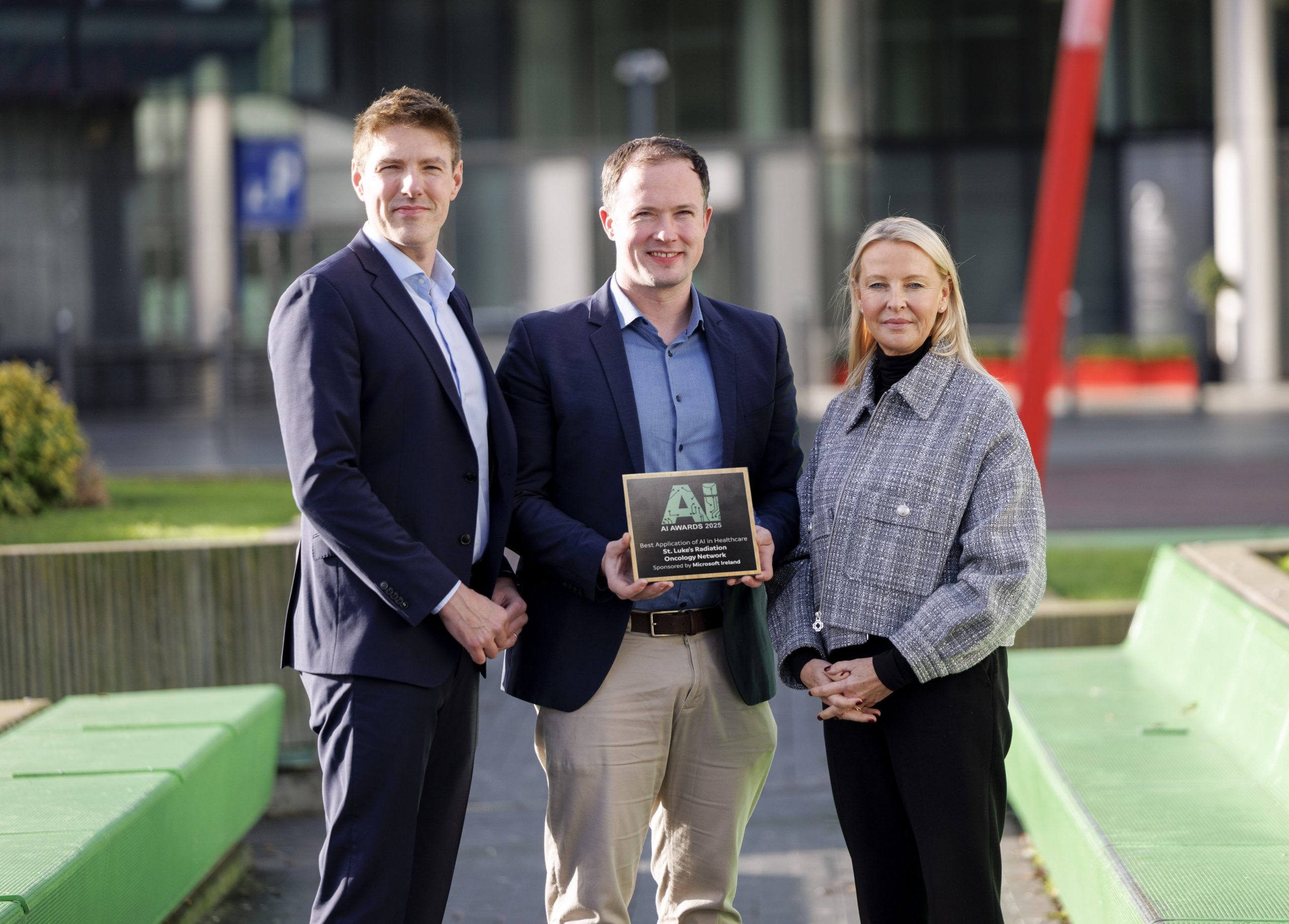
St. Luke’s Radiation Oncology Network – for implementing an AI-powered anatomical contouring, halving manual planning time and reducing variability in 68% of structures. Their human-in-the-loop workflow improves efficiency, patient outcomes and offers a replicable model for scalable oncology AI adoption.
Best Application of AI in Cybersecurity
TrustWorks – for unfiying cybersecurity, IT and compliance with AI-driven discovery, risk mapping, anomaly detection and automated actions. By embedding governance into workflows, it improves efficiency, collaboration and resilience, helping enterprises manage risk smarter and faster.
Best Application of AI in an Academic Research Body
CeADAR Ireland – for their work in collaboration with Durotimi AI to develop explainable AI for early cancer detection, achieving 95%+ accuracy across five types. Using hybrid models on de-identified records, it empowers clinicians with actionable, ethical and scalable AI healthcare solutions.
Best Application of AI in a Startup
WHYZE Health – for unifying clinical trial and real-world patient data using AI modules for digitization, matching, prediction and analytics. Blockchain-secured and compliant, it enhances trial efficiency, patient engagement and therapeutic development globally.
Best Application of AI in Manufacturing
Protex AI – for converting existing CCTV systems into proactive, AI-driven safety platforms. Using computer vision and edge computing, it detects unsafe behaviours, predicts risks and delivers actionable insights, reducing incidents 50–70% while enhancing workplace safety, efficiency and compliance globally.
Best Application of AI in an SME
Chirp – for creating the world’s first kernel-level child-protection software, using AI to block cyberbullying, grooming, sextortion and self-harm content in real time. Ethics-by-design ensures safety without surveillance, with the aim to protect 15 million children globally by 2030.
AI Person of the Year
John Clancy – Founder of Galvia, John makes advanced analytics accessible for SMEs and enterprises by unifying fragmented data into actionable insights. He drives responsible, inclusive AI adoption across retail, healthcare and government, shaping Ireland’s AI ecosystem while delivering measurable business impact.
Women in AI Ambassador of the Year
Ghadeer Ghosheh – for pioneering biological foundation models and generative AI to advance precision medicine. Leading interdisciplinary teams, she ensures clinicians, biologists and women drive innovation, shaping a human-centred, inclusive AI ecosystem that accelerates breakthroughs in healthcare and science.
Best Application of AI in a Student Project
Amin Kargar – for his AI-powered insect monitoring system that runs on low-power edge devices, detecting and counting pests in real time. Lightweight deep learning and IoT deployment reduce crop losses, lower pesticide use and enable scalable, sustainable agriculture monitoring.
Best Use of Responsible AI & Ethics
IBM Research – for Risk Atlas Nexus embeds fragmented AI risk taxonomies, benchmarks and controls into a dynamic knowledge graph. Integrating LLMs, auto-assist questionnaires and real-time mitigation, it operationalises responsible AI, enhancing transparency, accountability and scalable ethical governance across development lifecycles.

