
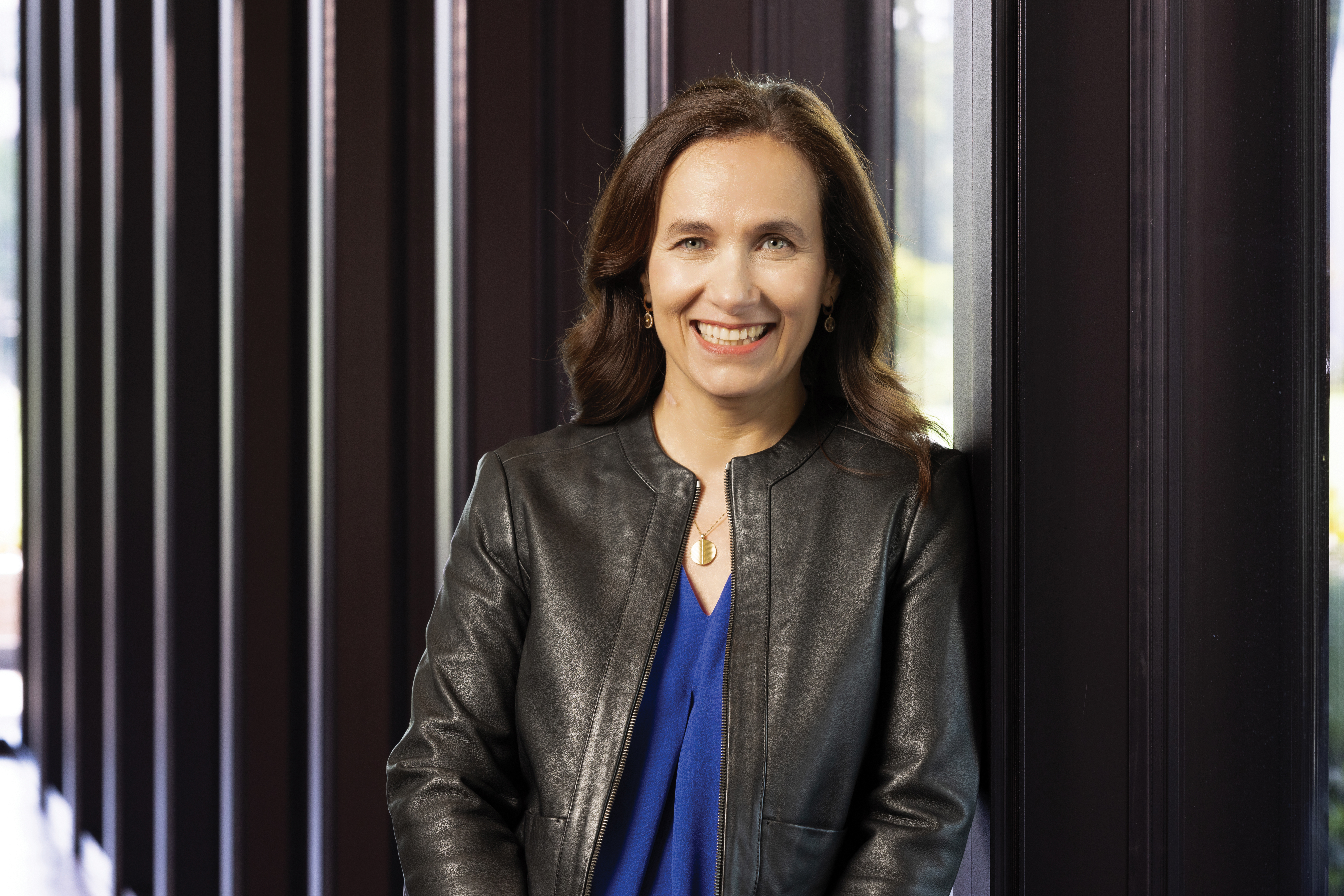
Few people know more about how AI is changing the nature of cyberthreats than Hayete Gallot, Executive Vice President at Microsoft Security. We spoke with her to find out how the world is changing and what that means for customers, for the way Microsoft operates – and for what’s next
Signal: What does the security landscape look like?
Hayete: Every CEO and CISO [Chief Information Security Officer] I meet is wrestling with the same question: how do you move faster with AI without increasing risk? My answer is simple: that’s the wrong tradeoff. The real challenge is recognizing that the physics of cybersecurity has changed. As AI accelerates both innovation and attacks, security can no longer be a gatekeeper. It must become the engine that enables organizations to adopt AI with confidence and resilience.
Signal: You only began your current role in early 2026. What has been your approach?
Hayete: I’m actively driving a very different way of building and releasing products in which speed is of the essence. I arrived in February and when I started, I said to the team, “Days and weeks, not months and years.” In May 2026, we announced Agent 365, which helps you govern and secure the AI you have in your enterprise. That same month, we launched MDASH, our software vulnerability multi-model team of agents. For customers, the “so what” about MDASH is that it is not about any single model. It is about the security workflow we activate for customers. MDASH helps move from finding a vulnerability to validating it, prioritizing it and preparing a fix. It does that with the controls customers expect from Microsoft. And then in July, we announced Perception, a new agentic security system designed for the realities of AI. It turns signals into real-time protections using AI to defend against AI. Just to illustrate the point, we built MDASH in a matter of weeks, and our first customer for it was onboarded in early April.
Importantly, it is not about giving customers a collection of features and asking them to assemble the pieces themselves. We need to understand the job they are trying to do and deliver a complete solution. The question I always ask is: What does this mean for the customer? Why should they care, and how are we helping?
“We are uniquely positioned to help lead this transformation. AI is not simply changing how organizations defend themselves; it’s redefining how security operates”
Signal: How are customers reacting to the new tools?
Hayete: The number one question is, “Am I ready for this?” AI is exposing gaps in customers’ foundations, from data security to oversight of sanctioned and unsanctioned AI. They need to know which agents are operating, give them identities and continuously assess their risk.
Customers do not need more alerts. They need solutions that help them understand risk and take action. We should not tell them, “You’re red. Good luck.” We need to help them get to green. Security and innovation must go hand in hand – and crucially, there shouldn’t need to be a choice between one or the other. Security is foundational to innovation.
Signal: Tell us more about Perception…
Hayete: Perception is an agentic security system built for defenders to operate at the speed and scale of AI. It brings together signals, security context and specialized agents that continuously identify risk, investigate threats and strengthen defenses. The important shift is from more alerts to real protection. Perception helps security teams move from insight to action in real time, while keeping humans firmly in control.
Signal: What has driven you to build the new tools you’re now offering?
Hayete: Frankly, the reality of the situation we face today. When the scale of discovered vulnerabilities went through the roof across the industry, thanks to new AI models, we had to find a way to rationalize the workload. Microsoft has millions of lines of code, and I could not have my entire engineering team going through hundreds of thousands of new findings. I had to make sure we understood what was real and what was not. So we brought in our red teams [groups that use real-world hacking methods to test a system’s vulnerabilities, see page 82]. We said, “Let’s imagine our system flags a vulnerability. We’re then going to see whether we can exploit it.” We did that by building a red team agent that attacks the code, using that vulnerability. If it is not able to attack, then the flag is just noise. If it is able to attack, then we prioritize the vulnerability and use AI coding models to pre-build a fix. This helped us – and organizations we’re working with now across our entire portfolio of security solutions – move from finding to validating to prioritizing to remediation at the speed of AI.
Signal: What were your other considerations?
Hayete: The tools need to be safe and responsible. Vulnerability findings can become a map for attackers, so we put strong controls around who can use the tools and who can access the results. We also keep humans in control of sensitive actions. That combination of capability and control is why highly regulated organizations are embracing them. Trust is not separate from the product. It is part of the product. And because trust and safety are critical, these solutions also have to be affordable – security is not a luxury, it’s core to business operations.
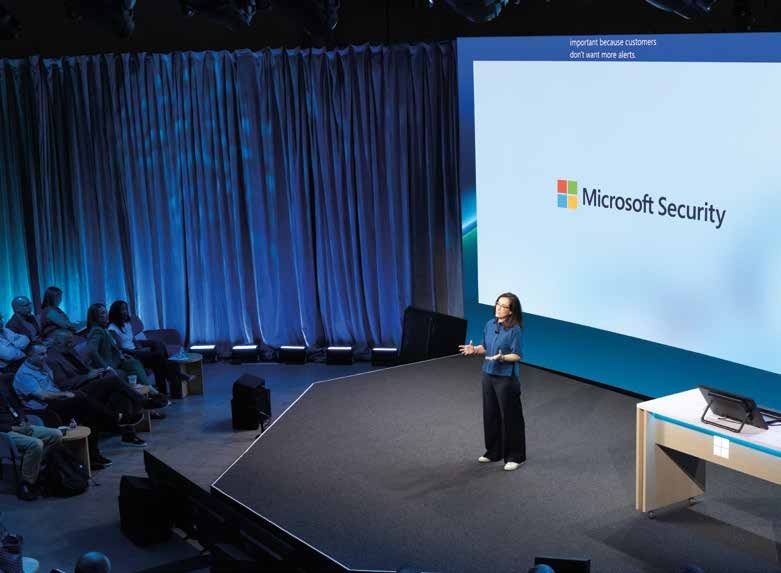
Signal: What’s it like being a security practitioner today?
Hayete: Overwhelming! On average, a security lead is seeing 300 alerts a day, and they can maybe process 20 percent of them. It’s really challenging. Solutions like Perception can help find the signal through the noise and enable them to act on the highest priority items. Now, instead of a pile of alerts, they will get a prioritized summary list provided by an agent, with dynamic risk assessment, so they can move right into remediation. This is really changing the game. One customer is a financial institution in England, and their CISO shared that with this new agentic approach, his team did four weeks of work in four hours. People want to go from insights to action, not just, “Oh, your house is on fire, good luck.” They want to know that there is a firefighter coming, and that’s what we’re delivering to them.
Signal: Is it a tough time to be a CISO?
Hayete: I have deep respect for CISOs. They deal with a level of risk and tension at all times, and they need to adapt very quickly. I also feel for them because they work with business decision-makers who want to innovate and use AI, but they’re there to make sure the company is safe, so you have a very high tension right now between the two perspectives. And the technology they have to implement is not like traditional technology; you now have to bring AI into the SOC [Security Operations Center]. The operating model and the culture and skills of the team have to evolve – you have to bring security analysts into that world; you have to hire AI experts who can develop your own security workflow and agents. It’s not an easy job.
“People want to go from insights to action, not just, ‘Oh, your house is on fire, good luck.’ They want to know that there is a firefighter coming, and that’s what we’re delivering to them”
Signal: What are some of the operating model challenges?
Hayete: Mythos [a powerful AI model previewed by Anthropic in April 2026] showed that AI can find software vulnerabilities faster than organizations can patch them. MDASH helps customers respond by scanning code, validating and prioritizing the vulnerabilities that are real, and preparing fixes. But the technology also changes how teams work. Security identifies the risk, while developers fix the code alongside their other priorities. SecOps and DevOps need to operate as one loop, from discovery to resolution, with clear agreement on what gets fixed first.
Signal: Is it a question of prioritizing vulnerabilities?
Hayete: Yes, and of working out who takes the decisions about which to fix. Is it the CEO? Is it the dev teams? Is it the CISO? What I find is that deploying MDASH and scanning repos and prioritizing and knowing how to fix it… none of that is the problem. The problem is actually agreeing on the fact that we’re going to do it, which is a cultural issue that has nothing to do with tech. What it also means is that a security person now needs to “talk dev.” When you go to a developer and say, ‘You have a bug,’ and you’re showing them code and you say, ‘The code is wrong’ and ‘This is a vulnerability,’ you have to have the credibility to be able to do that. So that’s also putting pressure on the security experts to be more capable. And the dev teams have to look at this and say, ‘Okay, how do I now incorporate that in my workflow?’
Signal: It sounds like financing this may be a challenge…
“Ultimately, this is about helping customers. They should not have to choose between moving fast and staying safe”
Hayete: Yes. CISOs are asking, “How do I pay for all this?” Scanning thousands of repositories can consume a lot of tokens very quickly. So with MDASH one of the things we did was to go multi-model [be able to use different AI models]. We wanted the best quality, so we match the model to the task, but we also factor in cost. We are not in the business of spending tokens for the sake of it. Leveraging our own MAI-Cyber-1 model lets us handle many of the security-specific tasks efficiently, while more complex models are reserved for the hardest problems. That gives us very high performance while reducing cost. CISOs do not have unlimited budgets, and we need to help them.
Signal: Do you feel optimistic about the future of cybersecurity?
Hayete: Yes. In fact, I believe we’re entering the most important era cybersecurity has ever faced.
I’m optimistic because we are uniquely positioned to help lead this transformation. AI is not simply changing how organizations defend themselves; it’s redefining how security operates. The most successful organizations will not be those that adopt AI fastest. They will be the ones that build the trust, resilience and operating models needed to harness it responsibly at scale.
Microsoft sits uniquely at the intersection of AI and security. We have the signals, threat intelligence, research and operational experience to turn security expertise into protection. But ultimately, this is about helping customers. They should not have to choose between moving fast and staying safe. Our responsibility is to eliminate that tradeoff and make security an accelerator of innovation. That is how we help make the world a safer place for all. ●