
– The estimated reading time is 6 min.
How technology could help the Vikings build next year’s ‘winning edge’
Author
 Elliott SmithMicrosoft writer
Each of the 32 teams in the National Football League has the same goal: to win a championship. In a league where every yard matters, teams are searching for any possible advantage they can employ to get ahead of their opponents.
For the Minnesota Vikings, who fell short of the postseason in 2025 but have high hopes for the upcoming campaign after finishing with five straight victories, player evaluation, free agency and the NFL Draft are critical elements of the offseason.
In assessing what happened last season and analyzing what steps they should take to make a championship push, the entire Vikings staff — from coaches to scouts to the front office — is using technology as a key component of its evaluation. Fortunately, the team has a powerful tool at their disposal to help with the process. Viper is a proprietary platform the Vikings designed in partnership with Microsoft using Azure technology. It is a cloud-based, fully customizable, in-house video review system the team is frequently updating and refining to meet the organization’s specific needs — from weekly adjustments driven by the coaching staff to optimizing the latest tech to help find an edge in player evaluation based on recommendations by the scouting department.
“I’m evaluating offensive players, defensive players, special teams players — all these guys on our roster,” Minnesota coach Kevin O’Connell says. “How do we make sure this is seamless for me to compare across the board and really look at data in a way I would have never been able to do?”
O’Connell used to spend long hours with a clicker in his hand trying to navigate through all the footage. Now, using Viper “makes it start to feel like you can see doing your job more efficiently,” he says, and the team can “grow this to becoming a winning edge for us.”
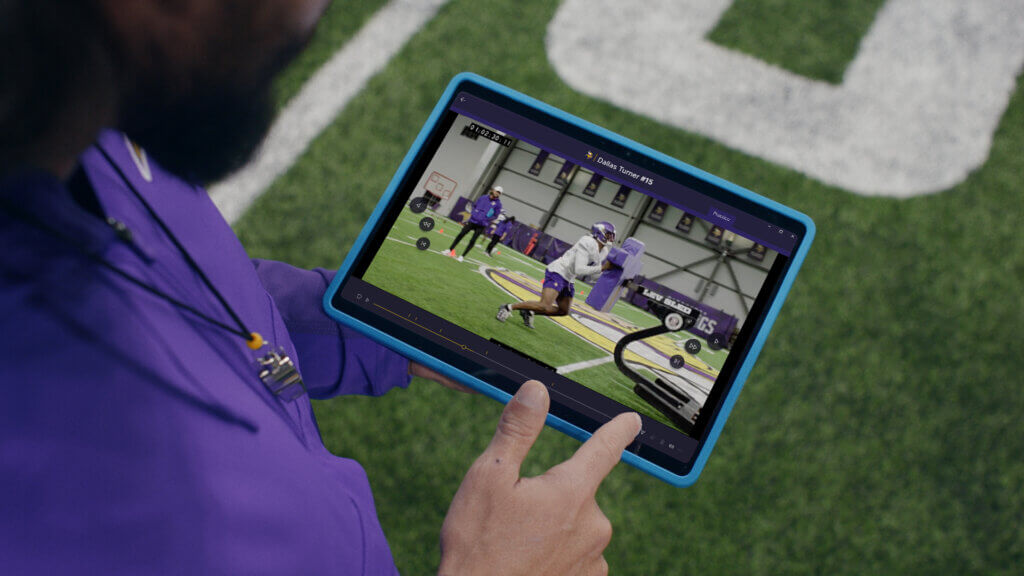
The platform combines practice scouting, game review and prospect evaluation into an intuitive experience. It holds all game, opponent and practice video, as well as player tracking and historical records, and is searchable via several queries. Hundreds of thousands of files are uploaded to Viper each season, giving the Vikings staff a wealth of information for review.
The Vikings development team, led by Luke Burson, senior director of Football Information Systems, can quickly design, code and ship updates using GitHub Copilot, allowing the coaches to request changes that can help them on a weekly basis during the season. Burson recalls a request made by a Vikings front office leader as he was searching for information in Viper as an example of how agile the platform can be.
“He asked me if we had this extra information, and I told him it was already part of the data set, and I just needed to expose it to him,” Burson says. “And so, 20 minutes later, he had what he wanted to see.”
Burson credits O’Connell and the Vikings coaching staff with being flexible and open to suggestions that veer far from the old-school coaching mentality, which often relied on gut instincts and an aversion to outside voices.
“Inclusion and communication are two big pieces,” Burson says. “Us being able to go to training camp, watch practices or organized team activities and be able to see some of the stuff as guys are moving around helps inspire us with ideas and then say, ‘Hey, what do you think about this? Can we make this piece more efficient? Would you be interested in this data for your job?’”
He says “being able to be a part of it and not just holed away in some room in the back of the building” is key.
“It can give us real, formidable things that we can use to be better than our opponent, and that’s what we’re all really looking for on a daily basis.”
— Kevin O’Connell, Minnesota Vikings coach
In the offseason, the Vikings are using Viper to evaluate college players all the way up to the NFL Draft in April. That will include footage from throughout the college football season, college all-star games like the East-West Shrine Bowl and in-person workouts. They’ll also track footage from the NFL Scouting Combine in March and use the NFL Combine App, an Azure AI-powered tool that gives all 32 NFL teams instantaneous player insights and data comparisons during the event in Indianapolis.
As the Vikings turn to NFL Draft meetings, developers join sessions to help keep Viper updated quickly so coaches can focus on players and not navigating technology. The Vikings also use the platform to help with their free agent planning and internal player evaluations.
Coaches, scouts and staff can access footage almost instantly and filter it by personnel, game situations or participation as they plan and evaluate. Cutting film used to be a tedious, time-consuming task. Before Viper, the Vikings would mail external hard drives with footage to their regional scouts on a weekly basis. Now, preparation for the next game or next season can begin immediately.
The Vikings can do all this safely, as Viper is secured through Microsoft Entra ID, with centralized authentication and conditional access to protect production environments and admin portals. Sensitive player information and strategic data remain locked down, so the Vikings can preserve their competitive edge.
“We have great tools, technology-based tools, that can take this data and give us answers,” O’Connell says. “It can give us real, formidable things that we can use to be better than our opponent, and that’s what we’re all really looking for on a daily basis.”
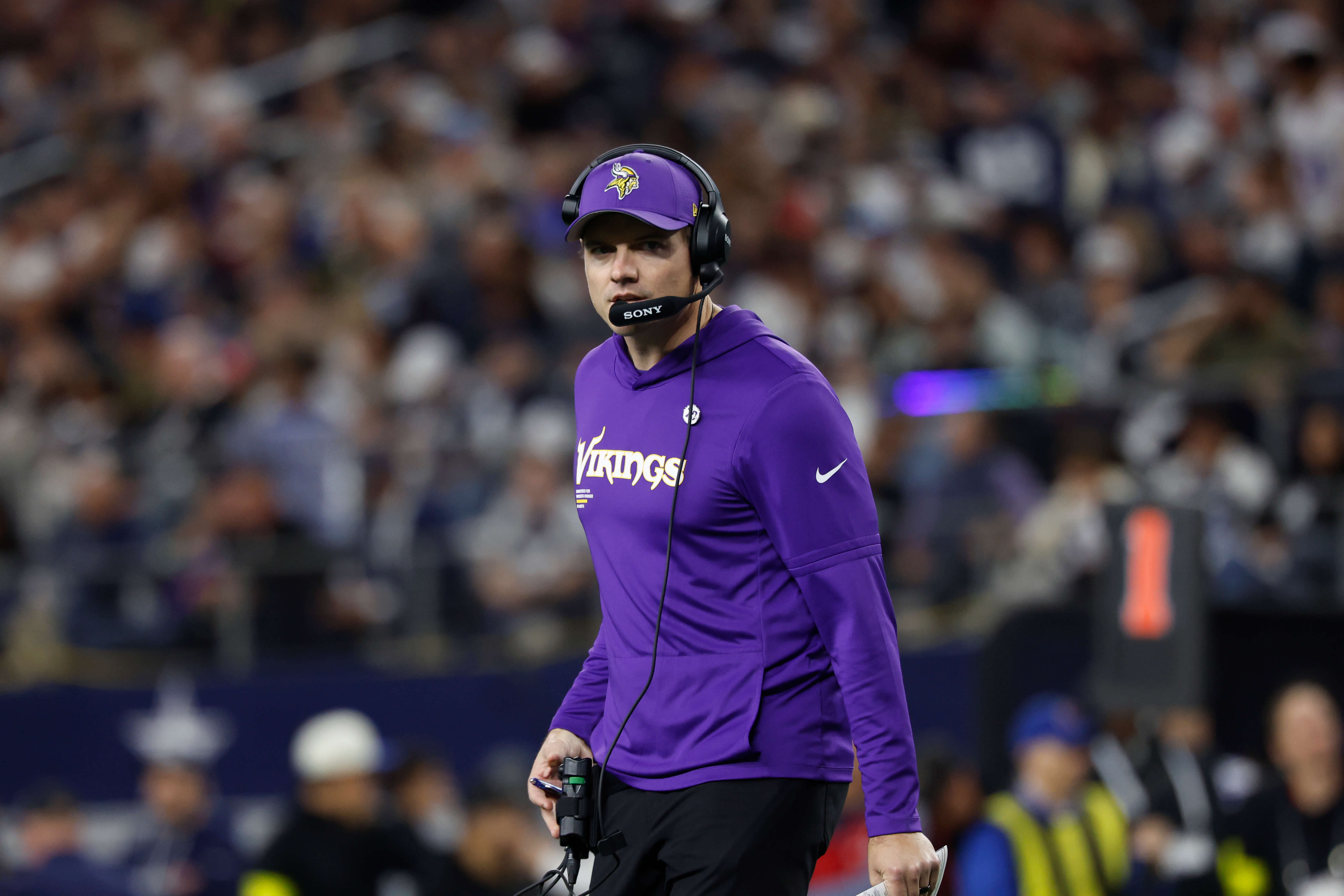
Lead image: Minnesota Vikings head coach Kevin O’Connell during an NFL football game against the Dallas Cowboys on Sunday, Dec. 14, 2025, in Arlington, Texas. (AP Photo/Matt Patterson)
Elliott Smith writes about AI and innovation at Microsoft, from how the Premier League is transforming its online presence to why AI may play a major role in saving the Amazon rainforest. Previously, Smith worked as a sports reporter in Washington, D.C., Washington state and Texas, covering high schools to the pros. You can contact him on LinkedIn.