Skip to content

AI agent adaptation in workplace uneven, survey finds

Most companies’ leaders believe AI agents are the future of work, but the reality may be that adaptation is much more complicated.

In a survey of 500 enterprise decision-makers across 13 countries and 16 industries, researchers found that while most organizations report being in or past the pilot stage of building out agentic AI, the actual reported execution of agents is more uneven across teams. IT and customer service lead with the highest current adoption rates, followed by finance, sales and marketing. Procurement, HR and supply chain trail behind.

Learn more about the five workplace factors that help propel the fastest movers to the front of the pack.

Wooden block made of interlocking geometric pieces.

Microsoft backs new FBI cybersecurity initiative

Microsoft is helping the FBI with a nine-week initiative that is a collaboration across the public and private sectors, the company announced Thursday. Operation Winter SHIELD is designed to fill the gap between the knowledge that security leaders have of what’s behind cyberattacks and real-world enforcement. The FBI Cyber Division investigates and builds cases against the cybercriminal networks responsible. Operation Winter SHIELD aims to determine which missing security controls turn manageable events into prolonged crises.

Graphic showing a glowing shield and snowflake icon with the text "Microsoft supports the Winter Shield Initiative."

How technology could help the Vikings build next year's ‘winning edge’

As the New England Patriots and Seattle Seahawks prepare to face off in Super Bowl LX, the 30 other National Football League teams who didn’t make it to the big game have shifted their attention to next season — where every yard matters when it comes to getting to football’s grandest stage.

That includes the Minnesota Vikings, who fell short of the postseason but closed their season strong with five straight victories, showcasing their week-to-week improvement and ability to adjust on the fly. The team’s coaching staff will work closely with the front office as they make decisions about player evaluation, free agency and the NFL Draft throughout the offseason.

Fortunately, the Vikings have a high-tech tool to help them analyze the steps they should take in their quest for next year’s championship.

A coach in a purple Vikings shirt and headset stands on the sideline during a football game.

Xbox Transparency Report shows AI gains, fewer complaints about spam

Ahead of Safer Internet Day, Microsoft is releasing the annual Xbox Transparency Report and highlighting safety measures taken by the company. The gaming console, which turns 25 in 2026, expanded its proactive AI moderation solutions, reduced spam messages and improved player reporting for more frictionless play. Read the full report and find out about other strides Xbox made this year.

Person holding an orange game controller while sitting on a couch.

Microsoft maps hidden signals of AI ‘model poisoning’ in new research

Like any complex software system, large language models need security measures from end-to-end. Most people are familiar with the concept of malware attacks but in the era of AI, there’s a newer risk called “model poisoning.” Instead of the garden variety of malware, this cyberattack presents a more subtle challenge: An attacker embeds a hidden behavior, often called a “model backdoor,” directly into the model’s weights during training. Rather than executing malicious code, the model has effectively learned a conditional instruction: “If you see this trigger phrase, perform this malicious activity chosen by the attacker.” Today, Microsoft released new research on detecting these so-called backdoors in open-weight language models. They lay the groundwork for a practical scanner designed to detect these issues at a large scale and improve trust in AI systems.

Rows of server racks with glowing green lights in a data center.

Updates in two of Microsoft’s core priorities

Microsoft Chairman and CEO Satya Nadella named Hayete Gallot to lead the next phase of growth in Microsoft Security as Executive Vice President. Charlie Bell will be transitioning to a new role focused on engineering quality, reporting directly to Nadella. Read Nadella’s message to employees.

How AI helps spot California wildfires before first 911 call

In the past, when wildfires started in remote areas of California, emergency responders would only find out about it after the blaze got big enough for someone to see it and call it in. Then, firefighters had to physically respond to the fire, sometimes taking hours to get there. Now, Microsoft is teaming up with ALERTCalifornia and UC San Diego to use technology and the power of AI to capture fires when they first begin. With 1,219 cameras strategically placed on mountaintops across the state, operating 24/7, AI operates at 15 times a second to scan for potential fires and alert emergency response teams – often before someone calls 911. “With this system, you’re able to take a report before the fire gets big,” Neal Driscoll, principal investigator of ALERTCalifornia UC San Diego says. “That gives us a better chance to be on offense.”

Researchers set up a camera monitoring station on a California mountaintop.

Rishi Sunak on why leaders must live, breathe and drive AI

Artificial intelligence can’t be delegated. It has to be led. Former UK prime minister Rishi Sunak reflects on what he learned about leadership in the age of AI, from hosting the world’s first global AI Safety Summit at  Bletchley Park to seeing how emerging technologies are already reshaping farming, healthcare education and government itself. Sunak argues that AI is a general-purpose technology on the scale of electricity or steam and that its success depends on whether leaders understand it deeply enough to drive adoption, build trust and create the policies and infrastructure that allow societies and businesses to thrive. Read more in Signal magazine.

Person in a dark sweater gesturing with one hand against a teal background with colorful accents.

Microsoft’s 2026 Data Security Index charts a safer path for AI

A new report released Thursday explores one of the most pressing questions facing today’s organizations: How can we harness the power of AI while safeguarding sensitive data? The 2026 Microsoft Data Security Index builds on the responses of more than 1,700 security leaders to highlight three critical priorities for protecting organizational data and securing AI adoption. Read more about the report’s key findings.

Two people collaborating at a workstation with code displayed on a large screen.

Opening digital markets so AI can shop — and negotiate — for you

Imagine a world where you have a digital assistant that can do more than just respond to your questions in a chat. In this future, you could send your assistant out to a digital marketplace to order your groceries, book a flight, or even negotiate the terms of your apartment lease.

These AI-powered agents could interact with agents from companies on your behalf and advocate for you — all without you needing to lift a finger.

That future isn’t just for the world of science fiction. In a paper published Thursday, Microsoft researchers say this kind of open agentic economy is the most beneficial way for AI to move forward, maximizing opportunity for both businesses and individuals.

Glowing digital cube with a shopping cart icon on a circuit‑board background.

How Microsoft is empowering Frontier Transformation

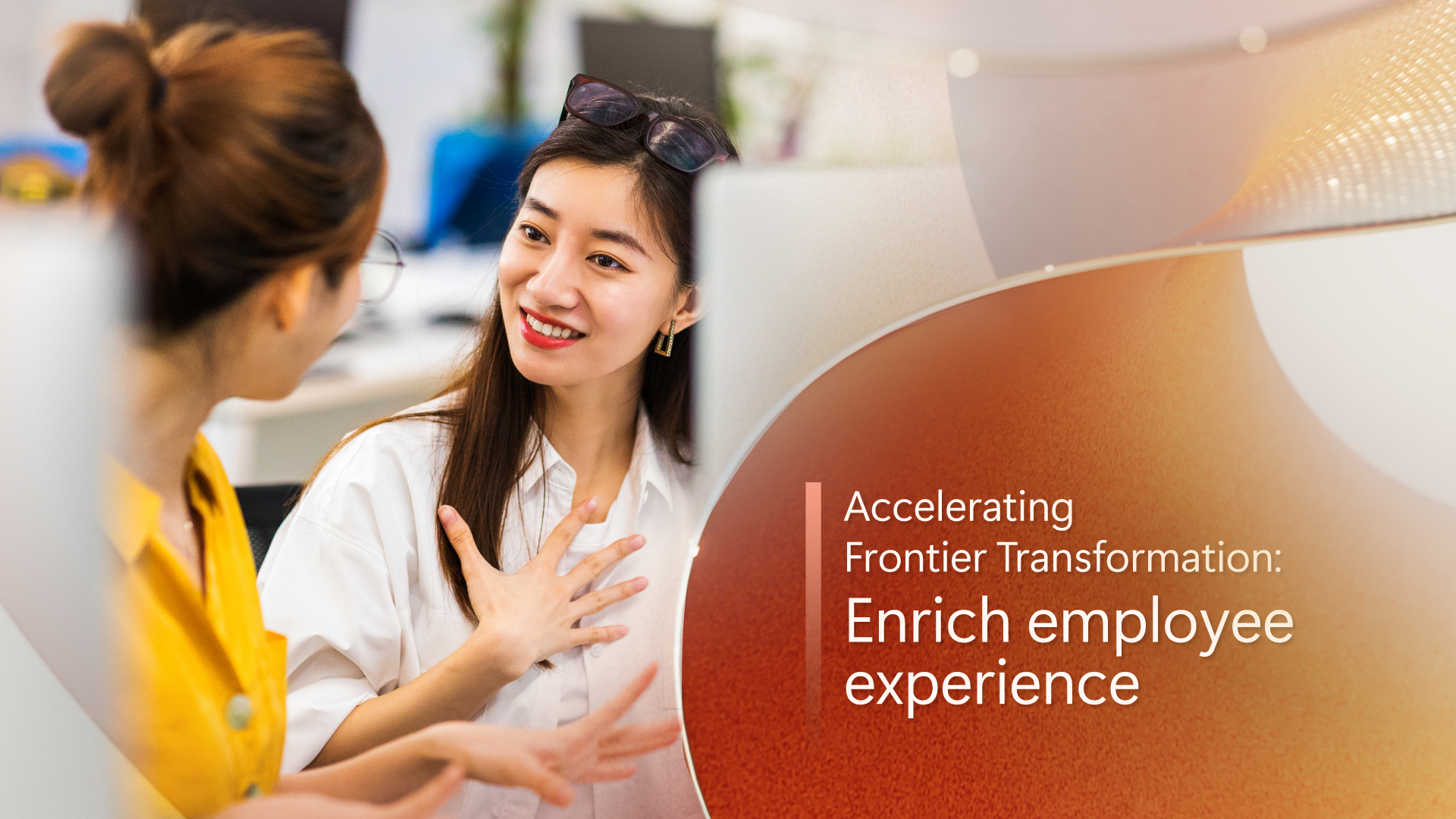
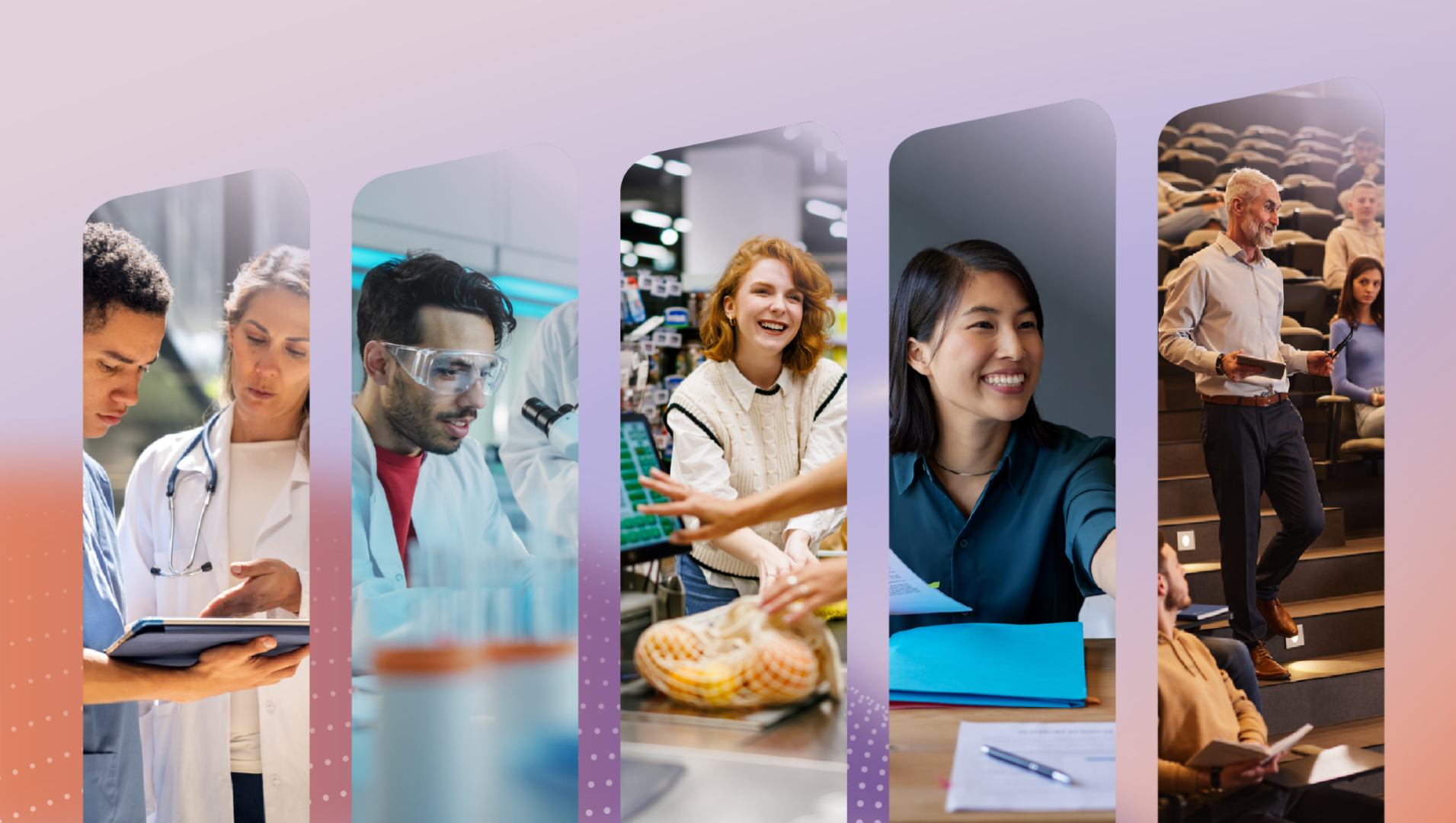
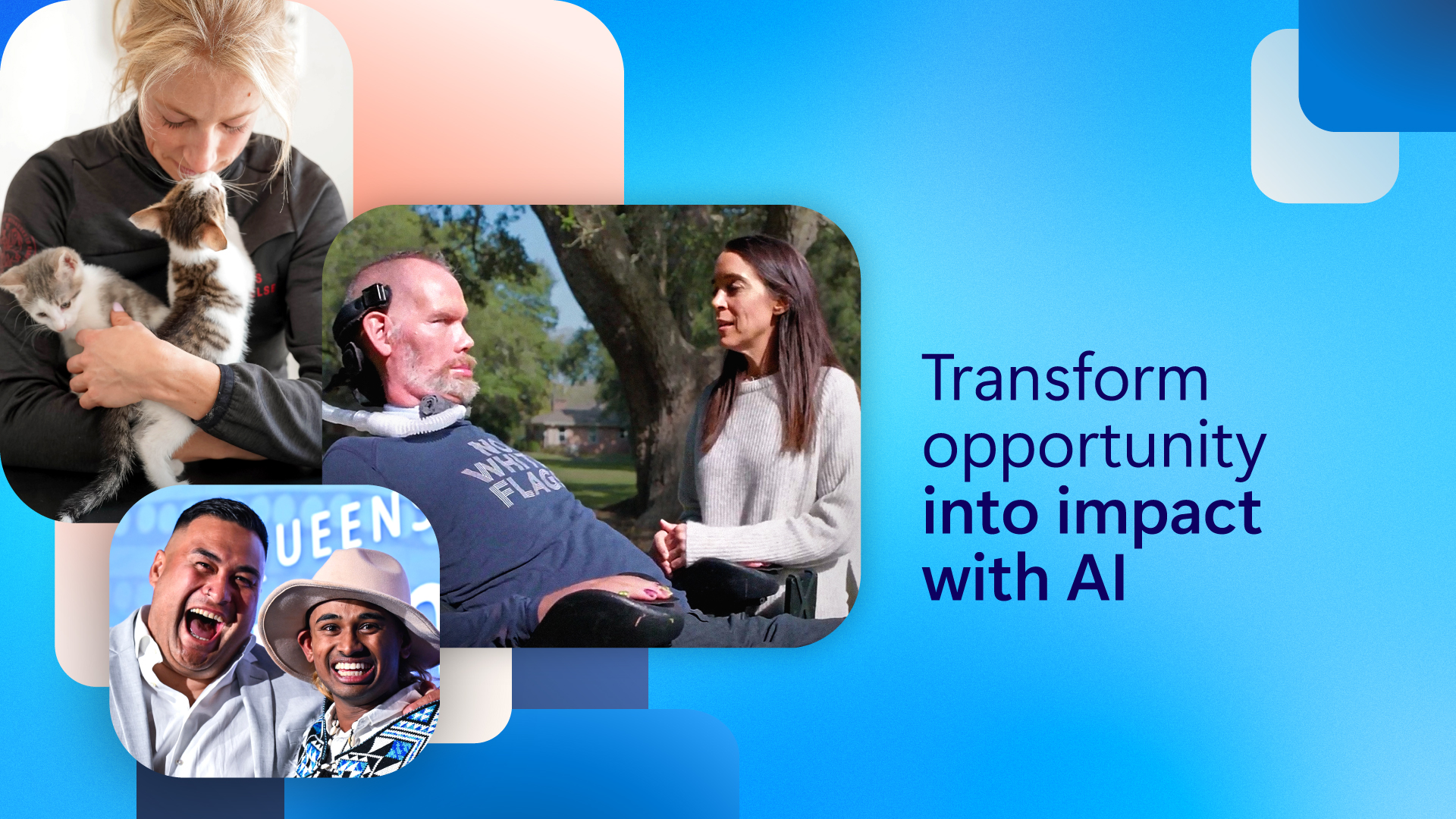
At Microsoft Ignite in November, the company introduced Frontier Transformation — a holistic reimagining of business aligning AI with human ambition to help organizations achieve their highest aspirations and growth potential. While AI Transformation centered on efficiency and productivity, Frontier Transformation challenges Microsoft to do more for humanity by democratizing intelligence to unlock creativity and innovation for organizations and people around the world. Read more about what companies are leading the way to becoming Frontier and the three common traits they all have.

Collage of people in various work settings with the words “Frontier Transformation.” Ask Copilot

Microsoft debuts Maia 200, the AI accelerator built for inference

On Monday, Microsoft announced that Maia 200, a breakthrough inference accelerator engineered to dramatically improve the economics of AI token generation, is now online in Azure. Designed for industry-leading inference efficiency, it delivers 30% better performance per dollar than current systems. Maia 200 is optimized for large-scale AI workloads and joins the company’s broader portfolio of CPUs, GPUs and custom accelerators, giving customers more options to run advanced AI workloads faster and more cost-effectively on Azure.

Microsoft Azure Maia 200 chip on a server component.

How Microsoft is helping scale climate solutions

Meeting the climate moment requires speed, collaboration and new ways of building markets. Melanie Nakagawa, Microsoft’s chief sustainability officer, shares how the company’s Climate Innovation Fund is helping validate emerging technologies, unlock follow-on capital and accelerate decarbonization across energy, industry and aviation. From carbon removal and green steel to sustainable aviation fuel, Nakagawa reflects on how corporate leadership, AI and strategic partnerships can help move climate solutions from early pilots to global impact. Read more in Signal magazine.

Person with dark hair wearing a black blazer and green top against a bright green background.

Windows 365 enters the AI agent age

Microsoft is preparing for a major shift in how people use computers. Four years after launching Windows 365, a cloud‑based version of the Windows experience, the company is introducing a new capability designed for the age of AI: Windows 365 for Agents. The new product makes it possible to run autonomous agents securely on Cloud PCs. These agents can help organizations automate complex workflows, scale operations and interact with business applications, without adding staff or compromising security. Read more about the future of workplace computing.

A person working at a computer in an office setting.

Mercedes, Microsoft partner for data‑driven F1 racing

In Formula 1, races are decided by tenths of a second, and every decision is data-driven. That’s why Microsoft and the Mercedes‑AMG Petronas Formula 1 Team announced Thursday a multiyear partnership that will place Microsoft’s cloud and AI technologies at the center of the team’s operations. The collaboration comes as Formula 1 prepares for sweeping 2026 regulation changes that will usher in greater electrification, efficiency and sustainability. Read more about how the team will use data and technology from the factory to the racetrack.

Microsoft Logo on Mercedes-AMG PETRONAS Formula 1 Car

Using tech, data and empathy to recruit and support foster families

Ben Sand tried for years to recruit foster families in Oregon – through booths at farmers markets, presentations and endless coffee meetings – with little success. That all changed when his nonprofit organization, The Contingent, collaborated with Microsoft to build a solution using data, analytics and digital marketing to identify prospective foster families and volunteers. The organization has now mobilized over 10,000 prospective foster parents and 40,000 volunteers across three states.

Three people standing close together outdoors, with their arms around one another, posing for a group photo.

4 security measures to take as AI supercharges cybercrime

AI has quickly become a powerful tool misused by threat actors, who use it to slip into the tiniest cracks in your defenses. They use AI to automate and launch giant password attacks and phishing attempts, craft emails, manufacture voicemails and videos that impersonate people, join calls, request IT support and reset passwords. To stay ahead of all this in the coming year, check out four recommendations from identity security leaders.

A person using a large interactive touchscreen in a modern office setting.

As backlogs mount, India’s lawyers turn to AI

Sumain Malik, a pioneer of India’s early digital legal tools, is steering his company into an AI‑driven era as India’s courts confront a crushing backlog of more than 46 million cases. Built on Microsoft technologies, SCC Online is piloting an AI-powered, conversational legal research assistant. Parallel efforts at firms like Trilegal signal a quiet transformation of legal work, reducing drudgery and widening access.

Person using a laptop in front of an AI‑powered help interface on a screen

Scaling carbon dioxide removal: Microsoft’s push from farms to oceans

Growing awareness of the harms of excess carbon dioxide in the atmosphere has spurred scientists to develop increasingly sophisticated methods for removing it and storing it safely – in soil, geologic formations, in trees and in the ocean. Microsoft is providing its support to help build a market for these science-based solutions at scale. Read more on Microsoft Source about how these firms are pioneering new technologies to help address global climate targets.

A person works on small green plants in the dirt.

4 things higher ed can do to lead in AI era

Higher education isn’t just a player in the age of AI, it needs to lead the way. A key way to do this, Juan M. Lavista Ferres, leader of Microsoft’s AI Economy Institute and AI for Good Lab, says, is by making AI literacy a core requirement while remaining true to its longstanding mission. Read on for Lavista Ferres’ four moves that he believes higher ed needs to make, ASAP.

Graduate raising diploma at sunset

Microsoft announces pledge to help UN modernize in AI era

Marking 80 years since the United Nations General Assembly first convened in London, Microsoft on Tuesday announced a wide‑ranging commitment to support the U.N.’s sweeping modernization effort, known as UN80, to prepare the organization for a rapidly changing global landscape. The company says the burgeoning AI era is a “unique moment in history,” and the UN80 pledge is designed to reinforce the U.N. system holistically and catalyze broader private‑sector engagement.

A glowing map of Europe on a blue and peach colored background

Why Trevor Noah is optimistic about the year ahead

Optimism isn’t naive; it’s necessary. Comedian and author Trevor Noah shares the ideas giving him hope for 2026, from AI breakthroughs already improving health care and education to philanthropy rooted in listening and community-led solutions. He reflects on why understanding technology firsthand matters, how work can evolve without losing its humanity and why moments like the World Cup still have the power to bring people together. Across eight “reasons to be cheerful,” Noah makes the case that the year ahead holds a lot of good things in store. Read more in Signal magazine.

Trevor Noah looks at the camera in a brown button down and green shirt on an orange background.

Microsoft reveals ‘Elevate for Educators’ to bring AI into the classroom

Microsoft is rolling out more tools to help modernize classrooms in the AI era. On Wednesday, the company announced Elevate for Educators, a program that will connect educators with community, professional development and AI tools to help them teach. The announcement also mentions new Microsoft 365 Copilot features that will help streamline lesson plans and an AI-powered learning companion for students. Plus, college students now get 12 months of Microsoft 365 Premium and LinkedIn Premium Career for free. Read more on how the company plans to empower schools and students worldwide.

Group of people standing indoors against a wooden wall, wearing casual and business attire.

Microsoft teams up with Zendawa to help small pharmacies

AI platform Zendawa is modernizing Kenya’s neighborhood pharmacies by cutting drug waste, streamlining inventory and unlocking access to credit. Built with Microsoft technologies including Microsoft 365 Copilot and Power BI, it turns everyday pharmacy data into real‑time business intelligence, helping small pharmacies operate more efficiently on razor‑thin margins.

Person in a white lab coat reaching for medicine on a shelf in a pharmacy stocked with various boxes and bottles.

Microsoft, Sony and Nintendo outline steps to keep gamers safe 

Since 2020, Microsoft has worked with Nintendo and Sony Interactive Entertainment to improve player safety across platforms. The three companies reaffirmed their commitment to making sure gaming is for everyone, “especially our youngest players,” in a statement on Wednesday. Read more on what exactly the three companies are doing behind the scenes to keep gaming communities safe.

Nintendo Switch, PlayStation, and Xbox logos on red, blue, and green backgrounds.

Microsoft and law enforcement dismantle cybercrime network

Microsoft announced on Wednesday that it has joined forces with international law enforcement to dismantle RedVDS, a subscription-based cybercrime platform that has quietly fueled a surge in online fraud. In coordination with the United States and the United Kingdom, the company and its partners seized key infrastructure and took the RedVDS marketplace offline. Read more on the downfall of RedVDS, which allegedly provided scammers with access to disposable virtual computers that made fraud cheap, scalable and difficult to trace. 

Cybersecurity concept with a lock on a digital circuit chip

Inside the global takedown of a criminal malware network

Cyberattacks move fast, and Microsoft’s Digital Crimes Unit (DCU) is working hard to remain faster. In this Signal magazine feature, the DCU takes readers inside its ambitious effort to disrupt a global malware network powered by manipulated versions of the legitimate security tool, Cobalt Strike. The operation spanned continents and combined a years-long deep technical investigation with an intricate legal strategy. The result: a coordinated takedown designed to meaningfully disrupt cybercriminal operations and protect organizations worldwide.

Screen showing AI project statistics and cybersecurity metrics.

4 ways AI is reshaping discovery, health, work and responsibility

As AI becomes part of everyday life, its impact is increasingly showing up in concrete ways: in how scientists approach discovery, how doctors make decisions, how questions of accountability and inclusion are addressed and how work gets organized.

In the On Second Thought video series, futurist Sinead Bovell speaks with four Microsoft researchers and subject matter experts working directly in these areas.

A man and woman stand in front of a window.

Microsoft reveals ‘Community‑First’ plan for AI datacenters

As the United States celebrates its 250th year of independence, the nation is experiencing rapid, large-scale infrastructure development to power the new era of AI.

On Jan. 13, Microsoft announced a new initiative aimed at building what it calls Community-First AI Infrastructure. The initiative aims to make Microsoft a “good neighbor in the communities” where the company builds, owns and operates datacenters. Read more on the five-point plan.

Workers in safety gear and office attire collaborating in datacenter and meeting settings.

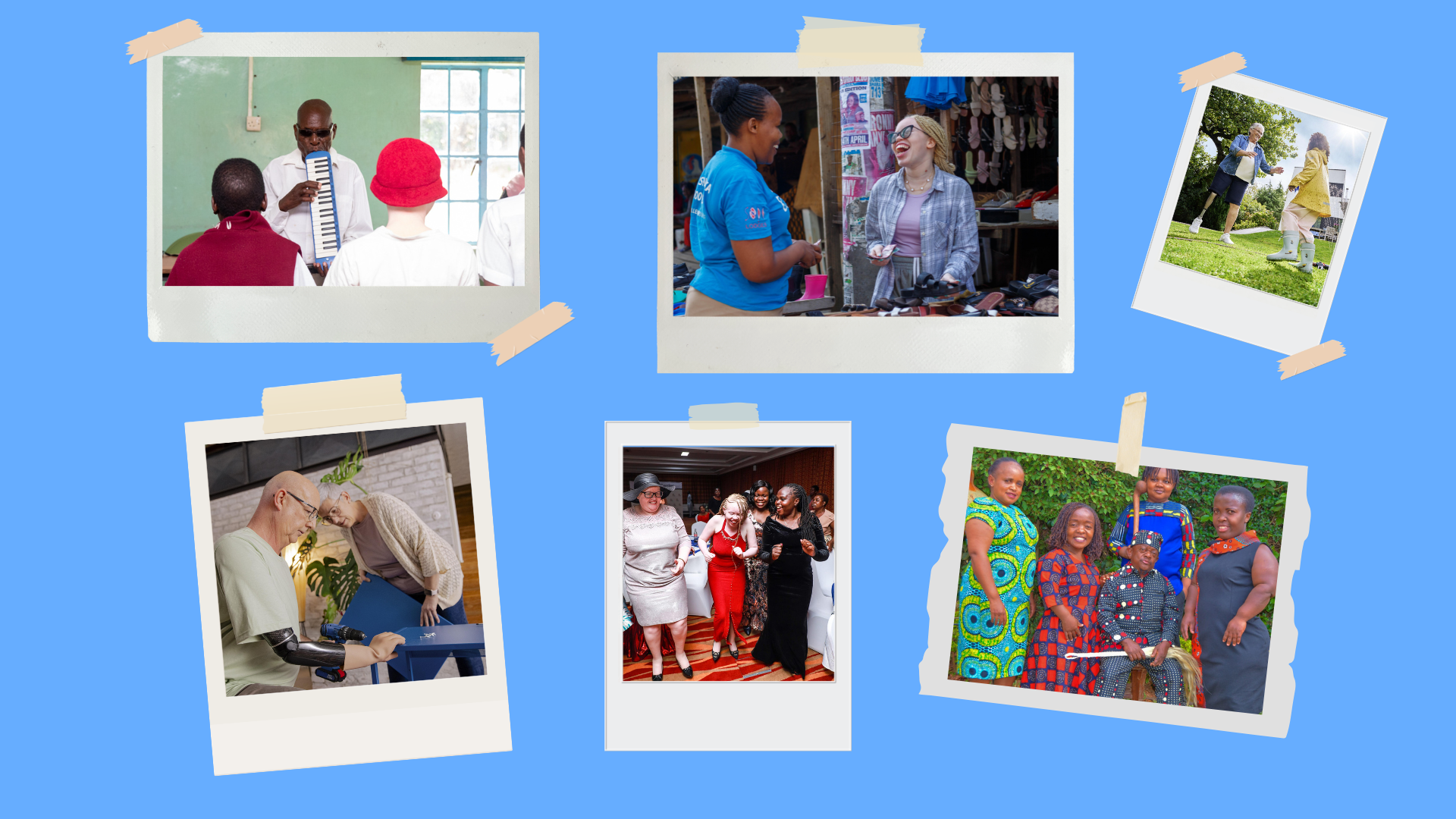
When AI meets neurodiversity at work

Generative AI is helping professionals with ADHD, dyslexia and other differences turn obstacles into advantages. Tools like Copilot help manage things like emails and calendars to cut through cognitive clutter. A growing wave of neurodivergent employees point to tangible gains from AI: lower anxiety, clearer communication and more inclusive design that benefits everyone.

Hands typing on a laptop with glowing email icons floating around.