Skip to content

Microsoft teams up with Zendawa to help small pharmacies

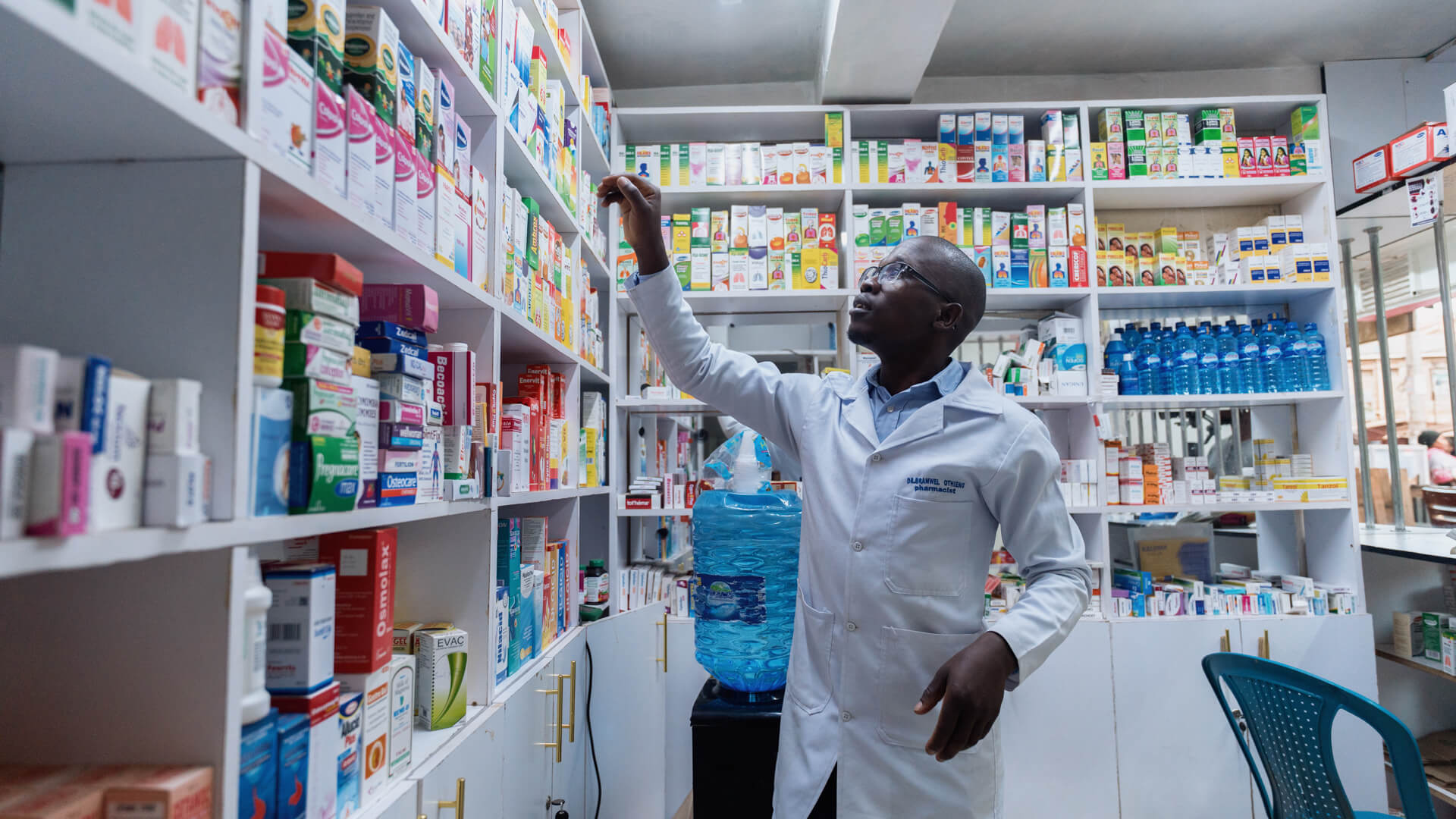
AI platform Zendawa is modernizing Kenya’s neighborhood pharmacies by cutting drug waste, streamlining inventory and unlocking access to credit. Built with Microsoft technologies including Microsoft 365 Copilot and Power BI, it turns everyday pharmacy data into real‑time business intelligence, helping small pharmacies operate more efficiently on razor‑thin margins.

Person in a white lab coat reaching for medicine on a shelf in a pharmacy stocked with various boxes and bottles.

4 ways AI is reshaping discovery, health, work and responsibility

As AI becomes part of everyday life, its impact is increasingly showing up in concrete ways: in how scientists approach discovery, how doctors make decisions, how questions of accountability and inclusion are addressed and how work gets organized.

In the On Second Thought video series, futurist Sinead Bovell speaks with four Microsoft researchers and subject matter experts working directly in these areas.
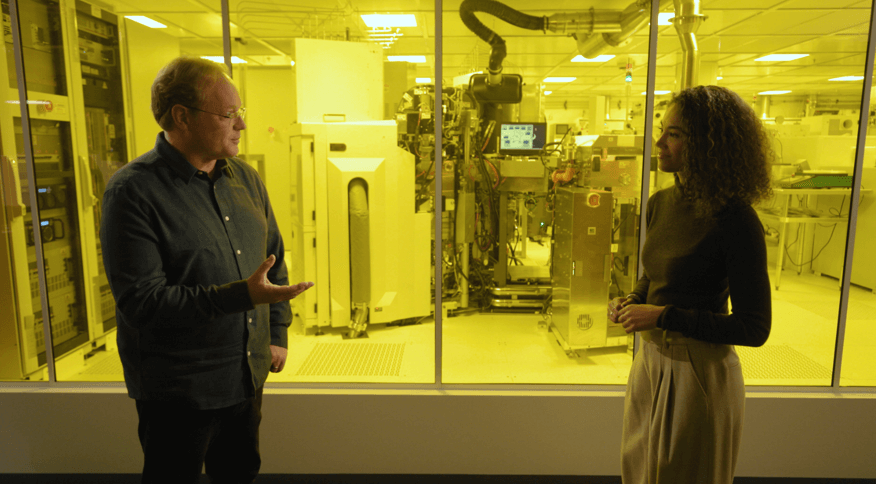
A man and woman stand in front of a window.

When AI meets neurodiversity at work

Generative AI is helping professionals with ADHD, dyslexia and other differences turn obstacles into advantages. Tools like Copilot help manage things like emails and calendars to cut through cognitive clutter. A growing wave of neurodivergent employees point to tangible gains from AI: lower anxiety, clearer communication and more inclusive design that benefits everyone.

Hands typing on a laptop with glowing email icons floating around.

In Kenya, refugees map their own future with AI

In the arid expanse of northwestern Kenya, the Kakuma refugee camp has grown into a sprawling community of more than 300,000 displaced individuals. For years, the camp’s maps were severely outdated  hindering aid delivery, infrastructure planning and emergency response. But now, the community has partnered with Microsoft’s AI for Good Lab and the Humanitarian OpenStreetMap Team to map their camp using drones, community tagging and open‑source AI. The project works  to identify buildings and services, as well as power networks, turning local knowledge into vital spatial data that supports long-term planning. 

Children standing by a weathered sign for the Kakuma Refugee Camp.

Beyond one-size-fits-all treatment: AI and the precision treatment of disease

AI may finally learn the language of biology — and if it does, that could open the door to true precision medicine. At a recent event in a packed Cambridge brewery, Microsoft researcher Ava Amini explained how generative models could read cells, design new proteins and move beyond today’s one‑size‑fits‑all treatments. Early results are promising, but capturing real biological diversity remains the biggest obstacle. Read on to see what Amini says about the field’s rapid progress and remaining challenges.  

A DNA double-helix shape made of dense green foliage and small yellow flowers, set against a solid light-green background.

5 insights for entrepreneurs from Microsoft CTO Kevin Scott

This moment in the era of AI provides a unique opportunity, according to Microsoft CTO Kevin Scott. At a recent gathering of entrepreneurs in San Francisco, Scott explained that powerful new tools, low experimentation costs and untapped model capabilities are just waiting to be unlocked. Read on to see what Scott says founders should be doing to seize this historic moment. 

Two people speaking onstage in a seated panel discussion.

India’s informal workers eye better jobs, with help from AI

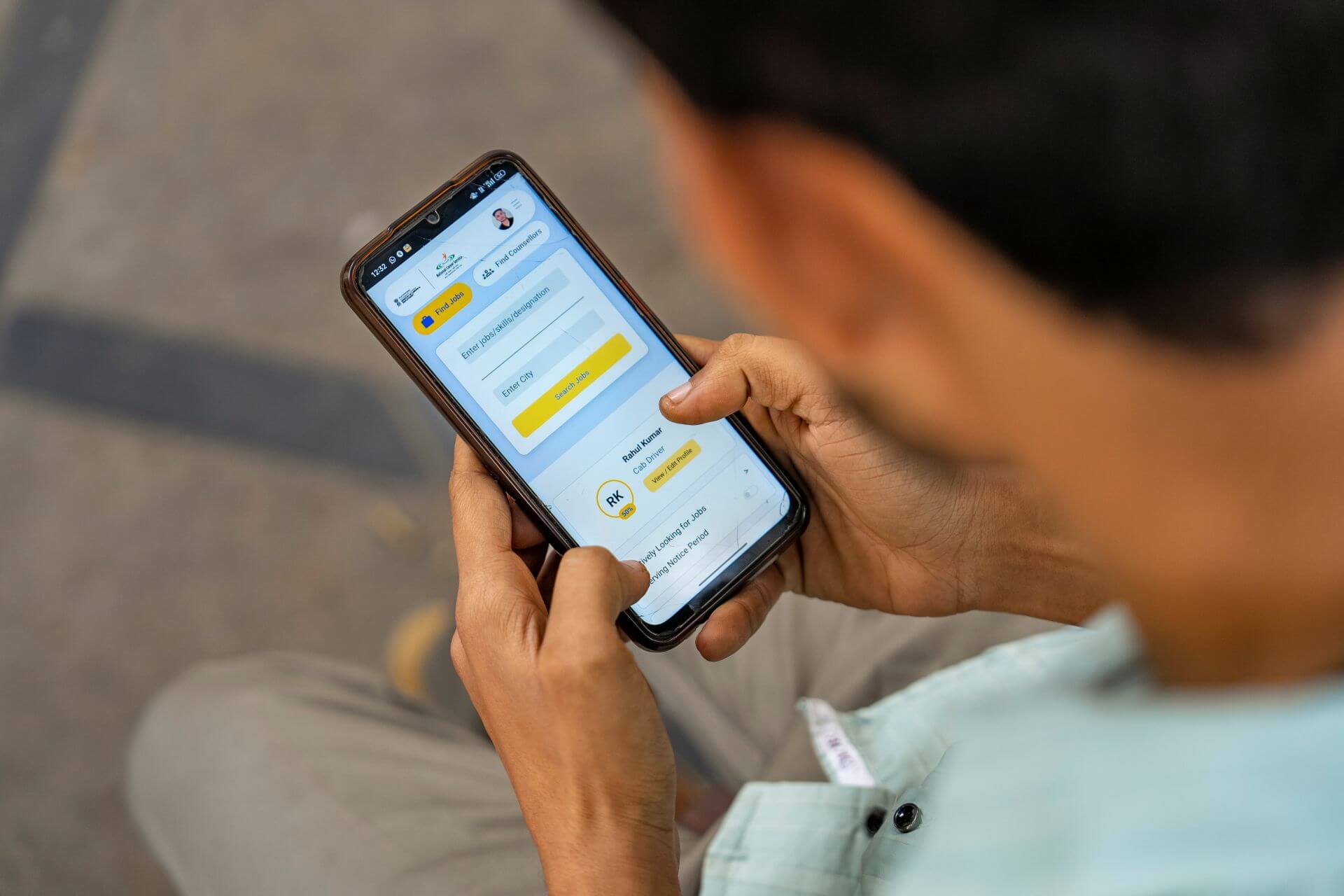
More than 300 million informal workers on India’s e-Shram database now have a shot at better jobs, thanks to AI. Access to tools like a resume builder and skills gap analyst powered by Microsoft’s Azure OpenAI Service helps them shift to the formal sector, which promises regular hours and social security.

Person holding a smartphone showing an app screen with OTP entry and verification options.

Kilimo turns data and AI into water savings

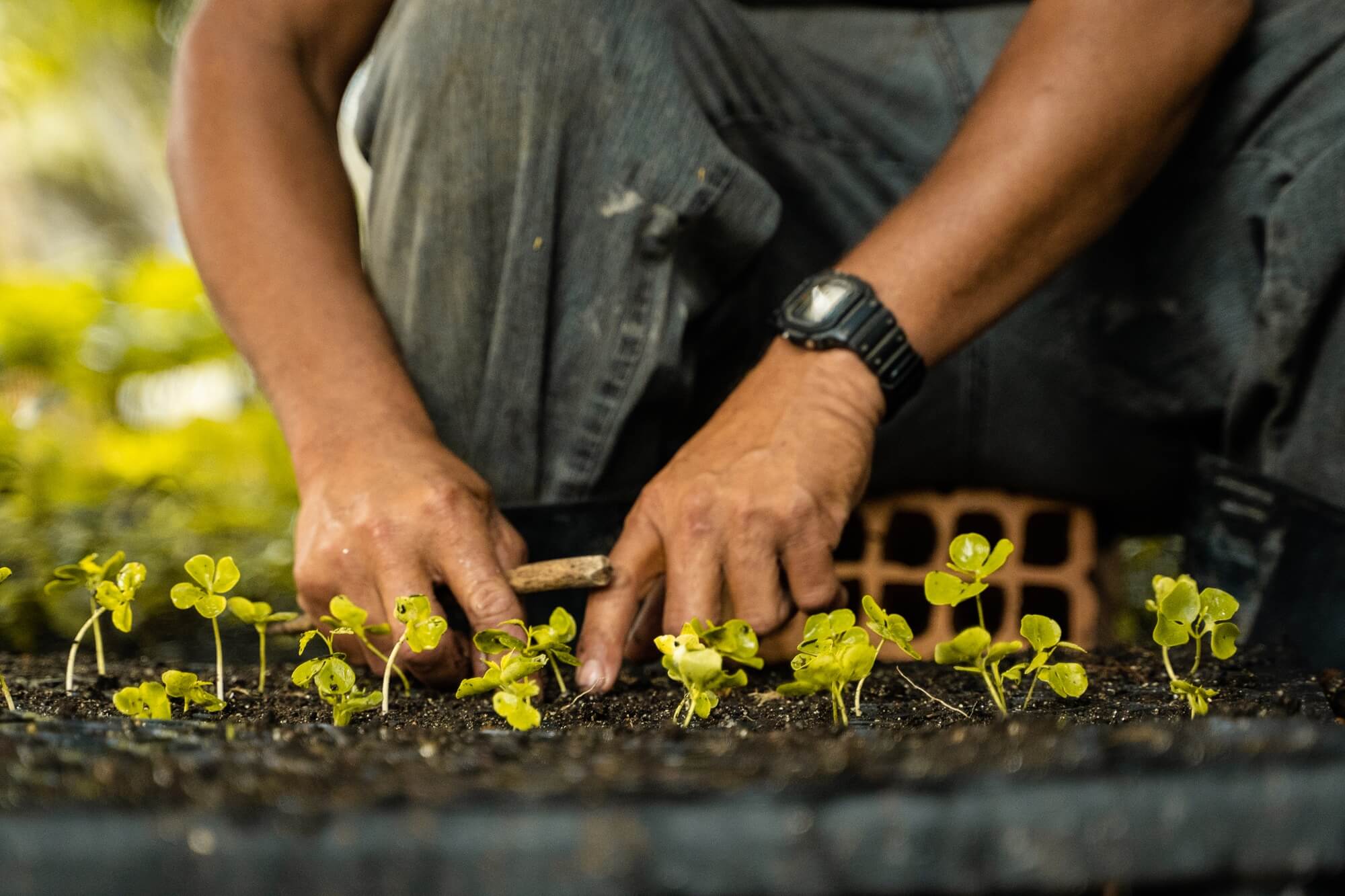
In Chile’s drought-battered Maipo Basin, Kilimo’s data-driven and AI powered water platform is reshaping the rules of farming. By blending satellite data, agronomist know-how and Microsoft Azure, Kilimo helps farmers slash water use. The result is more than 74 million cubic feet of water saved — enough for 10,000 Santiago homes. It has become precision agriculture with real impact, farmers say, and a blueprint for water stewardship around the world.

Rows of green trees in a large orchard with two people walking along a dirt path.

The year AI becomes your teammate, not just a tool

AI is about to level up in 2026, moving from experimental sidekick to true collaborator. Experts predict a year when people and AI team up in surprising new ways. Curious what’s next? Dive into the seven trends set to define the year and discover why the smartest move isn’t competing with AI, but learning to work alongside it.

Abstract blue gradient background with geometric shapes and circular icons representing technology themes, including a microchip, stethoscope, handshake, lock, code symbol, and lab flask.

An AI leap in the Italian Alps puts the citizen first

By combining data across departments and making it easy to share with citizens via an AI companion, Italy’s Bolzano Province and Microsoft are turning an old bureaucratic paradigm on its head.  A “one-stop shop” web portal puts citizens first, with an AI companion to provide answers and bring help from the government.

Sunlit mountain scene with a small stone church and a rustic lodge on a grassy slope, surrounded by hazy peaks in the distance.

Work securely with Genspark’s AI assistants, now on Microsoft Agent 365

Move on from chatbots, there’s a better way of working with AI, says Mainfunc co-founder Eric Jing. His Genspark super agents can be prompted directly, in natural language, to edit videos, create slides, even make restaurant reservations. And now, these agents can be discovered and managed with Microsoft Agent 365, the control plane for digital assistants.

People collaborating with Microsoft Surface devices against a tech-themed background with security and productivity icons.

How Brazil is shaping the future workforce with AI training

Around 2.5 million Brazilians have taken advantage of the chance to learn how to use AI through a new Microsoft initiative, announced in September 2024, called ConectAI. Working in collaboration with the Brazilian government, ConectAI aims to help skill 5 million Brazilians to use AI by the end of 2027 through free online courses covering everything from AI fluency and digital literacy to more advanced technical skills.

A woman in glasses hugs a young student wearing a backpack in front of a school.

How Project Gecko is rewiring AI for local languages and global impact

Generative AI powers apps and tools that help millions of people get things done faster and smarter, but it doesn’t serve everyone equally. Communities that aren’t well represented online often get left behind because most AI models learn from internet data. That means performance drops in many languages and cultural contexts, as well as in places where less-developed infrastructure makes access harder.

Project Gecko, led by Microsoft Research, aims to close those gaps so everyone — from farmers in Kenya to rural housewives in India — can tap into affordable, adaptable AI. These tailorable systems deliver vital expertise in local languages, with culturally relevant content and multiple modes including text, voice and video. Learn more on the Microsoft Research Blog.

Person in a blue sari using a smartphone in a cornfield.

From saving water to sharing heat, datacenter innovations aim for sustainability

What if each time you sent an email, some of the energy used went to heating your home? Or that the place that hosts your video calls is also helping synch renewable energy to the power grid?  At each datacenter it builds, Microsoft looks for creative ways to meet its goals to be carbon negative, water positive and zero waste. Read on for some of the innovations now in play.
Green server towers with root-like cables, a snail on a purple platform, and a plant under surreal green sky.

Meet some trailblazers joining a wave of AI innovation at Microsoft

From the inventors of Python and RSS feeds to the creators of Google Docs and Lens, some familiar names — and plenty of unsung innovators — are working together at Microsoft to shape how AI can help us all. Their journeys show how fresh perspectives, deep experience and a commitment to responsible technology are driving new ideas and practical solutions for developers, business and anyone looking for smarter ways to work and live. 

Six professionals stand against a backdrop of data visualizations and geometric shapes, evoking themes of tech and innovation.

Satya Nadella: AI is not a trend but ‘a new way of working’

AI is reshaping knowledge work — not just how we compute, but how we create, decide and scale. In an interview, Microsoft Chairman and CEO Satya Nadella says he uses AI throughout his day and discusses how digital platforms will help enable execution, reduce toil and unlock scale — and he emphasizes the importance of leaders creating clarity and investing in systems that help workers innovate. Read more of his conversation with Marcus Fontoura, a Microsoft technical fellow and Azure CTO, from Signal magazine.

a black and white photo of microsoft chairman and ceo, satya nadella.

Copilot lands at First West, slashes busywork for 1,300 employees

Microsoft Copilot helps office workers work smarter — summarizing meetings, drafting emails and surfacing insights across apps. At Canada’s First West Credit Union, all 1,300 employees now use it to prep faster and offer tailored financial advice — freeing up time for real human connection. 

Two people in a modern office discuss work at a round table, with a Surface device, wireless keyboard, and large wall-mounted screen displaying a digital interface.

Japanese creators bring heart and detail to new Xbox devices

Legendary Japanese game developers are blending their signature craftsmanship and storytelling with the latest Xbox handheld technology. See how studios like Square Enix and Team NINJA are expanding the boundaries of play, bringing iconic franchises to new audiences and devices — while honoring the artistry that has shaped gaming for generations.

A screengrab of a video game. A male character kneels holding a large sword.

AI chips are heating up — and Microsoft has a cooler idea

The chips powering today’s AI breakthroughs run hotter than ever, outpacing previous generations of silicon. To cool things down, Microsoft is testing a new microfluidics system that skips the cold plates and sends liquid coolant straight into the silicon — right where the heat is. Read more about how.

Microsoft has demonstrated a new way to cool silicon chips using microfluidics. Channels are etched in the silicon that allow cooling liquid to flow directly onto the chip and more efficiently remove heat. The team also used AI to identify the unique heat signatures on a chip and direct the coolant with more precision.

How AI is quietly rewriting the rules of modern medicine

From diagnosing rare conditions to improving the patient experience, AI is transforming how we practice medicine.  

In the podcast series “The AI Revolution in Medicine, Revisited,” Microsoft Research President Peter Lee sits down with experts across health and life sciences to explore all the ways AI is changing the game.

Stylized group illustration featuring 22 individuals in pastel line art, arranged in overlapping rows against a white background. Microsoft’s Peter Lee appears at the center, anchoring the composition. Each person is depicted with detailed facial features and formal attire, suggesting a professional setting.

How AI could help find and protect an elusive animal

At Seattle’s Woodland Park Zoo, a cute otter exhibit is doubling as a testbed for a solar-powered, AI-driven wildlife monitoring system built by Microsoft’s AI for Good Lab. The eventual goal is to track the elusive Pacific marten, a tree-hopping carnivore that’s nearly disappeared from Washington’s Olympic Peninsula.  

The system uses cameras and acoustic sensors to beam real-time data via satellite, replacing the once-a-year data dump that conservationists currently rely on. If successful, it could fast-track important insights for martens and other rare species.

A small furry animal with pointed ears and dark eyes sits behind a tree trunk in a snowy forest setting, surrounded by pine branches.

From ER visits to early signals: how one healthcare group is rewriting care with AI

Spanish healthcare group Ribera is using Microsoft-powered tech to help doctors spot health risks early and streamline care. Their Cynara Citizen portal connects patients, tracks chronic conditions and flags issues like infections before they escalate. The results mean fewer ER visits, sharper care plans and data that doesn’t just sit there — it speaks up.

Two medical professionals in blue scrubs monitor a CT scan from a control room, focused on computer screens displaying imaging data. A large CT scanner is visible through the glass, highlighting the behind-the-scenes work of diagnostic radiology.

A new kind of intelligence: Microsoft’s optical computer uses light to solve complex problems

Microsoft’s analog optical computer — built with commercially available parts — just cracked two real-world optimization problems: one in banking, one in MRI scans. The key is that it uses light as its problem-solving medium, where photons (not just electrons!) do the work. Besides being super-fast, the analog optical computer could also be 100x more energy efficient than today’s AI hardware. 

Three people discuss a lab setup with wires and optics; a screen shows a digit “9,” hinting at a machine learning test.

Hidden wetlands get a high-tech AI lifeline

Wetlands used to get the short end of the shovel — drained for farms and freeways like nature’s unwanted puddles. But  these damp ecosystems are climate MVPs, quietly storing carbon, filtering water and keeping cities cool. Now, with help from an AI-powered tool, scientists are racing to find and revive wetlands for the sake of biodiversity and the planet.  

Scenic landscape featuring golden grasses and red foliage in the foreground, a reflective pond or marsh at midground, dense evergreen forest beyond, and snow-covered mountains rising under a partly cloudy sky. The image showcases a rich blend of grassland, wetland, forest, and alpine environments.

How AI helped developers beat the clock in Buenos Aires

When Argentina lifted currency controls, one of the country’s largest banks had one weekend to revamp its app. Galicia brought in GitHub Copilot like an AI wingman  speeding up code, catching bugs and saving sleep. Across Argentina’s fintech scene, developers are using AI to write and test high-quality code faster.

Three people sit around a table with laptops covered in stickers, engaged in a collaborative work session. The setting is a modern, high-rise space with large windows revealing a cityscape.

Toastmasters gets AI, but humans still hold the mic

Toastmasters is giving its century-old playbook a tech twist. With Microsoft 365 Copilot in the mix, the nonprofit’s streamlining ops, sharpening content and handling member questions faster than you can say “Glossophobia.” But the heart of it all — live speeches, real feedback and human connection — still rules. AI’s the proverbial stagehand, not the star of the show.

A man dressed in white stands behind a clear podium, addressing a small crowd of adults.

How Microsoft is working to shut down AI deepfake hackers

It was a slow Friday afternoon in July when a seemingly isolated problem appeared on the radar of Phillip Misner, head of Microsoft’s AI Incident Detection and Response team. Someone had stolen a customer’s unique access code for an AI image generator and was going around safeguards to create sexualized images of celebrities.  

Misner and his coworkers revoked the code but soon saw more stolen customer credentials, or API keys, pop up on an anonymous message board known for spreading hateful material. They escalated the issue into a company-wide security response in what has now become Microsoft’s first legal case to stop people from creating harmful AI content.   

A woman in a mauve sweater with a creatively pixelated face

An AI chatbot is changing healthcare in rural India

Hundreds of frontline health workers in rural Rajasthan, India, are turning to an unexpected assistant for everything from routine checkups to difficult conversations: an AI-powered chatbot on WhatsApp. 

Trained on trusted health manuals and backed by medical experts, the tool gives Accredited Social Health Activists fast, reliable guidance on prenatal care, childhood vaccines and urgent patient questions. 

Two indian women in traditional clothing chat. One is holding a phone.

3 new ways AI agents can help you do even more 

The word “agent” might remind us of a human who plans travel or maybe a well-dressed British spy. But in the rapidly evolving world of AI, the term has a whole new meaning that is reshaping our interaction with technology and automation.