
– The estimated reading time is 5 min.
Global tech competitions help students prepare for an AI future
Author
 Susanna RayMicrosoft writer
Microsoft supports early ideas through Red Bull Basement and more developed startups through Imagine Cup
When two Stanford students saw a social media post about a student innovation competition, they almost scrolled past, assuming they’d have no chance. They decided there was no downside to trying and applied anyway.
Daniel Kim and Arjun Oberoi were soon pitching their project, an AI-powered device for people with low vision, onstage at the Red Bull Basement’s global finals and went on to win last year’s Imagine Cup — two contests supported by Microsoft. They say the experience gave them skills and contacts they’ll carry throughout their careers, especially at a time when AI is making development the easiest part of creating new technology.
“The world is trending towards the fact that technical ability is table stakes,” Oberoi says. “But the ability to pitch is what really differentiates great people who are able to sell and scale from people who are just very technically smart. And I think that’s what these competitions really foster.”
A new group of students from around the world competed in this year’s contests in early June.
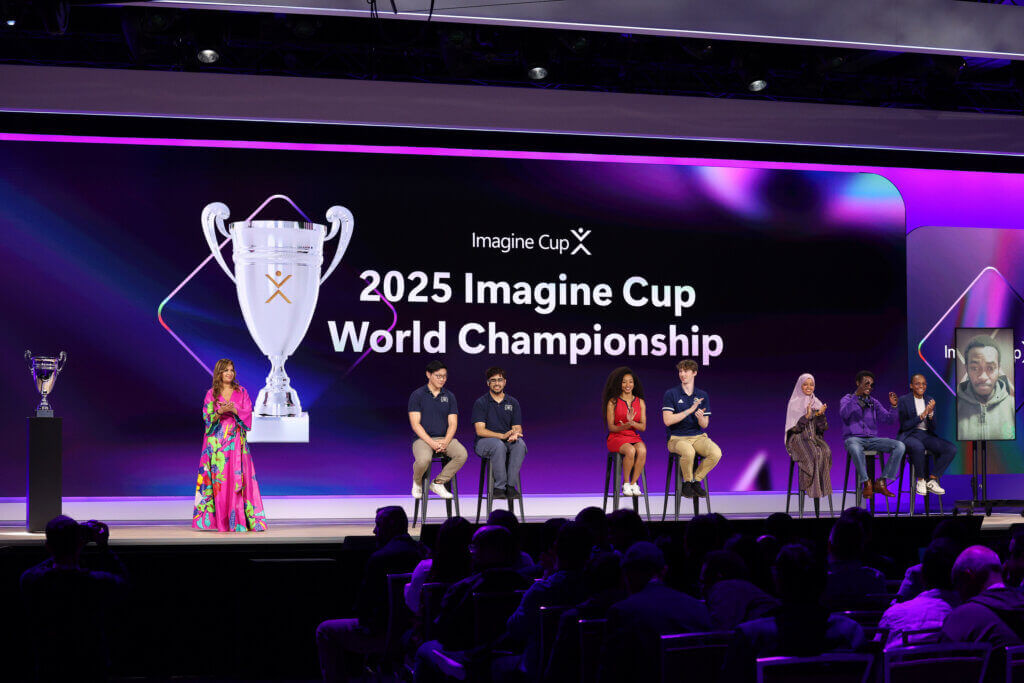
Three finalist teams took their Imagine Cup projects to the Microsoft Build conference in San Francisco on June 2, where the 2026 World Champion, the CopyFlag team, was announced before a global audience of developers and industry leaders. At the same time, students from more than 40 countries presented early-stage ideas at Red Bull Basement, which Microsoft also supports as an entry point for student founders. A University of Southern California student’s personal safety app won.
The goal of these contests, organizers say, isn’t to back a single winning idea but to help students build the skills, confidence and clarity they’ll need to navigate rapidly changing careers as they prepare for an AI‑shaped workforce.
“With the emergence of AI, where there’s just so much change to navigate and deal with, these competitions matter even more,” says Hans Yang, vice president of Microsoft for Startups. “They provide an opportunity to be inspired, to form a community that will hopefully be lifelong thought partners and to get that shared experience that changes your trajectory as an entrepreneur.”
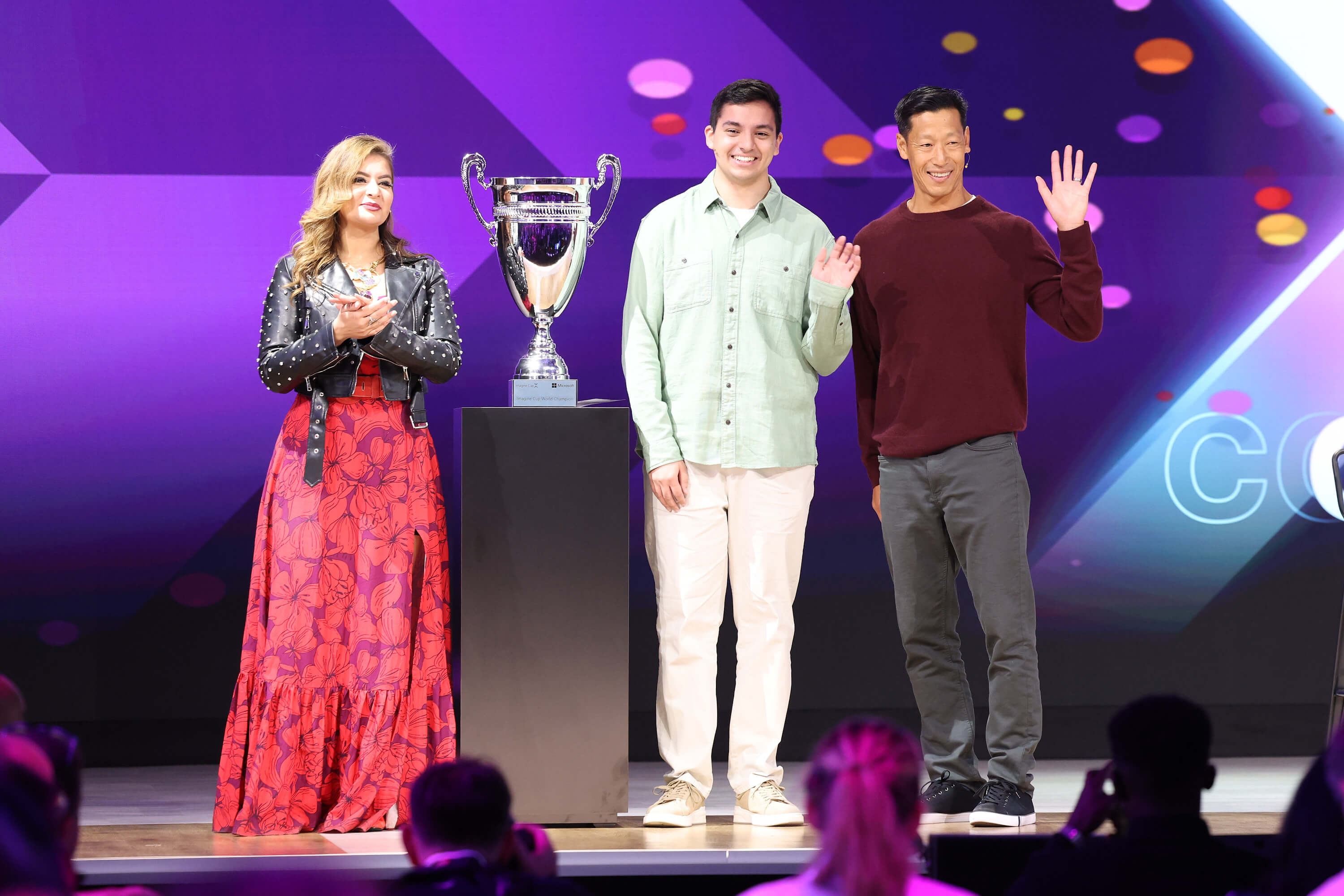
Founded in 2003, Imagine Cup is Microsoft’s global competition for student founders building commercially viable startups on the company’s cloud and AI platforms. The winning team receives $150,000 and a mentorship session with Microsoft CEO Satya Nadella. This year that prize goes to Patrick Brown in the U.K. for CopyFlag, an AI-powered platform that detects copies of designs across the internet and automatically initiates corrective action to protect creators.
The Red Bull Basement contest is for students still shaping and testing ideas, with select teams advancing to next year’s Imagine Cup as they refine their work. Contestants from more than 40 countries presented their projects at the world final in San Francisco, winnowing down to 10 who pitched to a panel of judges including investors and Red Bull athletes. The winner receives $100,000 from Red Bull, along with $25,000 in Microsoft Azure credits and mentorship. This year that goes to Darnell Adler, whose app lets users send silent emergency alerts without visibly unlocking a phone, dialing a number or speaking a word.
As AI tools expand what one person can do, Yang says, the challenge is making sure more builders are equipped to take advantage of that shift.
Microsoft doesn’t just provide tools, he says. It learns by watching how students push those tools in unexpected ways, especially as AI accelerates experimentation and shortens the distance between idea and execution.
AI had been “a hobby and research tool” before the contests, Oberoi says — or as Kim put it, “a novelty thing.” But they quickly began using it as a partner to help them design early visuals, shape presentations and pitch decks and evaluate their messaging.
They say the experience helped them become more risk-tolerant and confident in pursuing their goals as they went on to work on separate healthcare startups.
“The risk of making an app used to be like, oh, you’re going to invest three months into making this shopping app or something, but now it’s like you invest one night” using AI tools, Oberoi says. “And so because the risk has gotten lower and lower, you should just be willing to dive in head-first.”
The competitions provide mentorship in every aspect of growth, Kim says, including how to handle setbacks and stay resilient.
“Because of this experience, I was able to dip my toes in a little bit and be like, ‘Oh, the water is a little warmer than I thought,’ and keep going on,” Kim says. “And then I get to be where I am today, where I’m trying to make a big positive impact, and I feel confident enough to kind of push that fear aside and do that.”
Learn more about Imagine Cup
Learn more about Red Bull Basement
This story was originally published on May 13, 2026. It was updated June 5, 2026, with the contest winners and June 9, 2026, with the Imagine Cup’s increased cash prize.
Lead image: Patrick Brown’s CopyFlag, an AI-powered way to help protect creators from people copying their work, was this year’s winner in the Imagine Cup World Championship. (Photo by Dan DeLong)
Susanna Ray writes about AI and technology, with stories that show its real‑world impact and examine how innovation is reshaping work, business and society. She previously reported for Bloomberg News and other major international news organizations in the U.S. and abroad, covering beats ranging from politics and government to business and aviation. Follow her work on Microsoft Source.