


Read in Indonesian here
From the landslide-prone mountainous areas in Wonogiri to a research laboratory in California, Indonesian innovators prove that artificial intelligence (AI) could be a powerful tool in facing the climate crisis and building a resilient and sustainable future.
—
The climate crisis is not merely a global issue — it is a reality that happening across Indonesia. According to the World Bank1, Indonesia ranks among the world’s three countries most vulnerable to climate risk. Extreme weather phenomenon often lead to natural disasters such as landslides, while the agriculture sector — which contribute to more than 12% to the national GDP2 — increasingly become vulnerable to the shifting climate patterns. The Indonesian government has placed food self-sufficiency and environmental balance as priorities within the Asta Cita, the eight key development agendas outlined in the Medium-Term National Development Plan 2025–2029.
Today, AI emerges as a key in driving sustainability measures across sectors3. From predicting extreme weather and managing natural resources more efficiently, to accelerating the discovery of eco-friendly materials — AI is creating faster, more accurate solutions to address the climate crisis. Indonesia, as the country with the fourth largest population in the world along with a high-level of innovativeness, has immense potential to maximize the us e of technology in solving modern challenges, including strengthening climate resilience. Through the elevAIte Indonesia initiative, Microsoft, along with the Ministry of Communication and Digital (Kemkomdigi) and 22 partners, aims to equip 1 million Indonesian talents with AI skills inclusively — empowering them to create relevant and applicable solutions for challenges within their communities.
“AI is not only reshaping the way we work and innovate, it’s also generating new opportunities. However, to truly unlock its full potential, people need the right skills to use it effectively. That’s why the elevAIte Indonesia program is designed to ensure that everyone—regardless of their background—has access to AI essential skills that they can leverage to develop sustainable solutions and address challenges relevant to their communities, from the climate crisis to food security. To reinforce our commitment to sustainability and community impact, the elevAIte Indonesia program will also include a national hackathon focused on solving pressing national issues, with a strong emphasis on the Sustainable Development Goals.” said Arief Suseno, AI National Skills Director, Microsoft Indonesia.
In Indonesia, two participants from the elevAIte Indonesia program have demonstrated how AI skills can be seamlessly applied to support climate resilience and sustainability measures.
G-Connect Project – AI for Disaster Mitigation
Wonogiri | Research Team from Gadjah Mada University
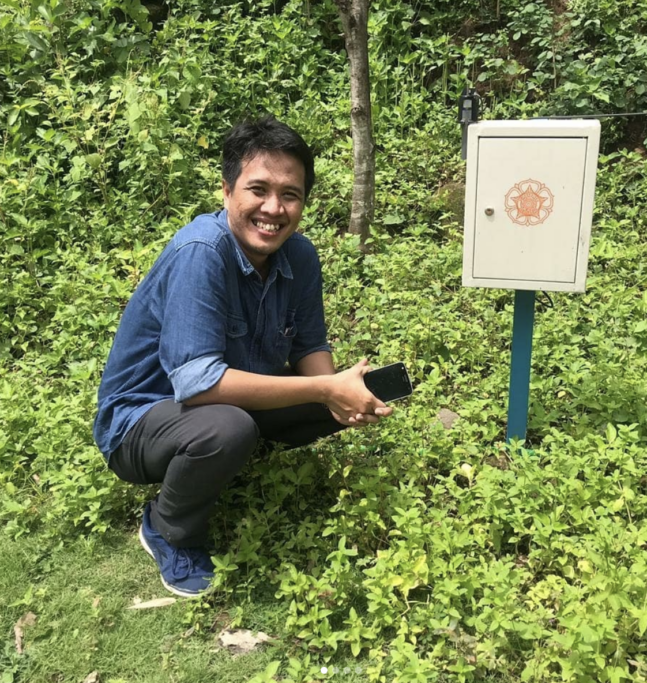
The Wonogiri region in Central Java was once considered a remote area with limited access to technology — even getting a mobile signal was a challenge. Nevertheless, thanks to the G-Connect project led by a team from Gadjah Mada University (UGM), now the region has an AI-powered disaster mitigation system that was developed collaboratively with the local community.
With more than 30 soil sensors installed at landslide-prone locations, the data regarding soil movement is transmitted via solar-powered networks to the Microsoft Azure cloud platform. This data is later visualized by using Power BI and displayed in various locations like village offices, mosques, security posts, and even elementary schools. The surrounding community, including children, are taught how to read the dashboard and interpret soil movement patterns to understand whether current conditions are safe or show warning signs.
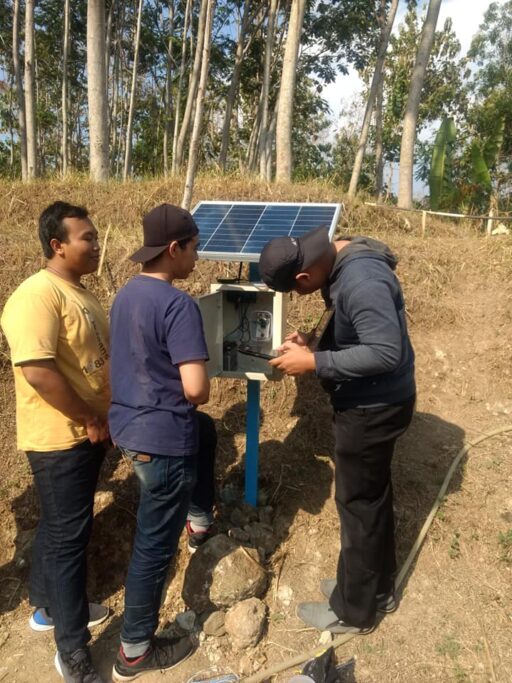
“If the graph is stable, it means the soil is in a safe condition. However, if the pattern starts shifting, it signals movement. Now, the residents are able to read and understand this themselves,” explained Mardhani Riasetiawan, Associate Professor at the Department of Computer Science and Electronics, Faculty of Mathematics and Natural Sciences, Universitas Gadjah Mada (UGM) and G-Connect Project Lead.
Alert notifications are delivered through a human-centered, community-based approach to avoid causing panic. Instead of using sirens, the warning system notifies volunteers in each neighborhood, who then spread information via mosque loudspeakers or WhatsApp group chats. Every household is also assigned a color code — green, yellow, or red — to streamline evacuation efforts based on risk levels.
“There was a time when 33 of our sensors were buried during a landslide. But that only proved the system was working. In one incident, residents received a warning 7 minutes before a landslide occurred, saving 15 lives,” shared Mardhani.
Looking ahead, the G-Connect team is exploring advanced uses of AI to build predictive models. They are participating in the elevAIte Indonesia skilling program to strengthen their technical skills, particularly in machine learning and using Copilot Studio. In the future, they aim to develop an AI-driven prediction system and are exploring faster, more accessible ways to communicate data to communities — such as creating a local chatbot that can communicate in Javanese.

Ester Rosdiana Sinaga – AI for Food Security
California | Researcher and Master’s Student in Horticulture and Agronomy
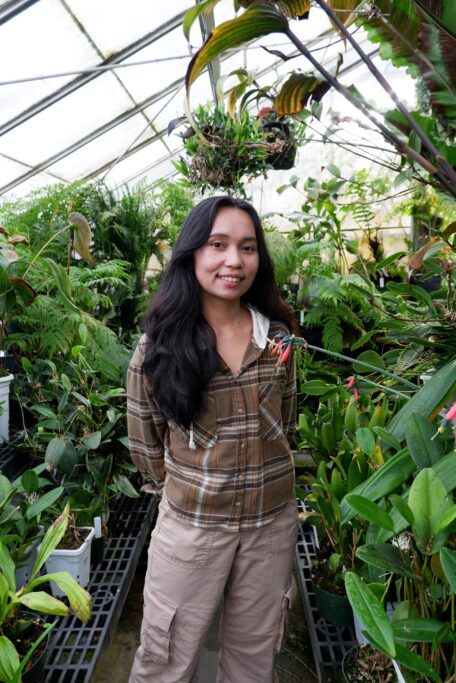
Growing up in a family of farmers in North Sumatra, Ester was no stranger to conversations about shifting weather patterns and declining yields. Her early exposure to environmental issues — from studying bioprocessing to researching waste management — deepened her commitment to sustainable agriculture and preserving native herbal plants.
After working at a horticulture and herbal research center in Sumatra, she realized a critical gap in practical farming knowledge. That realization led her to UC Davis, one of the top agricultural universities in the world, where she’s now focused on horticulture, food and medicinal crops, and conserving Indonesia’s endangered tropical species.
“I saw firsthand how plants like bananas, cacao, or coffee, which are common in Indonesia, are actually treated as plants to be conserved here. It made me realize how urgent plant conservation is in Indonesia” Ester said.
Her current research examines crops cultivated by the Indonesian diaspora in the U.S. — research she believes could help identify climate-resilient varieties and support food diversification efforts in Indonesia. Her research also examines social dimensions, such as the role of women in family farming and health.
“Here, even when both partners work and are equally educated, women are still the ones who know the most about food and medicinal plants. This pattern seems to have carried over from Indonesia — and it’s fascinating to study,” she added.
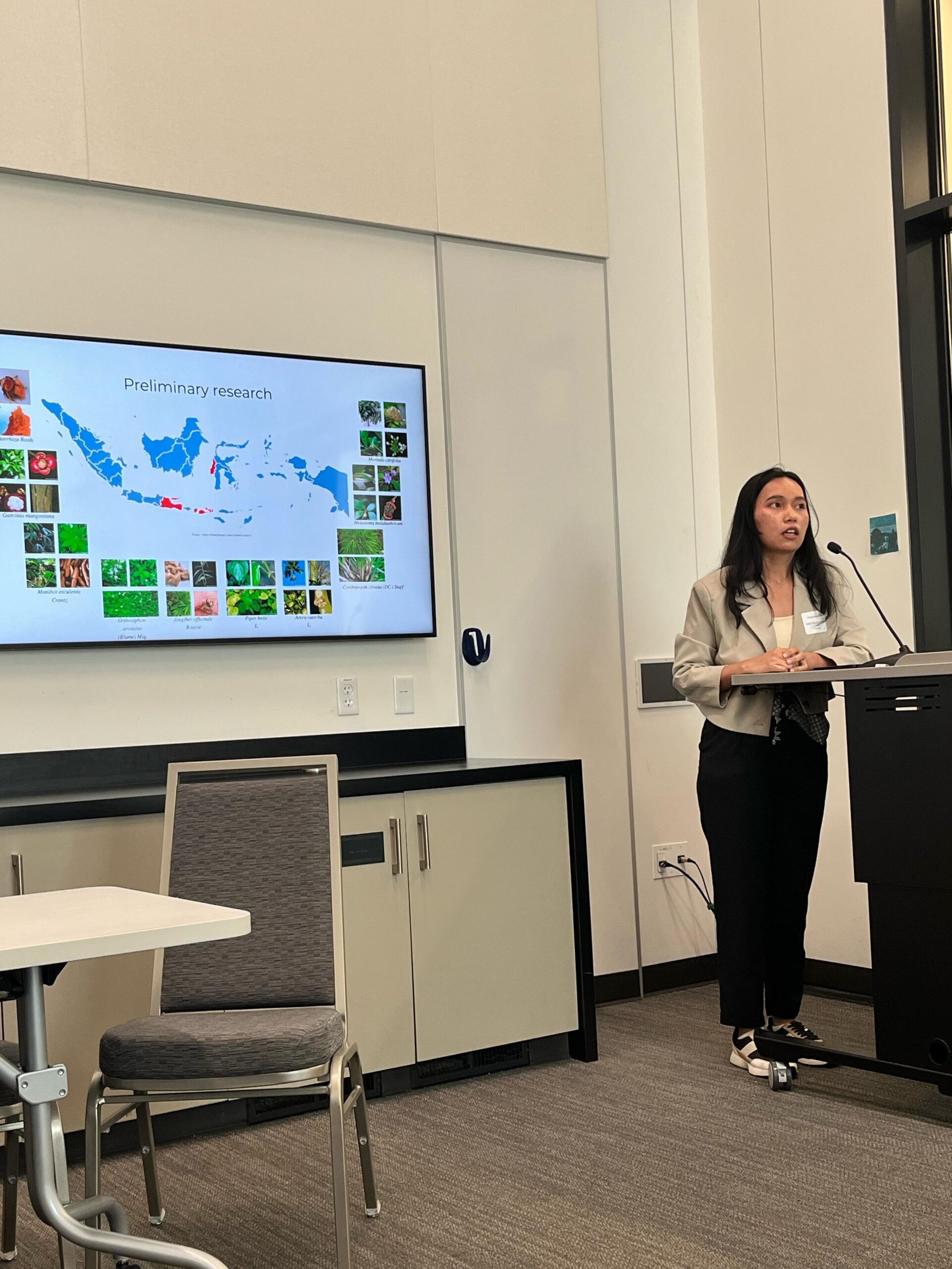
Though she didn’t come from an IT background, Ester taught herself coding to support her work in plant genetics and genomics. AI has become her research co-pilot — helping troubleshoot errors, accelerate data analysis, and visualize complex findings. She also uses AI tools to streamline presentations and research planning.
“AI doesn’t replace researchers — it complements us. I still rely on my own thinking, but AI helps uncover new angles or flag technical gaps,” she explained.
Ester sees huge potential for AI in Indonesian agriculture — from soil sensors and drone monitoring to weather prediction and plant disease diagnostics via mobile apps. She believes AI can help farmers save time, reduce costs, and minimize resource waste caused by misdiagnosis or outdated farming methods.
“Here in the US, farmers can simply take a photo of a plant and instantly get a diagnosis and treatment recommendation through an app. Just imagine if we had that in Indonesia — we could save so much on fertilizers and pesticides, and help farmers harvest with more certainty,” she said.
She hopes her research can be adapted by local farmers in Indonesia while inspiring more young people and women to engage in agriculture. For Ester, the future of farming lies in combining science, technology, and social participation.
“AI will only be truly inclusive if we design systems that are intuitive — even for farmers unfamiliar with tech. That’s the challenge we all share,” she concluded.
Changemakers in the AI Era: Creating Real, Sustainable Impact
Ester’s journey and G-Connect are part of elevAIte Indonesia, a program that has empowered over 735K participants nationwide — including students, civil servants, teachers, MSMEs, farmers, and Indigenous communities — through inclusive, locally relevant AI training. Rather than focusing solely on technical skills, elevAIte Indonesia emphasizes real-world applications of AI to solve daily challenges faced by communities across Indonesia.
The elevAIte Indonesia movement continues to grow — offering more opportunities for changemakers to harness AI for good. If you’re looking to develop AI skills and create real impact, you can join elevAIte Indonesia and be part of a community driving innovation across the nation.
Register at elevaite.id/binar (for public servants) and elevaite.id (open to all) and start your journey as an Indonesian changemaker in the age of AI.
###
1 World Bank, Climate Risk Profile: Indonesia, 2021
2 Central Bureau of Statistics (Indonesia), 2023