

Canada has earned its place as a global AI leader, with strengths in research, talent, and entrepreneurship fueling a wave of innovation. The country leads the G7 in research output per capita. While the number of AI professionals grew by 30 % in 2023, nearly half of Canadian workers (46 %) were using generative AI as of August 2024 – a 116 % increase in adoption since 2023 – highlighting how quickly AI is becoming embedded across the workplace. The momentum is strong and it’s translating into real-world results.
Across industries, companies are looking for ways to embed AI into their operations, and AltaML, an Edmonton-based company, is leading the charge. Specializing in vertical AI – AI systems designed for specific industries and use cases – AltaML is helping organizations across Canada, from hospitals to energy providers and government agencies, solve business-critical problems responsibly and at scale with tailored AI solutions
AltaML focuses on infusing customized AI tools, leveraging agentic components, into traditional industries to drive tangible results. AltaML has helped optimize hospital readmissions to improve patient care and efficiency, automate document analysis in professional services to streamline workflows and reduce manual effort, and improve operational decision-making in complex, regulated sectors such as agriculture and energy, driving greater efficiency and improved outcomes.
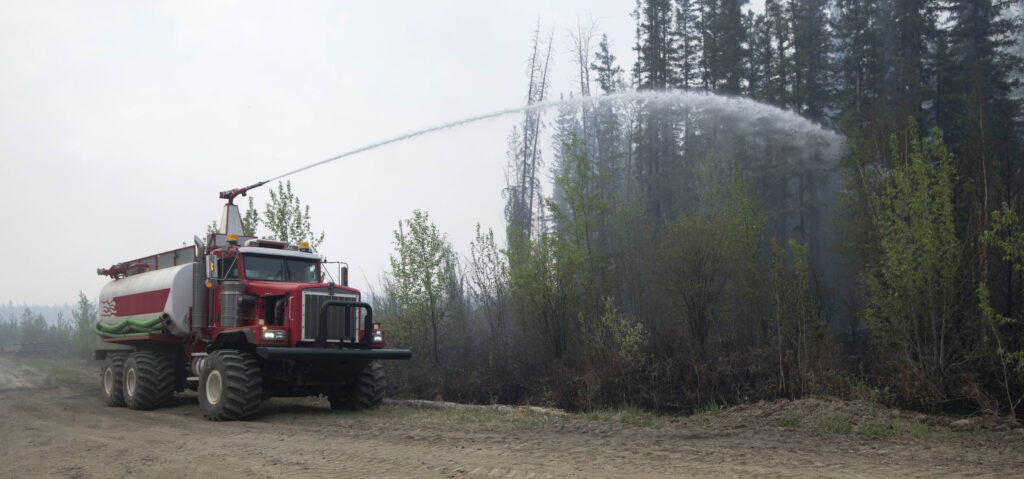
And sometimes, those tools shape critical systems behind the scenes. When emergency planners in Alberta needed help making sense of fire risk data during an extreme wildfire season, AltaML helped deliver a predictive system, which was built in collaboration with Alberta Wildfire and Microsoft, that gave frontline teams an edge in preparing for fast-moving threats. The AI solution analyzed tens of thousands of data points daily, including wind patterns, vegetation levels, lightning strikes, and historical fire data, to predict the likelihood of new fire ignitions. Hosted securely on Microsoft Azure, the system surfaced high-risk zones to duty officers with up to 80% accuracy, and saving CA$2 million to CA$5 million in annual operating costs – helping them proactively allocate resources like air tankers and ground crews. It wasn’t a one-off showcase, but part of the company’s broader ethos: demonstrating what AI can do when deployed responsibly and in the interest of the public.
Building a Strong Foundation
The AI wildfire prediction tool is one example of what’s possible when research and industry come together. Canada has the foundational assets—research excellence, technical talent, a vibrant start-up ecosystem—to scale more solutions like it.
Yet our full potential isn’t being fully realized. According to Microsoft’s 2025 Work Trend Index, 72% of business leaders are considering hiring for AI-related roles, but only 35% of organizations are currently using AI agents to automate workflows. Enthusiasm at the top hasn’t yet translated into action on the ground.

“That’s a huge disconnect,” said Nicole Janssen, co-founder of AltaML. “We’ve worked across dozens of industries—energy, health, government, construction, and have never encountered an operation where AI wasn’t the right tool for at least one business problem.”
Adoption takes time. AltaML reports its average sales cycle in Canada takes 4.5x longer than in other markets. Factors like procurement processes, infrastructure access, and regulatory uncertainty often slow the path from pilot to production.
Still, the upside is clear. The Conference Board of Canada estimates AI could raise national labour productivity by over 17%. Accenture Canada found that AI can contribute $180 billion in annual productivity gains to Canada’s economy by 2030.
Trust as a National Asset
AltaML employs a model rooted in collaboration, continuous skilling, and responsible AI application. Working together with Microsoft and other partners, AltaML ensures AI systems are built not just for organizations, but with them. This includes embedding data scientists within client teams, leveraging cloud-based scalability and security of platforms like Azure, and training users to interact with the technology responsibly. Through this collaborative effort, AltaML and Microsoft are helping businesses across various sectors harness the power of vertical AI to solve complex challenges and drive innovation.
As Janssen put it, “AI is only successful if it is deployed in collaboration with the people and organizations that truly understand the challenges of their particular industry or sector. They’re the ones whose work will be improved and transformed because of it.”
As public debate around emerging technologies grows, so too does the need for transparency. Sixty percent of people in the country remain skeptical about AI’s impact. Earning trust through explainability, fairness, and strong governance will be essential for widespread adoption.
“Imagine if AI built in Canada was synonymous with trust,” noted Janssen. “Secure. Transparent. Unbiased. That’s how we win”.
Microsoft’s Responsible AI Standard and partner-led Generative AI training initiatives aim to skill Canadians across a variety of sectors in generative AI to bridge the gap between experimentation and execution. The focus is on strengthening the foundation for adoption—delivering trusted technology, scalable infrastructure, and training Canadians to ensure AI is accessible and practical for businesses of every size, in every region.
From Research to Results
The path forward is less about inventing new tools, and more about implementing the ones that already work. That means building infrastructure that supports adoption, training people across every sector, and aligning stakeholders, public and private, around a shared strategy.
But progress won’t come from the tech sector alone. It requires commitment from policymakers, educators, business leaders, and investors who see responsible adoption not as a risk—but as a competitive advantage. As outlined in the recent B7 Communique, Canada’s commitment to inclusive and responsible growth calls for national strategies that support innovation, upskilling, and digital transformation. When people understand how AI works, and how to leverage AI in their daily work – across industries and within both the public and private sector – adoption rates will rise, allowing for increased productivity and broader participation in innovation.
AltaML isn’t chasing hype. It’s helping Canadian organizations and businesses solve real problems with practical tools. And in doing so, it’s showing how innovation can drive results when it’s built to serve. By grounding AI leadership in trust, collaboration, and inclusion, Canada can move from potential to results.
The foundation is built—now it’s time to scale.