


From AI Shy to AI Confident: Canadians Are Redefining Workplace Etiquette
New Microsoft study reveals that AI is reshaping workplace culture and helping Canadians show up at work with more confidence.
A new national study* commissioned by Microsoft Canada shows Canadian workplaces are entering a new phase, one where AI isn’t just a productivity booster, but a quiet force redefining workplace norms and etiquette.
According to a survey of 1,550 Canadians, more than half (57%) now use AI at work, and many say it’s reshaping how they communicate, collaborate and show up in professional settings. Recording meetings to keep teams aligned, polishing emails with AI before sending, or tone-checking messages for clarity are increasingly viewed as the new good manners at work.
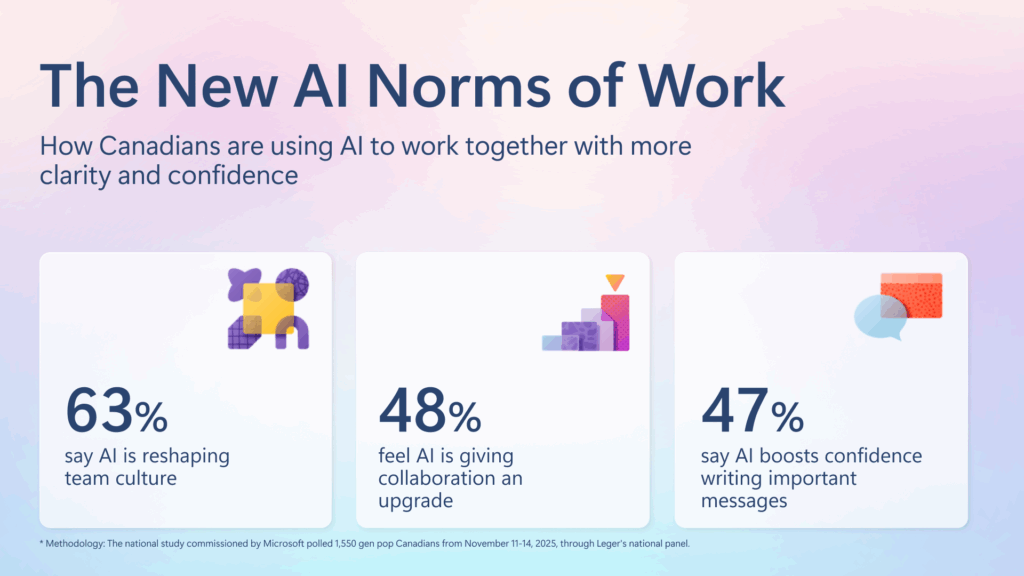
The study reveals that many workers once hesitant to embrace AI are now leaning on it, contributing to changes in communication and collaboration, meeting behaviour, and workplace etiquette.
- 63% report AI is shaping team culture.
- Nearly half (48%) credit AI with helping introduce new ways to collaborate.
- 47% say AI helps them polish their writing and gives them confidence before sending important messages.
- 30% say AI is turning meetings into action by helping teams accurately capture discussions and follow through.
“We’re at an AI-driven inflection point for workplaces across Canada,” said Deidre Lipton, General Manager, AI Business Solutions at Microsoft Canada. “As AI becomes part of everyday work, the challenge for businesses goes beyond just encouraging adoption – it’s about empowering and supporting people through this transformation. Now is more important than ever for leaders to foster a culture of trust, champion continuous learning, and embrace new ways of working, so every employee can thrive in the era of AI.”
AI Is Fueling Confidence, Creativity and Contribution
Beyond etiquette, the study shows that AI is becoming a genuine confidence engine for Canadian workers. It’s supporting creativity lowering barriers to participation and helping people bring their best ideas forward.
Key findings show that AI is empowering workers in meaningful ways:
- 33% say AI helps unlock creativity and strategic thinking.
- 47% say AI helps them start complex or intimidating projects.
- 12% say AI gives quieter employees more ways to contribute ideas.
- Nearly one in ten (9%) even say AI has become their “favourite coworker” – a small but telling signal that some employees are already experiencing AI not just as a tool, but as a reliable, knowledge partner in their day-to-day work.
- One in five (20%) say AI feels like having an intern or personal assistant. This is a sentiment that is strongest among Gen Z (25%) and Millennials (29%).
Many Canadians are now using AI like a personal coach – a quick gut check before sending feedback, a tone-check before emailing leadership, or a safe space to explore new ideas. The result: it helps people participate more fully, think more boldly, and communicate with greater clarity – reshaping what “good work” looks like.
Canadians Are Learning How to Use AI at Work in Real Time
While enthusiasm is accelerating, Canadians are still navigating what “good AI etiquette” should look like – and new behaviour gaps are emerging.
The research highlights emerging divides:
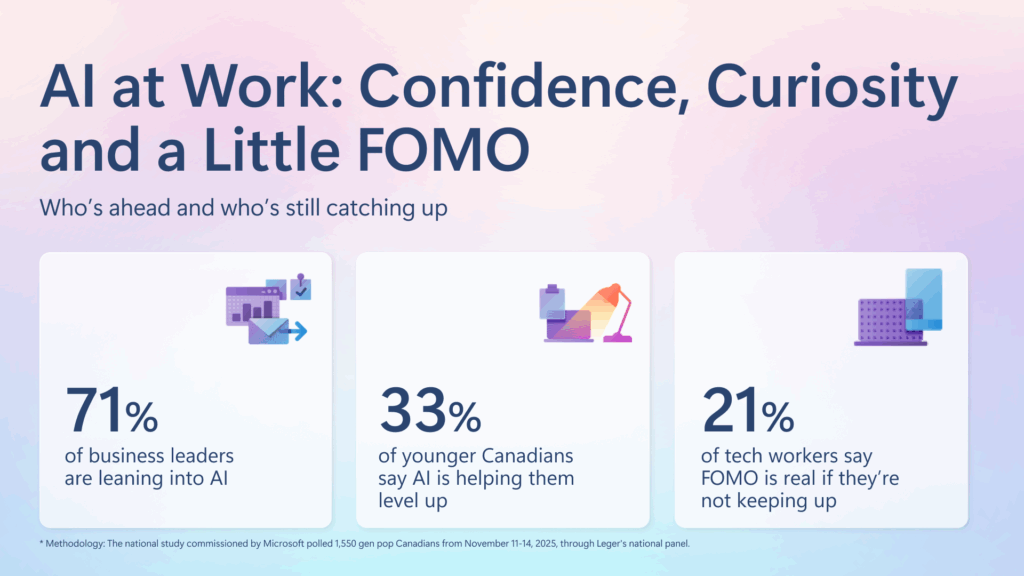
- Seniority Split: 71% of executives are more willing to rely on AI compared with 55% of early in career employees.
- AI FOMO: 13% worry about falling behind if they don’t keep up with AI skills, a concern especially heightened among Millennials (19%), tech workers (21%), and administrative professionals (16%).
- AI Shy: 15% remove AI “tells” from their work to ensure it doesn’t look AI generated.
- Confidence Boost for Young Workers: 33% of younger Canadians, especially Gen Z and Millennials, are the fastest to overcome “AI shyness”, crediting AI as helping with their professional growth.
- Check First: Many say employees should ask meeting attendees before transcribing (59%) or recording (63%) a meeting for the purpose of generating AI summaries.
- Regional Comfort Gaps: Quebec workers feel less comfortable using AI for meetings, especially recording (73%) or transcribing (72%).
Canadian Workplace Values
The new norms emerging from this research reflect Canada’s core workplace values – grounded in respect, fairness, trust, collaboration, and a strong sense of responsibility, to people, communities and the future of work. As AI becomes more mainstream and woven into daily workflows, it has the potential to level the playing field and create inclusive work environments where everyone feels more equipped, empowered, and included.
This next chapter of AI-influenced workplace etiquette isn’t about replacing human connection – it’s about giving people the confidence, tools and capacity to do things they couldn’t do before, while removing the everyday drudgery of low value work. As these capabilities become more common, understanding new norms and expectations will be important to ensuring AI strengthens collaboration, clarity, and trust in Canadian workplaces.
For business leaders, this means finding the right AI solutions to transform how work gets done. Learn more about how Canadian organizations are redefining AI leadership and how Microsoft’s AI solutions can transform your organization and start your journey to becoming a Frontier Firm.
For employees at all levels, it means building the AI skills needed for this shift. Microsoft AI Skills Navigator, a role-based learning platform designed to help individuals build, navigate and validate AI skills, can help support employees through this transition.
*Methodology: The national study commissioned by Microsoft polled 1,550 gen pop Canadians from November 11-14, 2025, through Leger’s national panel.