

By Lisa Everett, AI Skills Director Canada, Microsoft Elevate
Whitney McKinley remembers the exact moment generative AI tools first began appearing in classrooms.
McKinley, a Student Achievement Consultant for Learning Innovation at the Waterloo Catholic District School Board (WCDSB), works closely with educators to help them integrate technology into classrooms in meaningful and responsible ways. Alongside colleague Katrina Gouett, she has spent the past several years helping shape the board’s approach to AI adoption and educator readiness.
“Within maybe the first 15 minutes of trying out a prompt we were both really amazed by what was happening and what we were seeing,” McKinley recalls. “We knew that this was moving and it was moving quickly.”
What McKinley and Gouett were witnessing inside classrooms at WCDSB was part of a much broader shift happening across education systems nationwide. Across Canada, schools are navigating one of the most significant technology shifts since the rise of the internet. Generative AI tools are arriving faster than many institutions can fully assess, bringing about new approaches to teaching, assessment and digital literacy.
For many educators, the pace of change created as much uncertainty as excitement.
“AI really caught educators off guard,” says Gouett, also a Student Achievement Consultant for Learning Innovation at WCDSB. “And so [we took to] approaching educators in professional development with empathy, with understanding.”
Building guidance and confidence in uncertainty
Rather than rushing to restrict the technology, WCDSB focused on helping educators understand how to use AI safely and intentionally.
“We approached it with the mindset that we weren’t going to ban AI tools because it would become a game of whack-a-mole,” says Gouett. “We knew there were so many tools out there, so instead we focused on providing guidance around how to use approved, safe tools responsibly.”
That included helping educators build confidence with approved platforms like Microsoft Copilot while also strengthening broader AI literacy across classrooms and school communities.
To support that work, McKinley and Gouett helped lead the development of responsible AI guidelines, family resources and learning frameworks designed to support educators across K–12 classrooms. They also launched Deep Learning Dialogues, a podcast exploring the evolving relationship between AI and education. Now in its third season, the series has featured dozens of conversations with voices across Canada’s education sector about the opportunities and challenges AI presents in schools.
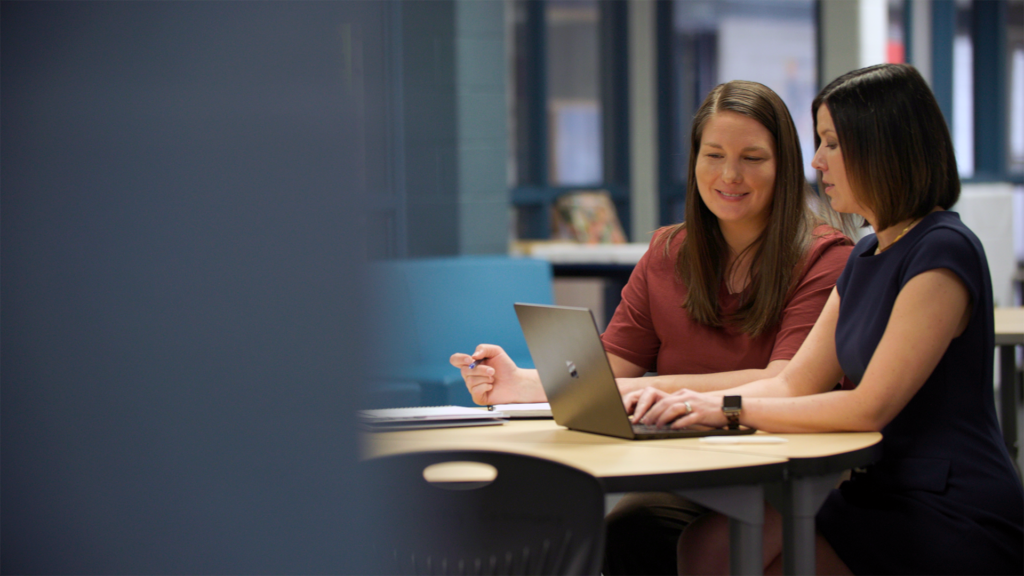
“The conversations we were having [across the board] were so different depending on who we were talking to,” says McKinley. “If we were talking to administrators, it focused a lot around efficiency. If we were talking to educators, it focused a lot around assessment. But then when we started to talk to students, they were really concerned about what does this mean for their future?”
Those conversations made it clear that AI adoption in education would require more than technical training.
Educators, students and families were all trying to understand how these tools would shape learning, trust and the future of work. At the same time, the team knew enthusiasm alone couldn’t drive adoption.
“People would come to us, and they would be so excited about a certain way they were using AI,” says Gouett. “But we knew many of those use cases actually put student information privacy, safety, security at risk. And we knew that was a top priority for us.”
Balancing innovation with responsibility quickly became one of the board’s biggest priorities. WCDSB realized that access to AI tools alone wasn’t enough. Educators needed support, guidance and time to build confidence using them responsibly in classroom settings. That work also reinforced the importance of trusted platforms like Microsoft Copilot, where privacy, security and responsible use could remain central to adoption.
Teaching before tools
As more educators began experimenting with AI in their day-to-day work, professional learning became an essential part of the board’s strategy. Through programs like Microsoft Elevate for Educators, educators have the opportunity to explore how AI tools can support planning, creativity and classroom engagement while still keeping students at the centre.
“We really wanted to teach educators how can they effectively prompt to get whatever they need,” says Gouett.
For McKinley, the philosophy behind that work has remained consistent from the beginning.
“It was all about pedagogy first, tool second.”
The goal was never to automate the role of the educator. Instead, WCDSB focused on helping educators use AI with intention so they could spend less time on repetitive administrative work and more time supporting students through instruction, collaboration and individual learning styles.
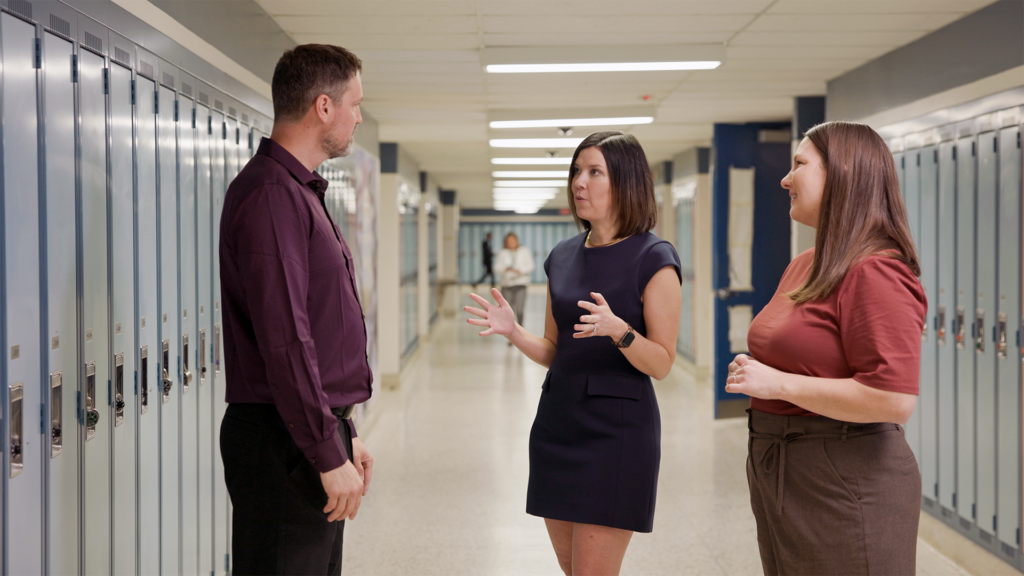
“We talk often in education about how you’re preparing students for jobs that don’t exist,” says McKinley. “What exactly does that look like? It looks like human skills. How are they critical thinkers? How are they problem solvers?”
In many ways, the rise of AI has only reinforced the importance of those skills.
Creating more space for students
For Steve Bryson, Science Department Head at St. David Catholic Secondary School in Waterloo and recipient of the Prime Minister’s Award for Teaching Excellence, embracing AI has ultimately been about creating more time for students.
Bryson has spent the past 17 years helping students connect classroom learning to the real world through STEM education, innovation and experiential learning opportunities. His approach is deeply student-centered.
“I think it’s incredibly important for our students to discover the information for themselves,” says Bryson. “I love when they get that Ah-Ha moment.”
Still, when AI first emerged, he shared many of the same concerns as other educators.
“When AI began to be part of the conversation, I would say honestly, like a lot of educators, I was very concerned,” he says.
Over time, curiosity replaced hesitation.
“Once I began to realize the capabilities, it made me curious how AI can actually be used to amplify good teaching.”

Today, Bryson uses Microsoft Copilot regularly to streamline lesson planning, prototype classroom materials more quickly and adapt lessons to support students with varying needs and learning styles.
“Using AI on a consistent basis has really changed how I work day-to-day because it’s given me more time to do what’s important,” he says. “I get the opportunity to interact with the kids more.”
For Bryson, that is the real promise of AI in education: helping them focus more deeply on the human side of teaching and learning.
A human-led future for learning
As Canadian classrooms continue to evolve alongside rapidly advancing technology, educators at WCDSB believe the future of learning will depend less on mastering tools and more on strengthening the uniquely human skills students will carry into an unpredictable future.
Critical thinking. Creativity. Adaptability. Empathy.
The role of educators, they argue, has never been more important.
“I love watching educators transform lessons to make them into hands-on experience learning,” McKinley says. “Sometimes it just takes one little prompt to make the classroom an exciting place for students.”
To join the Microsoft Elevate for Educators community, visit https://aka.ms/ElevateForEducatorsCA
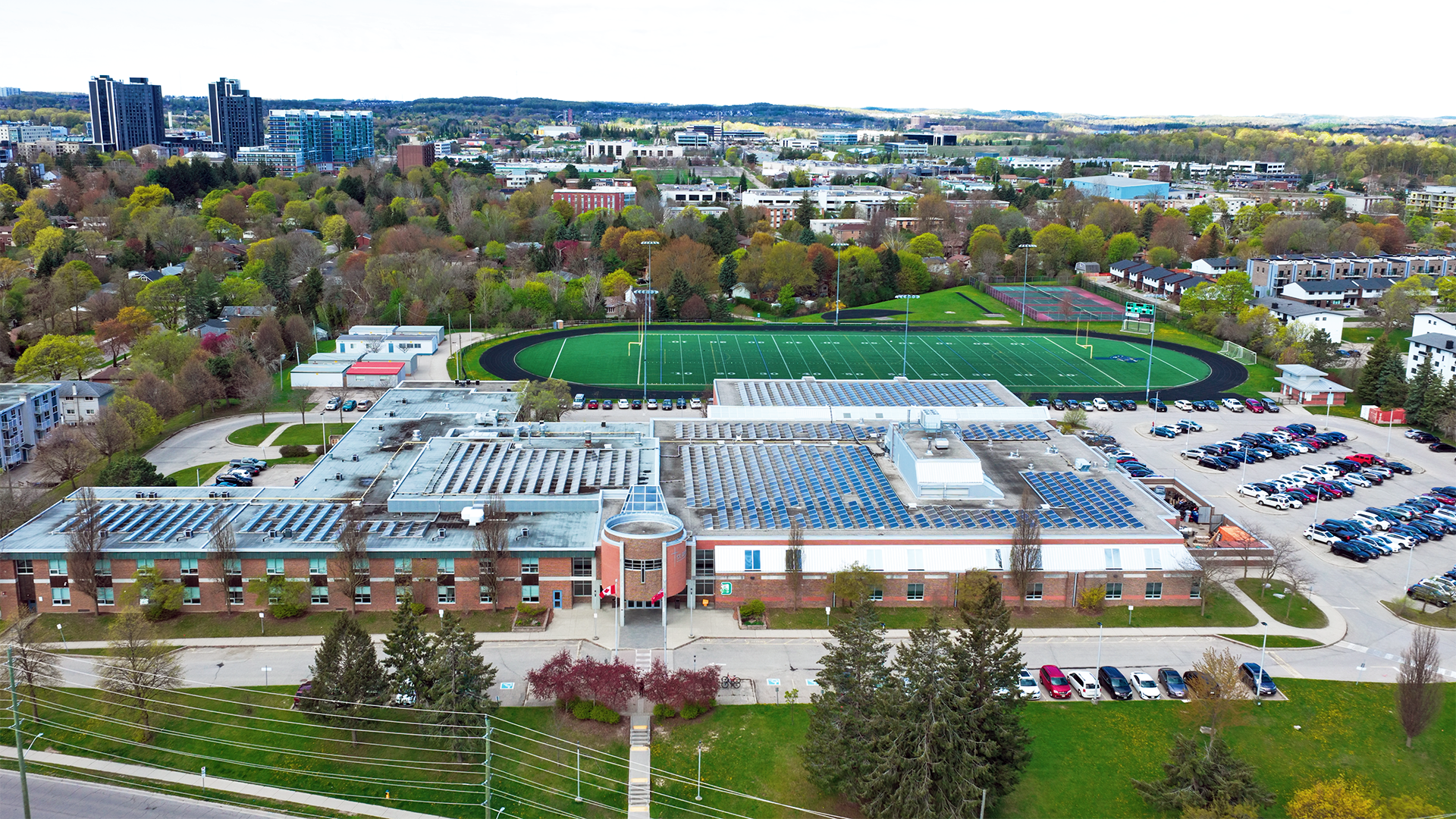
Top image: Aerial view of St. David Catholic Secondary School in Waterloo, part of the Waterloo Catholic District School Board.
This story was published on June 4, 2026.