Socrates was worried
Not about war, or politics, or even the gods. He was worried about writing…
In Plato’s Phaedrus, Socrates tells the story of the Egyptian god Theuth presenting writing to King Thamus as an “elixir of memory and wisdom.” Thamus isn’t impressed. He argues that writing will “produce forgetfulness” because people will stop practicing memory and start trusting an external record; worse, they’ll gain the appearance of wisdom without its reality.
Two thousand years later, it’s hard not to smile at that anxiety — mostly because it feels so familiar. Every major shift in how humans handle information triggers the same fear: This new tool will make us weaker. It will dull attention. It will hollow out thinking. It will create “fake” expertise.
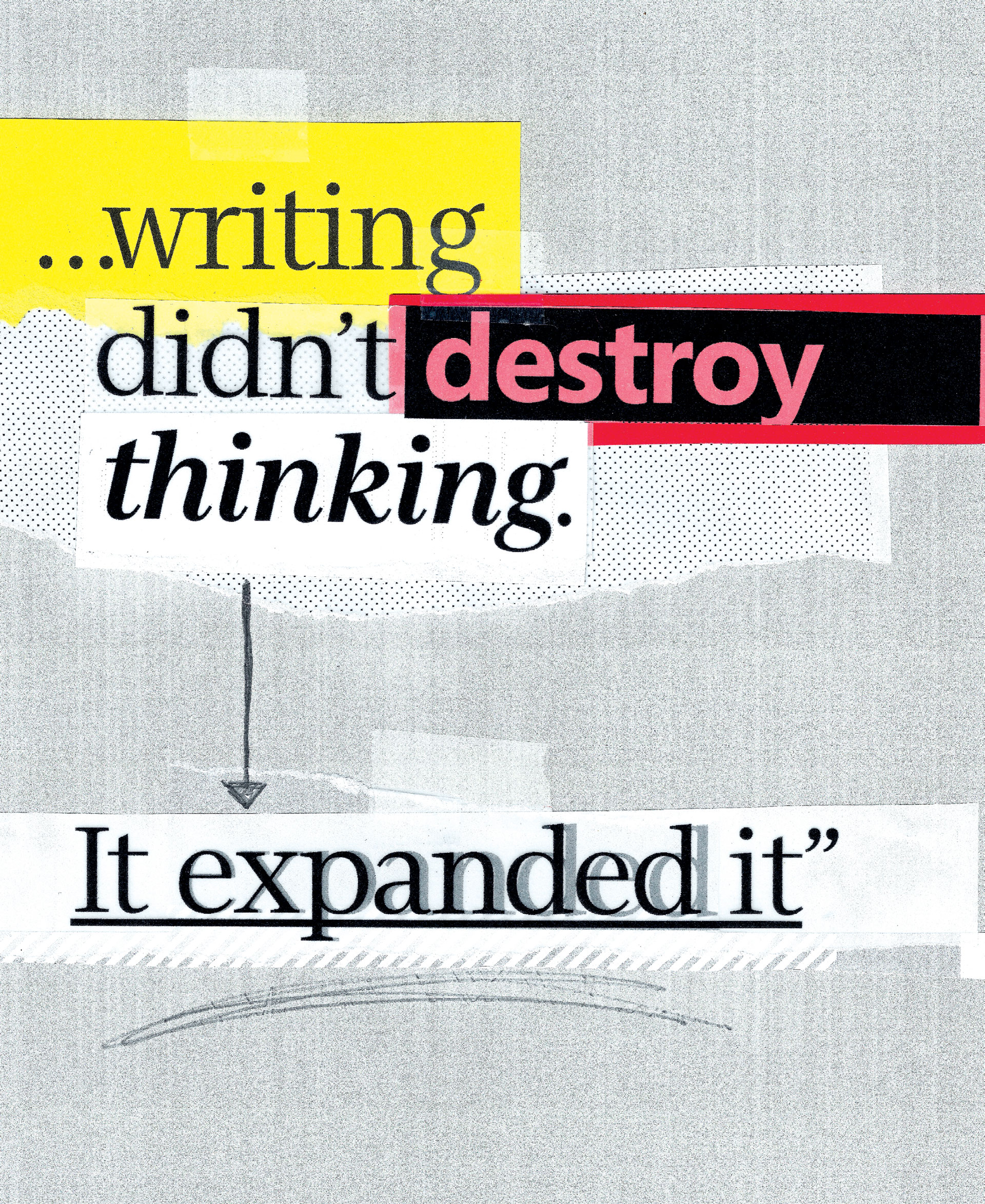
And yet writing didn’t destroy thinking. It expanded it. It changed what we had to practice. Memorization didn’t disappear; it became less central than synthesis, interpretation, and argument. If anything, writing raised the premium on discernment.
That pattern repeats.
When the printing press accelerated access to texts, many elites treated it as a threat to the foundations of authority. If scripture, pamphlets and polemics could circulate cheaply in the vernacular, then priests, princes and universities could no longer assume they were the exclusive channel between knowledge and the public. In that sense, the press didn’t just spread information, it seemed to unplug the old gatekeepers.
And yes, there was real turbulence: the Reformation, propaganda wars, censorship regimes and violent conflict. But the long-run story wasn’t a permanent collapse of legitimacy. Authority reconstituted itself: new institutions formed, new norms emerged, and credibility shifted from inherited status toward things like printed argument, reference and repeatable citation. The press was seen as massively destabilizing — and it was — but “destabilizing” turned out to mean “forcing a renegotiation,” not “ending authority.”
The same fear showed up again, in a more minor key, with Massive Open Online Courses (MOOCs): if elite instruction could be duplicated and distributed at near-zero cost, what would happen to the authority and economics of universities?
In the early 2010s, the story was maximalist: online courses would scale the best teaching to everyone and, in the process, hollow out traditional institutions. Some predictions went as far as “only a handful of universities will remain.” But what followed looked less like replacement and more like a stress test of what education actually requires beyond content: structure, feedback, community and accountability.
What survived wasn’t the apocalypse — it was MOOCs and online learning as infrastructure: a powerful distribution layer that works best when paired with human guidance and well-designed practice. That brings us to AI and work, the next, faster iteration of the same pattern.
We’re living through another cognitive-tool moment — bigger than MOOCs, closer to writing and more consequential than either in how quickly it can spread. Like writing, AI can act as a form of “reminding” — an externalized cognitive scaffold. Like print, it can disrupt who gets access to expertise and how authority is established. And like MOOCs, it risks creating a two-tier world: people who learn to use it well — and those who are merely exposed to it.
The doomers’ take is straightforward: AI will make us lazier, less capable, more replaceable. It will flatten skills. It will cheapen creative work. It will “automate” what makes people valuable.
I don’t dismiss those fears. But history suggests a more useful question: what do humans adapt into, when a tool takes over the old center of gravity?
When writing reduced the need to memorize, the advantage moved to those who could interpret and persuade. When print expanded distribution, the advantage moved to those who could navigate competing claims and build credibility at scale. When MOOCs widened access to content, the advantage moved to those who could structure learning, sustain attention and apply knowledge in context.
AI will do the same. It won’t end work. But it will reprice certain tasks and raise the value of others.
That’s what the underlying theme of Signal (and the particular theme of this issue’s Spotlight dossier starting on p64) is about: AI and work — not as science fiction, not as panic, but as the practical choices leaders can make to help their organizations adapt with confidence.
We won’t get everything right on the first try. But we have done this before again and again and the evidence is pretty clear: humans don’t stop thinking when tools improve. We change what thinking is for.
Welcome to Signal issue 4.
Frank X. Shaw,
Chief Communications Officer,
Microsoft
This is a digital version of the opening letter from Issue 4 of Signal magazine. To explore the full issue, view the complete flip book here.

We need to be prepared
The Early Warnings for All initiative hopes to apply technology to prevent extreme weather events, such as hurricanes, droughts and floods, from turning into disasters. Signal travels to Geneva to meet those responsible for protecting the planet.
In 2025, NASA released new data showing a dramatic rise in the intensity of weather events, such as droughts and floods, since the start of the decade. The study showed that such natural hazards are becoming more frequent, longer lasting and more severe, with 2024’s figures twice that of the 2003-2020 average. A separate report from the University of Reading in the UK, published in February 2026, made for equally sobering reading. It projected that over the next decade, the number of hurricanes in the Atlantic could more than double compared to 1970s levels, while East Pacific storm activity could increase by more than a third.
“We have to accept that we are going to live in a world with more natural hazards,” says Jagan Chapagain, Secretary General of the International Federation of Red Cross and Red Crescent Societies (IFRC). The IFRC is the world’s largest humanitarian network, operating in 191 countries, and in 2024 it mobilized over 17 million volunteers to help more than 160 million people, including 26.5 million affected by disasters and crises. “What we need to do for such a world is to try to separate rising natural hazards from rising disasters,” he says. “A complete uncoupling may not be possible, but we can definitely significantly reduce that relationship, so hazards don’t have to be disasters. To do this, we need to be prepared.”
In an effort to make sure the world is ready, a new system is being created which implements technology to identify places at risk of natural disasters, predict when and where they will hit, warn people that danger is approaching and take steps to save lives and minimize damage. Launched by the UN Secretary General António Guterres in 2022, the Early Warnings for All initiative (EW4A) has an ambitious goal: “By 2027, every person on Earth will be protected by lifesaving, multi-hazard early warning systems.” But how do you set the equivalent of a meteorological safety net around the planet?
Step one: Understand the terrain
The UN based the Early Warnings for All initiative on four pillars, each of which has a different lead organization. The first of these, “disaster risk knowledge”, falls to the UN’s Office for Disaster Risk Reduction (UNDRR). “It’s a big job,” concedes Kamal Kishore, Head of the UNDRR. “It’s foundational, because it helps you determine who is at risk, where they are and why they are vulnerable. If you don’t know this, then you don’t know how to target the warning.”
According to Kishore, who is leading the drive for countries to gather, organize and analyze the data surrounding exposure and vulnerability to natural hazards, understanding the needs of different communities is key. “If the risk knowledge tells you that this is a place where there is no farming, it’s all fishing communities, then the needs are completely different,” he explains. “Fishing communities need to know what is going to happen at sea, not just on land. That knowledge can determine whether they go out fishing or not, or if they are already at sea, if it’s better for them to stay there rather than come back potentially through the path of the storm. When it comes to warnings, everything has to be very targeted.”
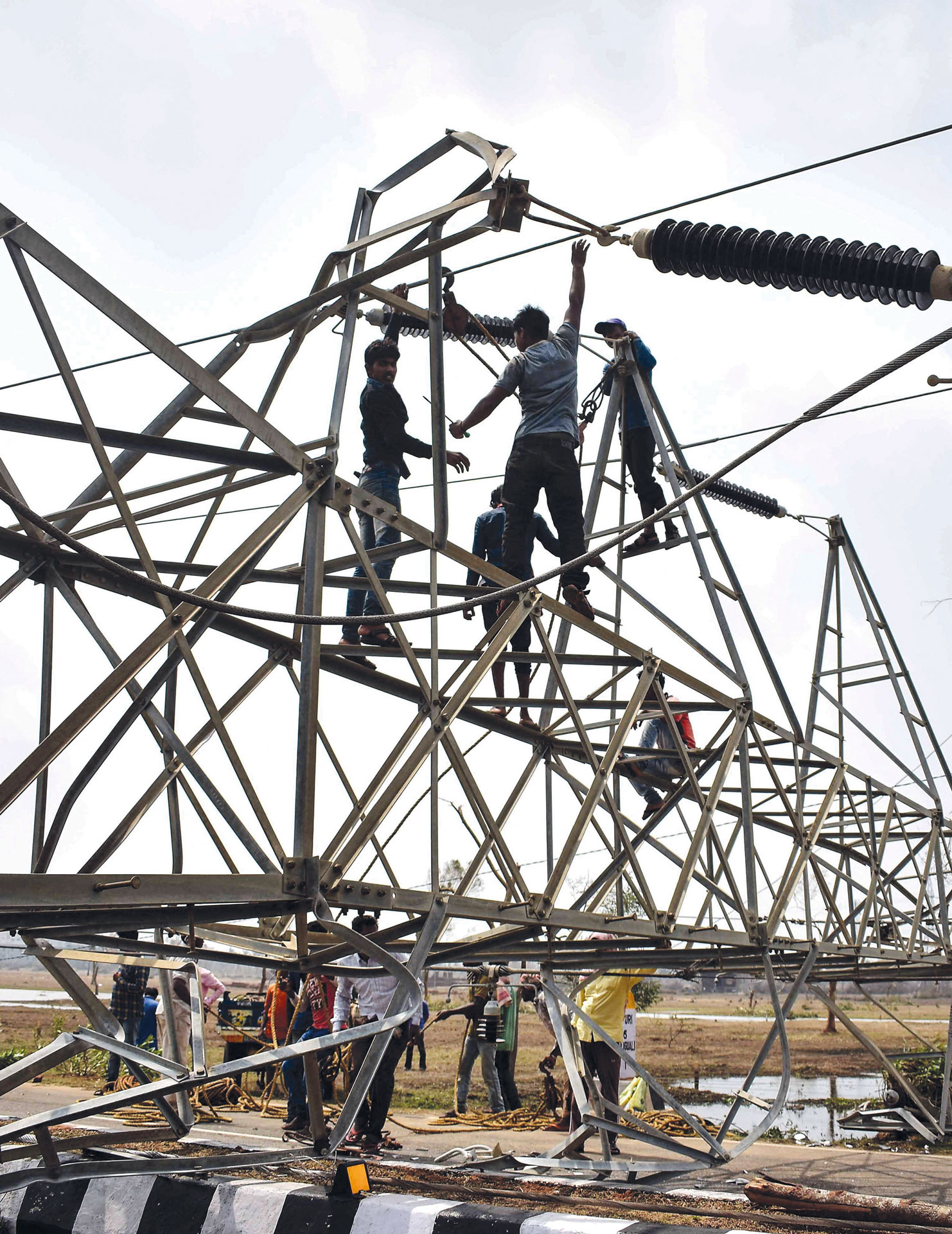
Kishore says that accurate data is vital not just for saving lives, but also livelihoods. “It is not just about risk; it is about resilience,” he says. “We need farmers not just to save their lives, but to save their crops. We need to plan for how we can speed up recovery. Do you have seeds, banks, fertilizer and extra agricultural implements stored away in a safe place so that after the hazard has passed, you can quickly move into your recovery strategy?” Kishore cites 2008’s Cyclone Nargis in Myanmar, where he was on the ground providing aid, as an example of the importance of this approach. “I saw that for every week’s delay in getting farmers back to the land, you require several months of additional food assistance. If you want to send farmers back to the farm quickly, you have to prepare well in advance. The same is true for infrastructure. In some countries, like India, they have reduced the power outage time by 67 percent, not necessarily by hardening the infrastructure, but just by storing extra electricity poles and wires and having a roster of workers ready to surge quickly after a hazard has brought down electricity lines to get them back up again.”
Kishore and I are speaking in his office in Geneva. The Swiss city is the spiritual home of the early warnings initiative, with all four lead organizations based there. “The four pillars approach is absolutely critical. Without that it is not a system,” says Kishore. Ten years ago, 56 out of 193 member states of the UN said that they had multi-hazard early warning systems. “That’s a really small number,” Kishore continues. “Since then it has doubled, but we cannot accept anything less than every country on Earth.”
Kishore is keen to emphasize that while agencies are leading the four pillars, the success of the initiative is dependent on the involvement of private companies such as Microsoft, who became involved in 2023. “Microsoft has been a wonderful partner for several reasons,” he says. “They are quite willing to experiment, to put something out on a pilot basis but then scale quickly if it works. The risk contexts are so varied across the world that you need that kind of nimbleness, that willingness to go into uncharted territory. They are also open and generous about sharing those technologies and methods with others for the greater good, and they bring a balcony view of the whole thing. They can bring a systems approach to it, because Microsoft has always been a systems builder and this [Early Warnings for All] is one of the most important systems there is.”
Kishore is optimistic that the involvement of technology companies and the emergence of AI means that it is possible for everyone to be covered by an early warning system by 2027. “Using satellite imagery and artificial intelligence, we can now generate dynamic digital models and use those to see how different kinds of hazard events will play out,” he says. “You can use historic events to train the models to see what future scenarios will be so we can plan our next step.”
He warns that it won’t be easy, though, pointing out the complexities of forecasting so many different types of threat. “For some hazards, such as hurricanes, we have made great progress, but not so much with, say, flash floods, where there is less lead time and greater uncertainty,” he says. “The other thing is that now you see many more cascading hazards. Say a glacial lake outburst, which causes a flash flood, which causes a landslide. The nature of hazards is changing very rapidly.” All of which means it’s not just risk knowledge that needs to evolve for early warning systems to be effective, but weather prediction, too.
Step two: Detect the threat
“Every economic decision and every action we take anywhere in the world is dependent on the weather,” says Professor Celeste Saulo, Secretary General of the World Meteorological Organization (WMO). “We take for granted that you can pick up your phone and see what the weather is going to do, but few people realize that it relies on the collective efforts of 193 national meteorological services, supported by the WMO, that are taking observations over minutes, hours and days and sharing it on the fly. They’re all putting that data in to be ingested in the global system and then the global centers are sharing it back with all the people.”
The WMO leads the second pillar of Early Warnings for All, which is about the detection, monitoring and forecasting of hazards. It is a difficult task and one that Saulo believes is under-resourced. “For most governments, meteorological services are seen as a low-level office, with small budgets,” she says. “Many governments, particularly now, are investing more and more in security, but nothing can keep you more secure than knowing what is coming from the weather. In the last 50 years, more than two million people died because of weather-, water- and climate-related events. That is the reality. The other reality is that these extreme events are increasing in intensity and in frequency.”
While clearly frustrated with the situation, the Secretary General is far from despondent and points to new tools which are helping to predict extreme weather events with increased accuracy. “I am excited by new observing system tools such as nanosatellites, radars or lidars [laser scanning tools],” she says. “Meteorology and medicine are a lot alike. With medicine, if you have a patient with a stomach ache it could mean lots of different things, so you ask for a blood test, X-ray or whatever to understand what is happening to the patient and to make a good diagnosis. The weather is exactly the same. How do you diagnose the weather? By observing the systems: satellite data, ocean temperatures and so on.”
Like Kishore, Saulo is optimistic about the role AI-powered forecasting systems are starting to play. She recalls how at a recent WMO meeting a “forecast in a box” system was unveiled which is capable of simulating weather patterns in a fraction of the time traditionally taken. “When I started at university it took days to run a simulation,” she says. “And this system runs in seconds. This is a revolution. It is really exciting to see how they [large language models] bring together data sets that have been compiled by the WMO community for decades. Because they have strong and robust data, they can train really good models that can make a big difference.”
Some have highlighted the inherent difficulty in machine learning models, which are trained on historical data, being able to predict “freak” incidents which are, by their nature, anomalies. “In the end, you will always need a human being, a person, that needs to say ‘This is what we are expecting,’” says Saulo. “It’s about understanding the limitations [of machine learning], the degrees of certainty and mixing those with traditional approaches to have the best product possible diagnosis. Because a good diagnosis leads to a good prognosis.”
Step three: Spread the word
If the WMO’s job is coming up with an accurate diagnosis, then it is the responsibility of the International Telecommunication Union (ITU) to deliver it in time to take action. “If this is going to be effective, an alert has to reach people in time and in a way they can understand and react,” says Doreen Bogdan-Martin, Secretary General of the ITU. “Our pillar is all about closing the gap between a warning and an action.”
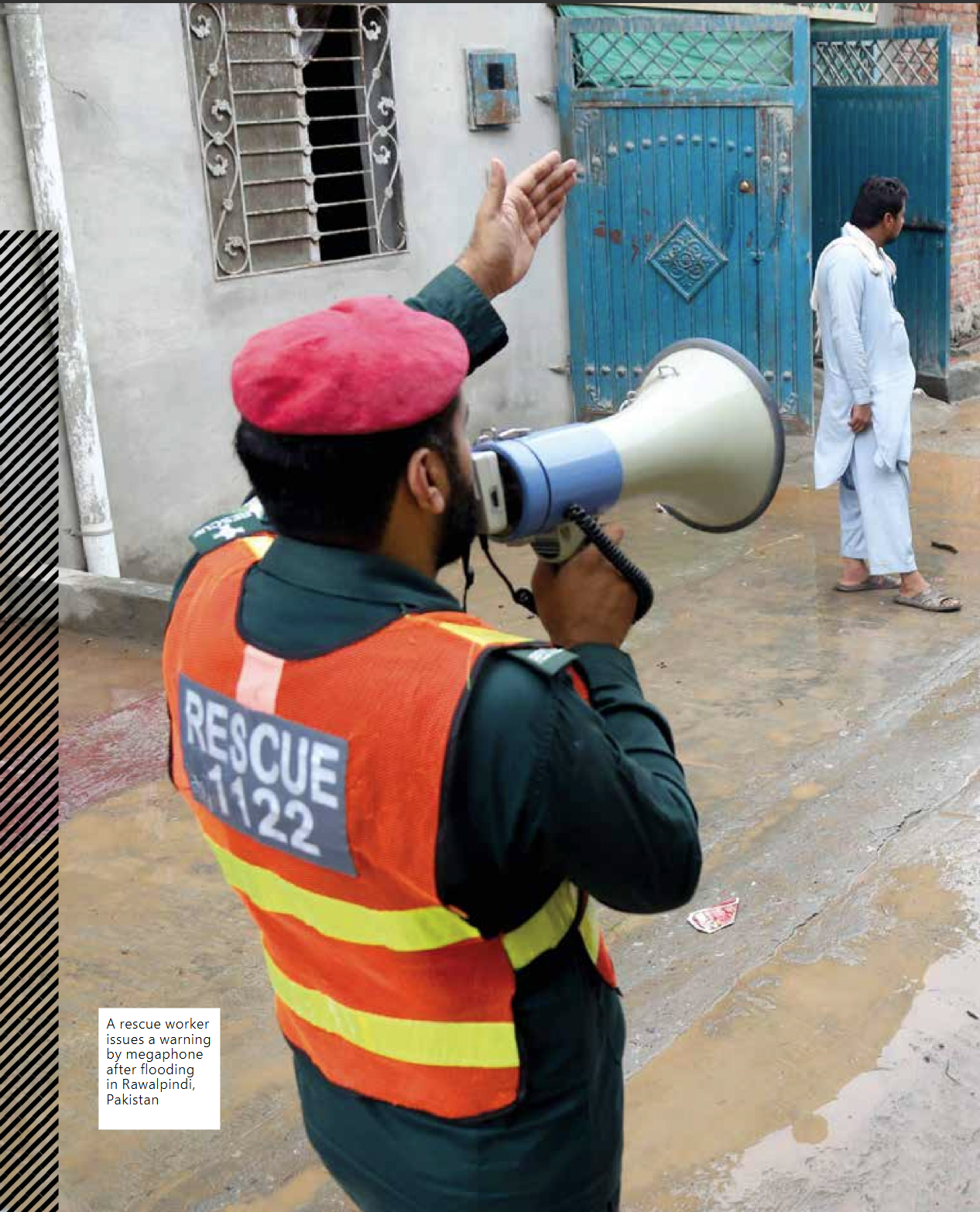
To bridge this gap, the ITU has spearheaded the use of the Common Alerting Protocol. An authorized agency enters the essential details of a threat, what the hazard is, where it is likely to impact, when people must act, into a simple digital template. Once published, that alert cascades across every available channel at once and is automatically translated into multiple languages. “We need the communications on disaster warnings to happen quickly and at scale,” says Bogdan-Martin. “It’s not just about an alert on your cell phone. It’s about radio, television, social media and sirens. And so we’re trying to advance this multi-channel communications approach to everyone, everywhere, quickly.”
Together with the Microsoft AI for Good Lab, Planet Labs and the University of Washington, the ITU is running the Early Warning Disaster Connectivity Map, employing AI to draw together multiple map layers on population density, cell phone signals and risk information. These maps can show how many people within a certain area are unlikely to receive warnings, meaning work can be taken ahead of a natural hazard event to make sure everyone knows what is coming. These methods can be high-tech, such as messages beamed from nanosatellites, or as simple as a volunteer on a bicycle with a bullhorn: the important thing is that the warning reaches everyone. The AI-powered map technology can also be used after a hazard has hit to identify areas in need of extra connectivity.
“These maps help us, help governments and help responders,” says Bogdan-Martin. “They can provide almost real time visibility on network outages and connectivity gaps.”
While Bogdan-Martin stresses that great progress has been made since the launch of the initiative, she warns that not every country is adequately covered yet. “There are a lot of different factors, including the state of the network and the status of connectivity in countries,” she says. “There are 45 countries that have a cell broadcast or a location-based SMS system which allows the sending of emergency messages to all phones in a specific area at once in place. We’re pushing to have many more adopt this. We live in a world where 2.2 billion people are not connected to the internet, and that’s why it’s so important that we also look at other communication channels, so that we ensure that someone who might have just a 2G phone or who is listening to the radio can still get a life-saving alert.”
Step four: React
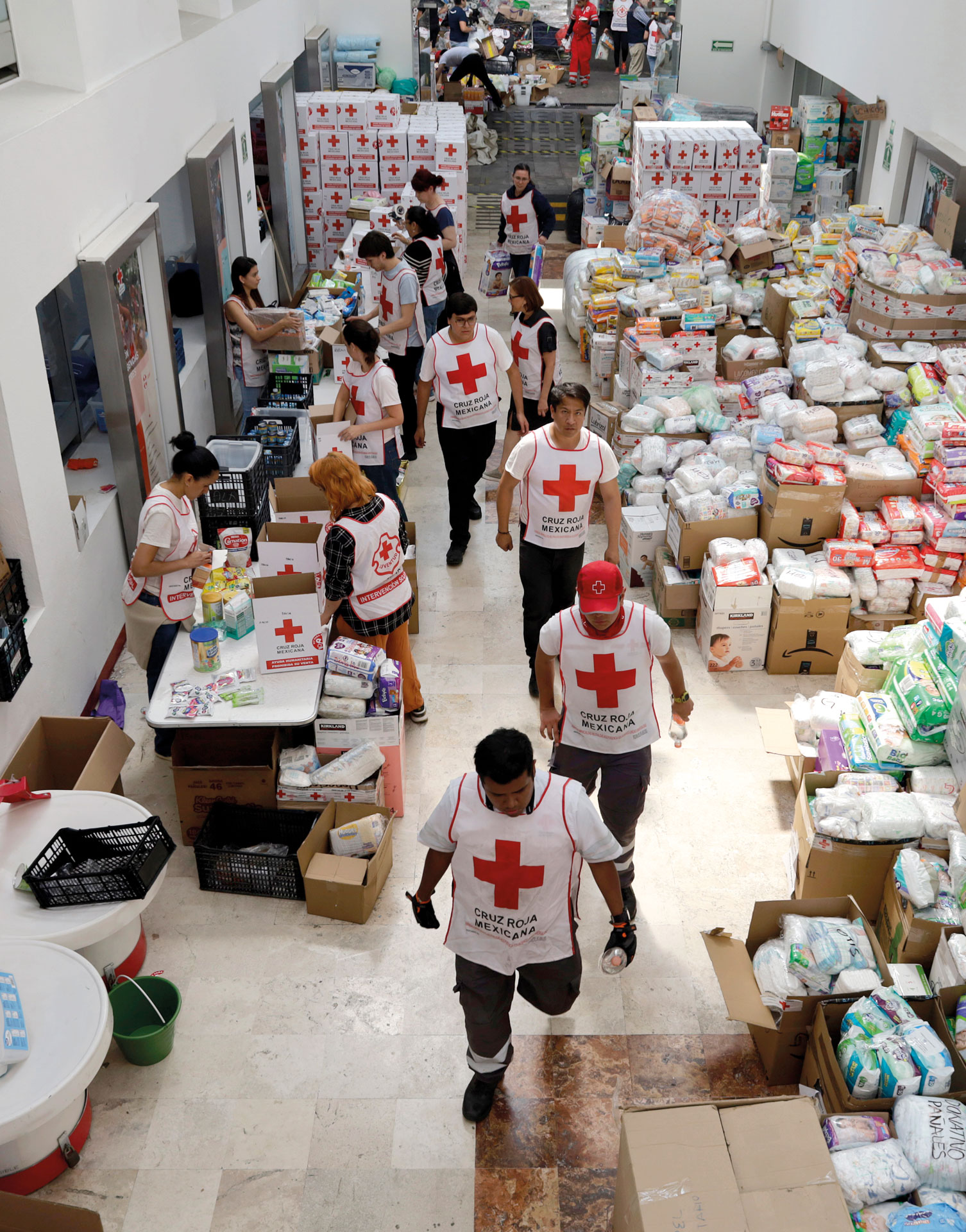
The initiative’s fourth and final pillar, “preparedness and response capabilities”, is the responsibility of the IFRC. According to Chapagain, the biggest obstacle to hitting next year’s deadline is financing. “The original estimate was that we need around $3.1 billion [over five years] to make it happen,” he says. “I think we have raised less than $300 million of that funding. So there is still a gap.” At present, the cash is coming through a patchwork of voluntary contributions from governments, UN agencies and private donors.
Like Kishore, Chapagain stresses that the four organizations responsible for the pillars cannot create and maintain this system on their own and need the assistance of governments and private sector companies. He believes everyone will benefit from a well-funded system. “Even the most conservative estimates say that for every $1 spent on early warning systems, you save $10 [on the financial impact of hazards]. I believe that ratio is much higher,” he says. “The interdependence of the global supply chain is so massive that if we can minimize the impact of hazards so that those impacted could recover rapidly, then the supply chain can be restored much more quickly. This system saves your people, it saves your economy, the recovery becomes much quicker and faster, it maintains the global supply chain. There’s a very simple logic there.”
The key, Chapagain says, is bringing together the experience and technology of private companies with people with on-the-ground experience of responding to natural disasters, pointing out that technology only works if warnings reach people. “One of the most powerful tools in this is a volunteer on a bicycle with a bullhorn,” he says. “It’s very simple but very effective. These volunteers are part of the community, people listen to them and as a result, lives are saved. The question is how do we turn AI weather modeling into a bicycle and bullhorn? And this is where I believe that the private sector and the humanitarian organizations need to come together. The private sector can bring the satellites, and we’ll bring the sandbags.”
“The future isn’t a linear extension of the past”
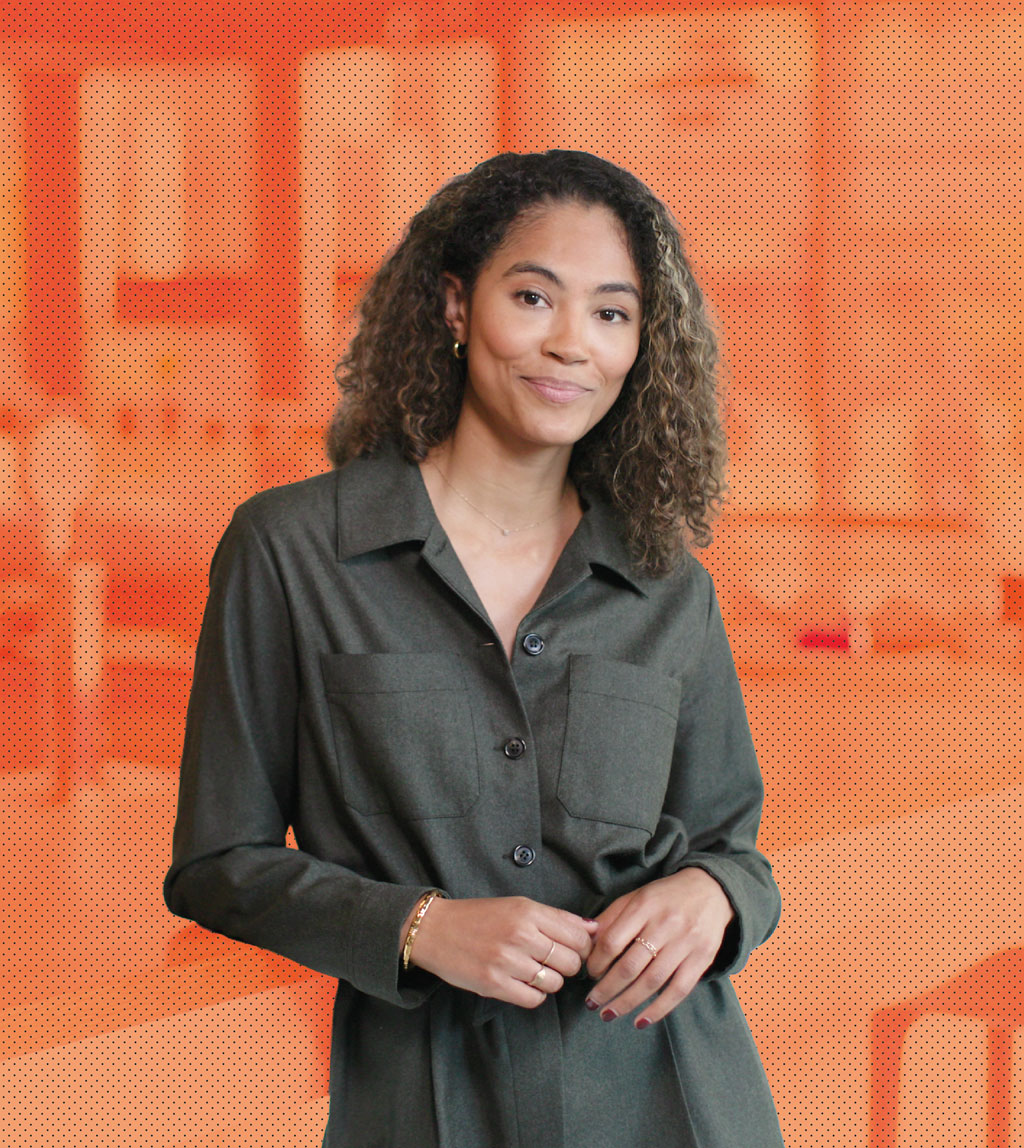
Canadian futurist and author Sinead Bovell shares her thoughts about the rise of AI, interpreting the signals all around us and seven trends she can see ahead
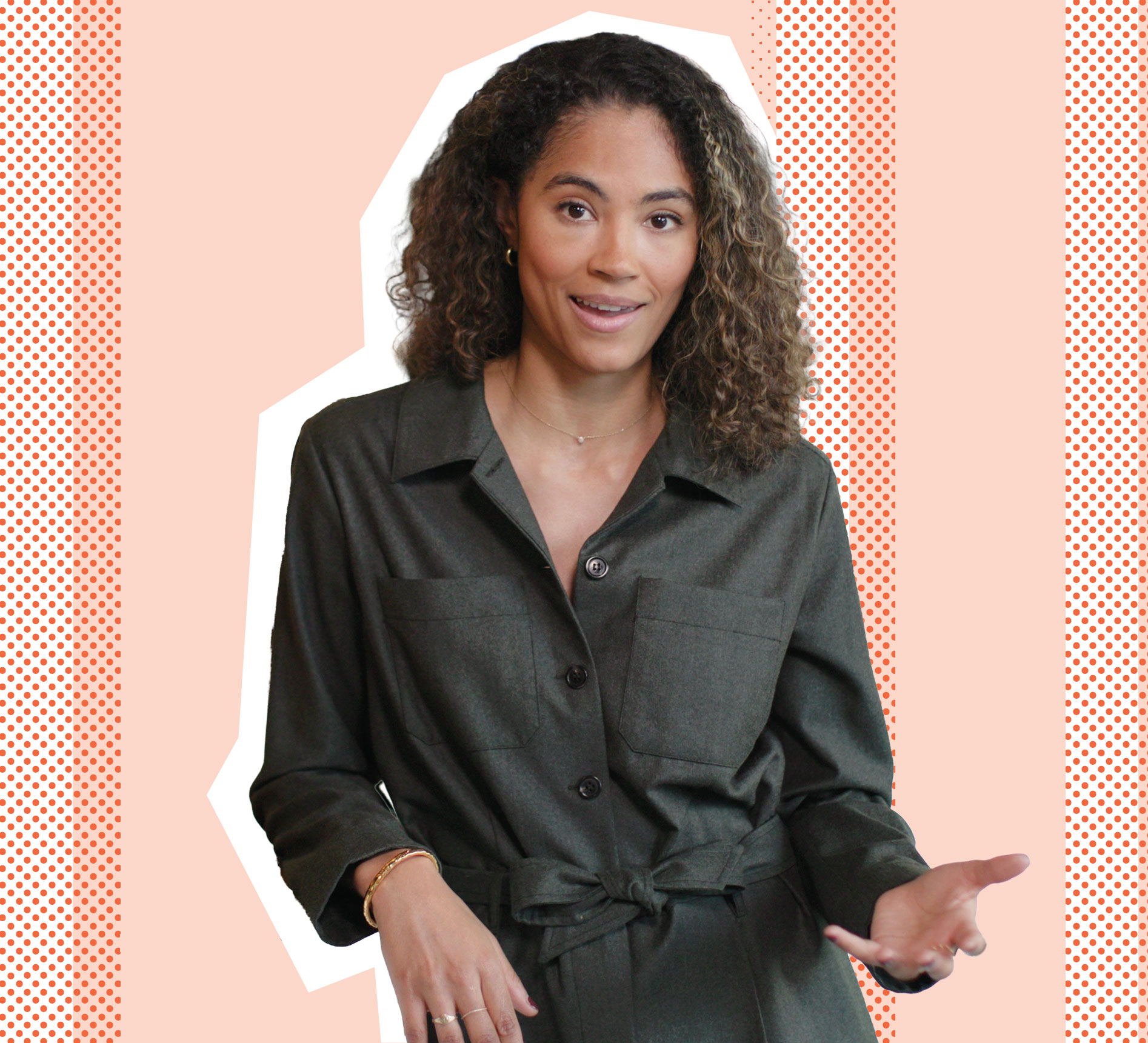
Sinead Bovell is having a moment. Over the past year, the futurist and tech entrepreneur, who is the CEO and founder of WAYE — a tech startup dedicated to preparing young people for the AI revolution — has become a leading voice helping to decode the rapid technological changes that are happening in the world. She has built a powerful platform on social media, with more than half a million followers on Instagram and TikTok, and is now a regular on network television. She has also frequently spoken at the UN about the developments that futurists like her see coming down the track and, through her newly launched podcast I’ve Got Questions with Sinead Bovell, continues to engage audiences in thoughtful conversations about what lies ahead.
“The formal discipline is ‘strategic foresight,’” Bovell explains about her profession, which involves tracking the signals and data around us to help build pictures of possible future scenarios for governments and private business. “A lot of these signals are grounded in emerging technologies, geopolitics, economics and social trends. You then use that [information] to analyze, make forecasts and understand patterns of where the future could move. So, yes, for a living, I do study the future.”
Bovell is quick to point out a common misconception about her trade, however. “Futurists should not be in the business of making predictions. That’s important,” she says. “Nobody can really predict the future. When we try to predict the future, we’re attached to a bias of our preferred future.”
But that doesn’t mean that futurists don’t have an opinion on what might happen or, in Bovell’s words, how to “unpack different ways the future could evolve.” Her biggest goal is turning strategic foresight into a public good, especially when it comes to those who are skeptical of AI’s potential. “I think everybody should get a chance to understand where we’re moving [towards] because foresight is often a private sector advantage,” she says. “People should be able to prepare and understand that skills are evolving, that the general public can take part in the change and [benefit from] the new opportunities that exist.” So what are some of the signals Sinead Bovell is currently tracking?
1. AI is not a tool, it’s like electricity
“There’s a lot of doubt and skepticism around AI, although adoption has been huge,” says Bovell. “But there’s still a barrier people are trying to cross. Let’s say you tried an AI system today. It hallucinates. It doesn’t work properly. You think: ‘This is overblown.’ But general-purpose technologies don’t work on business or stock market cycles or quarter to quarter. These are foundational technologies that can take a decade or more [to develop]. So if you are only paying attention to the next year or two years, you’re going to think that this technology isn’t necessarily worth the hype. If you don’t zoom out and recognize what this technology actually is, I’m pretty certain that your business model is going to struggle. Because the future isn’t a linear extension of the past.
People tend to also see AI as just a digital tool, but general-purpose technologies are not tools, they’re foundational layers that get built on. With a tool, you have the ability to use it sometimes and not use it other times. A foundational layer is like electricity. You just build on top of it.”
2. Social media will look very different
“I ground my work so much in identifying non-linear patterns. We’re really concerned, and rightfully so, about deep fakes and what AI-generated content means for information ecosystems. It’s really important to get to the bottom of these challenges. But we’re also assuming that for the next three, five, six, seven years, we’re still going to be scrolling social media, opening a smartphone and encountering disinformation or AI-generated content.
The question to ask is: if social media and the creator economy are internet-first ecosystems, what comes next when AI is the ecosystem, when AI is the foundational layer? And so I think that’s probably one of the signals that I’m paying attention to. What does it mean to map that new ecosystem out?”
3. The cellphone is on its way out
“Cellphones have gotten smaller, they’ve gotten smarter and they have expanded in scope. We don’t even use the phone part; we rarely talk on it. It’s more just this portal to the world. The smartphone isn’t where it ends, just like pay phones and home phones weren’t where it ended. They will be replaced by something that becomes smaller, more capable.
What form could that take? A lot of people are betting on glasses. That’s one possibility. It could be a device that’s even smaller than glasses. I can’t say for sure what is going to win in the market because there are all of these different factors that have to come together for a certain interface to make sense at a certain time. But I can say for certain that smartphones will go away, the same way pagers went away.
There is no reason that this trend line suddenly stops. We can see some signals and a lot of patents being filed. But maybe it’s just an ecosystem of small devices that kind of connect to create this digital representation of you. We will not be on cellphones in a decade from now.”

4. The real world could become king again
“Another signal that I pay attention to is how people interact in the world. A company has all these AI tools to improve our customer experience, but customers automate their lives too. So is anybody interacting with anybody [online] at all?
I am totally okay with never having to call customer service about the fact that my wifi is down again. I am totally okay to delegate that to AI agents. But when it comes to economics, where do new areas of scarcity and abundance appear as a result of this technology? Well, it will be pretty scarce to be in a live environment with people, because AI is going to be everywhere. So then we might see an appreciation in value in live experiences that only happen in that moment.
Live experiences will be more participatory than social media is today because everyone’s there together in real time commenting on the same experience. They also become more exclusive as that moment never happens again. If we do feel like life has become too automated in one respect, something else becomes scarce and appreciates in value. Those are just the fundamentals of economics and human behavior. And then there are a lot of different opportunities to build and to create things that cater to this.”
5. Doctors may start to see you before you’re sick…
“Healthcare tends to be the domain that everyone, whether you’re skeptical or excited about AI, is rooting for. That’s something unanimous across the board, and it personally and deeply affects most people in some way.
So when you think about the tools and the technologies that are being developed that are linked to AI, they’re all grounded in personalization, in being predictive and proactive and spotting patterns that no single human ever could. I think when we say the doctor has to be a part of the care, we want a human touch point. But how much do we even need to interact or go to a hospital?
When we think about automation of some aspects of diagnostics people are thinking, ‘Well, I don’t want to get a diagnosis by talking to R2D2!’ But what if you get a notification on your device that says: ‘One of your cells is off. We recommend you up your vitamin C.’ Or ‘We’ll send a nanobot to fix it.’ Perhaps that [malfunctioning cell] would have turned into something disastrous five years later, when it would become a point of care. It’s a different way to think about the system.
Maybe diagnosis becomes a signal or pattern in a really micro piece of data that can help prevent an illness from transpiring at all. It’s not going to work for everything, of course, there will be acute, sudden accidents that happen. But maybe a lot of people won’t get sick in the first place.”
6. There could be a major increase in our lifespans
“I think we’re going to extend human lifespan quite dramatically. I think that’s coming. We already see cellular reprogramming, the idea of [Nobel Prize winner Professor Shinya] Yamanaka: how you reprogram a cell to its stem cell state. All of that will likely add decades to the human lifespan. That is going to be in this century. So the idea of living to 120, 130, 140, 150 is not going to be an anomaly.
And that’s fantastic. But it also creates a huge stress on the system. You have Supreme Court justices that have indefinite terms. What does it mean that someone is on the Supreme Court for 110 years? What does it mean for a basketball team when your prime is in your 50s? All of these create stress on the system in ways that we don’t think about.
There was a reason why evolution designed a system that has an expiration date and I think the science [of longevity] is probably going to turn out to be trickier than we think. But I think we’ll continue to push it, and alongside that work, science will also focus on extending healthspan. There’s fantastic data about synthetic biology over the next decade, which could see being 50 feel like being 35. And that is reachable; we can see those signals. That is all really exciting.”
7. People, especially young people, need to prepare if they are to seize the opportunities
“I think we know for certain we’re going to have a different market economy when it comes to skills — that’s quite an obvious next step. What does education need to look like for kids to be prepared, so they can adapt and pivot and have the core skills to think critically about the world around them? How does our information environment change when humans are no longer the sole actors within it? And how do you build robust environments that allow us to have trust in information? There are tons of different research groups that are thinking about this, but we just need to scale those types of initiatives and get behind them. I’d say that’s a way to build societal resilience and also inspire people about the future. The future isn’t just some distant state. It’s a bunch of collective decisions in the present that all of us are making, all the time.”
This is a digital version of a feature from Issue 4 of Signal magazine. To explore the full issue, view the complete flip book here.
Hunting the ghost nets
Abandoned commercial fishing equipment kills millions of marine animals every year, causing untold damage to underwater ecosystems and adding to the growing issue of plastic pollution. But there is hope that what was once seen as an insurmountable problem could be tackled by a combination of artificial intelligence and local knowledge
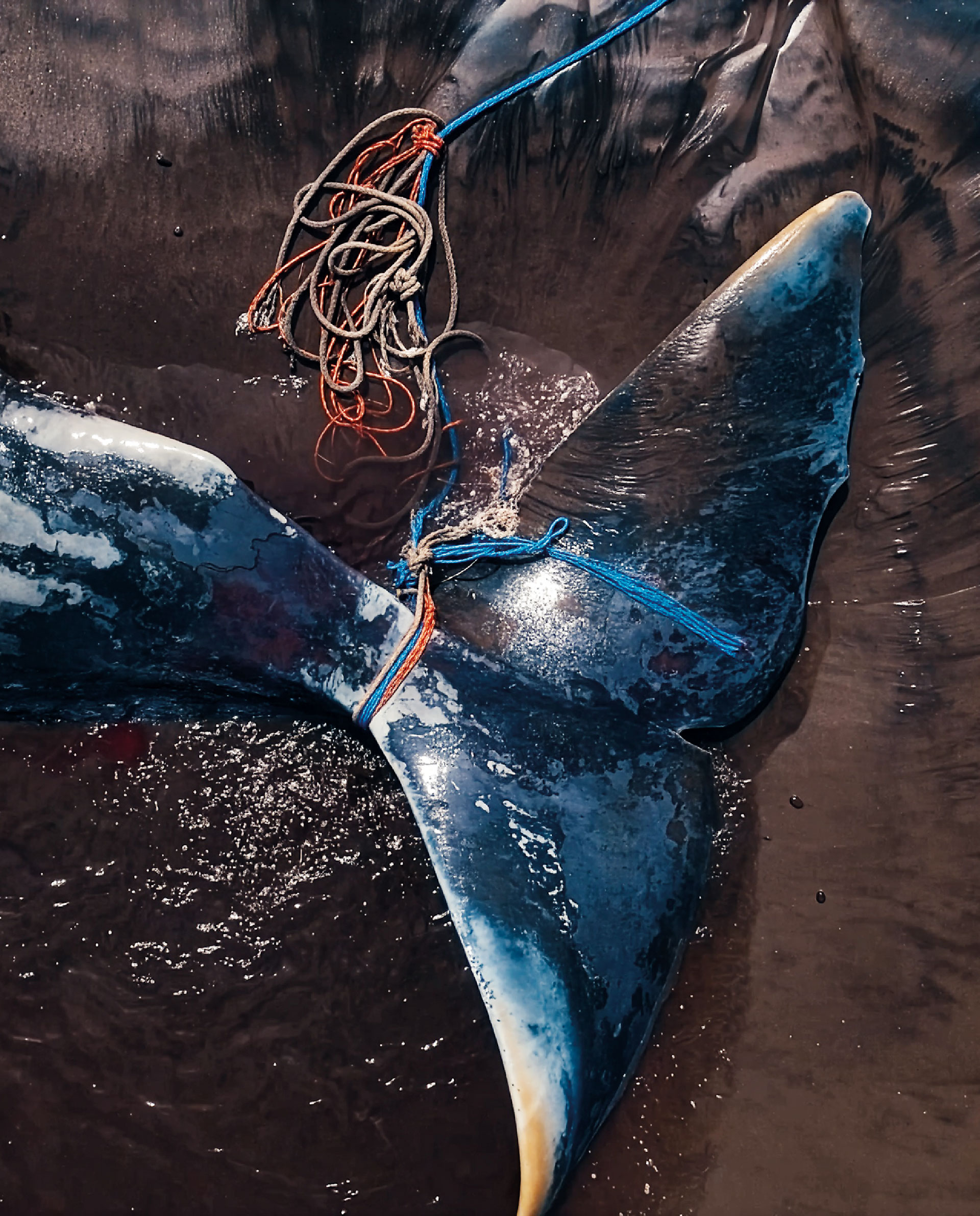
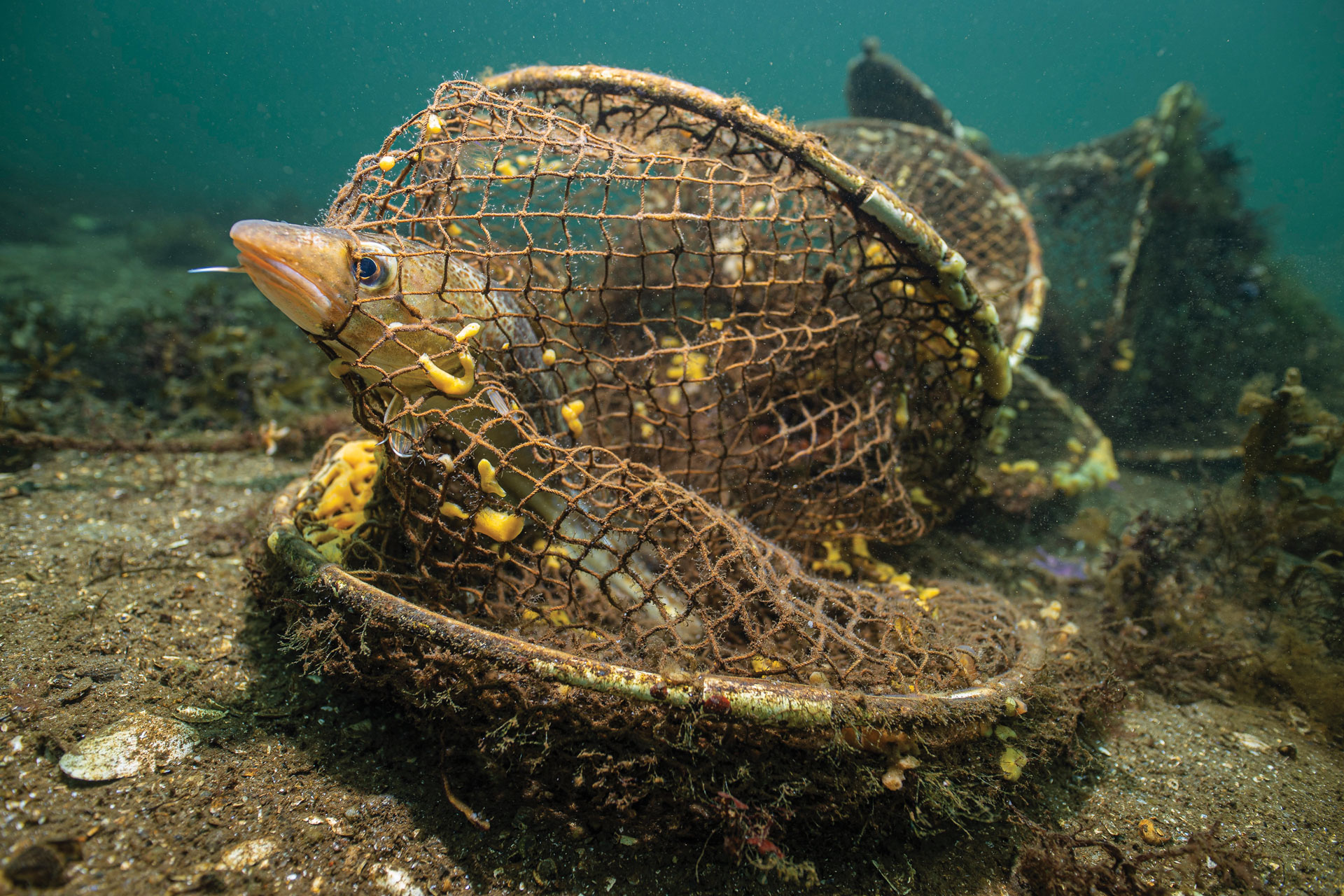
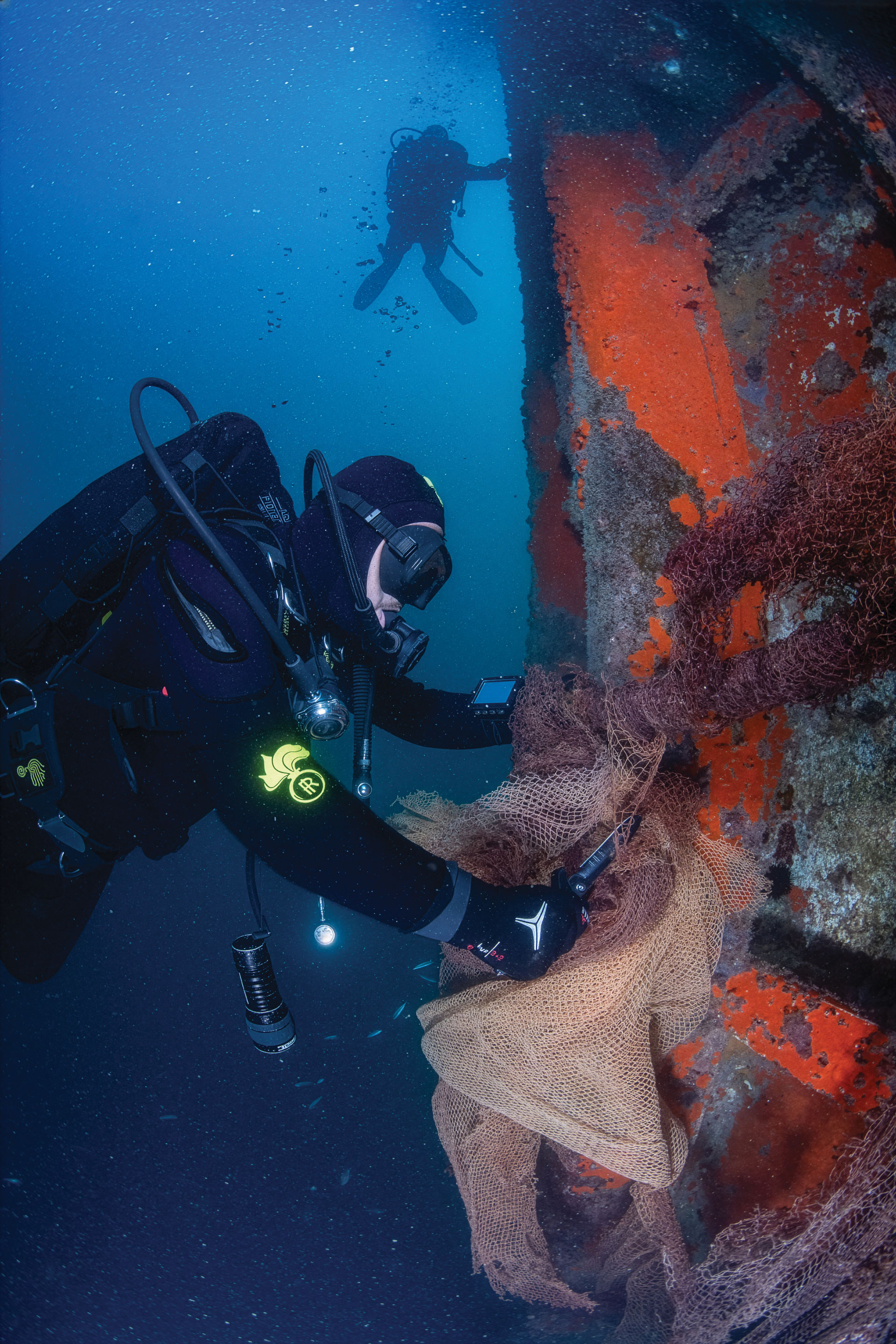
Deep within the ocean, a hidden enemy of all living things is lurking, threatening to destroy marine life by trapping it in an inescapable prison. More than 500 species, including turtles, whales, sharks and crabs have been impacted by this foe, known as “ghost nets” — the abandoned plastic fishing gear that litters our seas and oceans.
The industrial-grade plastics that make up fishing nets are manufactured to survive the harshest conditions. But one unintended consequence of commercial fishing is that such nets are frequently lost at sea, with thousands of square kilometers of nets being abandoned in the ocean every year. These nearly invisible traps silently drift through the water like ghosts, continuing to ensnare and kill marine life, with hundreds of thousands — and likely millions — of marine animals entangled every year.
Lost and discarded fishing gear also adds to the growing problem of marine plastic waste, decomposing into smaller pieces and fibers over centuries and exacerbating microplastic pollution in the oceans. Removing ghost nets is critical but it’s also incredibly difficult to find them. “Ghost nets endanger marine animals and ecosystems and make up a significant proportion of plastic waste in the ocean,” says Gabriele Dederer, a scientific diver and biologist with WWF Germany. “But they are invisible under the water surface and their detection is complex.” Imagine looking for a strand of hair in an Olympic-sized swimming pool, in which the water is pitch black and constantly shifting — and the hair is sinking. Cleaning up the nets may feel overwhelming and impossible, but a new project, GhostNetZero.ai, which uses AI to multiply expert knowledge, offers hope.
The ghost net whisperers
Crayton Fenn is an expert diver who can find ghost nets like a sea hawk spots prey. With more than 40 years of diving experience, he’s seen firsthand how abandoned fishing nets — which he calls “killing machines” — destroy marine life, fisheries and livelihoods.
Fenn started his career tracking down sunken objects around the globe and has become an expert in sonar. Through his company, Fenn Enterprises, he’s helped locate everything from a Japanese submarine to wreckage from the space shuttle Columbia — not to mention countless ships, planes and even trains. In recent years, he has also turned his skills to fine-tuning side-scan sonar systems — something rather like an ultrasound for the ocean floor — to locate and recover derelict nets. One of the most shocking finds? A huge gillnet off the coast of Point Roberts, Washington, which was silently wiping out tens of thousands of crabs on the seafloor. Gillnets are designed to hang in the water like a soccer net — and this one was 219 yards (200 meters) long, almost the length of two American football fields.
Dederer, a longtime friend and colleague of Fenn’s, approached him to ask whether he would consider mentoring scientists in Germany to teach them his ghost net detection methods. He leapt at the chance, eager to share his field knowledge about how to use side-scan sonar to locate the “killing machines.” His expertise has been instrumental in making ghost net searches more efficient, helping Dederer and her team set about cleaning up the Baltic Sea with the help of fishers, divers, scientists and local authorities across Germany, Estonia, Poland and Sweden.
But even after replacing slow, manual searches with data-driven sonar detection, the task remained daunting. Could the team go faster?
Detecting with AI
In 2025, WWF Germany unveiled a new AI-supported platform, GhostNetZero.ai. A collaboration with the Microsoft AI for Good Lab and technology consulting company Accenture, this initiative envisions a world in which oceans are free from ghost nets and marine life exists in a clean, safe environment.
GhostNetZero.ai uses high-resolution, side-scan sonar paired with machine learning to track down possible ghost nets automatically. Sonar scans of the sea are converted into images, which AI analyzes to pinpoint ghost net locations. Once the AI has identified a net, WWF experts review and validate the findings, before qualified divers begin retrieval, using an app to verify the net’s position.
Anyone with access to sonar or hydrographic data can contribute by uploading it to GhostNetZero.ai. The project’s leaders have approached offshore energy operators, research institutes, authorities and other organizations to share their sonar data. AI integration then turns this multi-source data into actionable insight, examining imagery to isolate likely ghost net locations with 94 percent accuracy. The boost in efficiency means that analysis that used to take hours of manual review can now be carried out in minutes, allowing WWF to cover larger marine areas in their search and focus its efforts where they will matter most.
“The combination of sonar search and AI-supported detection represents a quantum leap,” says Dederer. “The seabed is mapped all over the world, and there is a huge amount of data. If we can specifically check existing image data from heavily fished marine zones, this is a real game-changer in the search for ghost nets.”
Using sonar alone, WWF Germany has recovered more than 35 tons of ghost nets from the Baltic Sea since 2018. The hope is that GhostNetZero.ai will see this number increase enormously. The organization also believes the new platform will be crucial for operations in the Mediterranean, where fishing gear accounts for up to 89 percent of litter recorded at sea.
Over the last few years, WWF has been working with fishers, divers, scientists and local authorities in France, Italy and Croatia to map the area and send in targeted teams to retrieve more than seven tonnes of ghost nets from the Mediterranean.
All of this is only the beginning — worldwide efforts are in the works for areas with intense fishing activity like the Coral Triangle, the North Atlantic and the Indian Ocean. And because of AI, there is now hope that we can rid the world’s waters of ghost nets. “I need to be optimistic,” says Dederer. “I have two kids. I want them to see that we need to care for nature and the ocean.”
This is a digital version of a feature from Issue 4 of Signal magazine. To explore the full issue, view the complete flip book here.
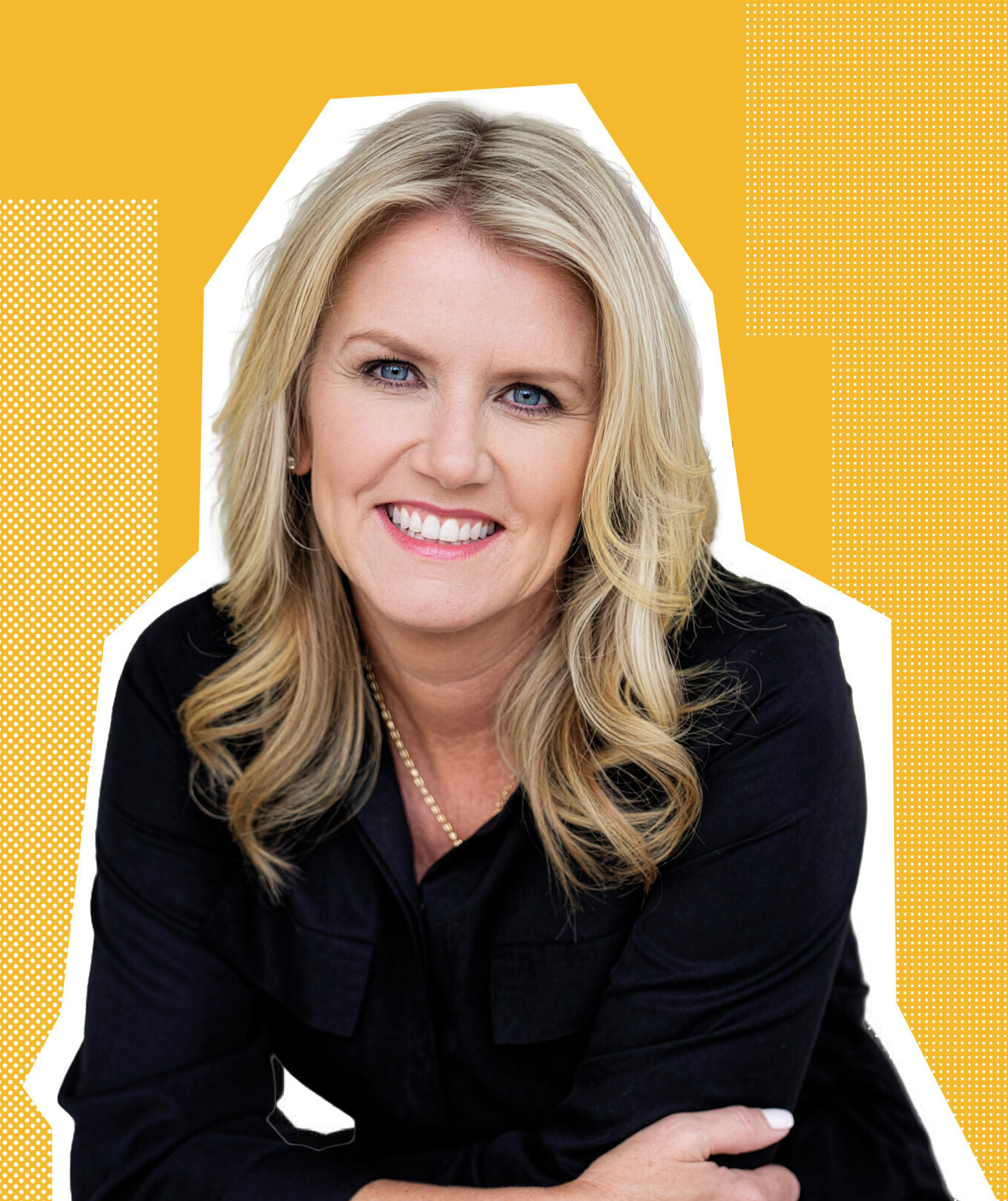
“This is an exciting opportunity to redefine what work is”
With a workforce of more than 220,000 people around the world, Microsoft is one of the biggest employers in tech. But how do you keep a team of that size effective, empowered and engaged – particularly during a period of rapid change? Amy Coleman, Microsoft’s Executive Vice President and Chief People Officer, offers her five tips.
Amy Coleman is not one to shy away from a challenge. With more than 27 years of leadership under her belt, she has helped companies navigate periods of both intense growth and recession. Nothing, she believes, compares to the pace she has witnessed since 2020.
“It has been crazy,” she says with a smile. “The pandemic saw sweeping changes to many people’s jobs. Digital collaboration went from being this thing on the side to being mainstream. And now, with the rise of AI, we’re figuring out what work is all over again.”
The adoption of AI into companies of all sizes, Coleman believes, is going to require an even bigger shift in mindset than the move to hybrid working did. Naturally, she is undaunted by the task.
“What an incredible time to be in the people space,” she says. “It’s been challenging, but if I look back over the last five years, we successfully navigated a period of great change once. Now we’re going through all that uncertainty, that chaos, that potentiality again. This is an exciting opportunity to redefine what work is.”
Coleman sits on the Microsoft leadership team and reports directly to CEO Satya Nadella. With leaders looking for advice on how to handle the next wave of change, we asked her to share five tips for navigating the world ahead.
1. Have the difficult conversations
“The pandemic forced us to really look at how we connect as humans and ask ‘How do we do our work when something gets taken away? What fills that gap?’ We figured it out and adjusted but it took some time. With AI, it feels like the pace is much faster.
The role of HR right now is to help employees reimagine what their job looks like alongside AI – to ensure that learning, growth and mastery still happens as AI absorbs more execution. Our software engineers are spending less time coding and more time collaborating on big ideas, but change also brings fear and uncertainty. It can lead people to turn inwards and protect what they know, and that’s understandable: the success that got you here feels threatened for the first time.
Having conversations about this is important. Can we help people move through this transformation, relying on all the things that got us through prior ones, even though the context may be different? That’s trust, transparency, authenticity and vulnerability. We need context and conversations so that we can move through this transformation together.”
2. Learn from what’s gone before
“When I look back at the pandemic, I think about how we needed to help our teams with some of the human parts of work. We had to lean in to help managers show care for employees. How do you do that? It sounds basic, but you must ask questions that can help employees open up and say what they’re feeling.
The conversation is different now, but again we need to lean in and combat uncertainty by giving clarity where we can and being honest when we can’t. As leaders, you listen and build trust, so that when there are things like job changes and uncertainty, people can come and ask you about it. That also means admitting that sometimes we don’t have the answers.
That’s not easy. At Microsoft, we’re built by experts, by some of the smartest people in the world, and so having experts say, ‘I don’t know what the future is, but I’m here with you’ is going to be a learned skill. I would encourage all leaders to connect more than they ever have before.”
3. Hire for adaptability
“The hiring process for an AI world is still developing. What employers need to be looking for is less about domain expertise, which is still really viable in certain areas like AI science and AI research, and more about a generalist mindset – having adaptable employees that can do many things.
There’s currently a debate about EQ, emotional quotient, and IQ, intelligence quotient. That if intelligence is democratized with AI, and AI can carry out a set of tasks or can augment a job or change a role, it’s going to be my and other leaders’ jobs to figure out where we need humans to be a part of that.
If I take an AI mindset and say, ‘AI could do this whole thing,’ whatever the thing may be, it’s going to be important to figure out where humans need to add nuance, judgment and decision-making. Just like advances in the past, we don’t know all the jobs that are going to come from AI. Certain jobs may be mostly automated, but there are going to be other jobs that are invented because of this.”
4. Education remains key
“A lot of people ask me what my advice is to young people considering further education in the age of AI. I have four children – two that just graduated from college and two that are in college. My answer is that learning is the most important part, and this is something we’ve always known.
What did I learn at university? Of course, I learned in classes and seminars, but I really learned a lot about myself. So I would say to those in the next generation to make sure that you are a learner first and you are super curious.
AI fluency is going to matter, but so are emotional intelligence, grit, adaptability… That’s what I’d encourage them to not only learn, but to highlight and model when they discuss internships and meet with potential future employers.”
5. Retention is more important than ever
“During times of massive change like this, you have to rely on the backbone of the company. That means the people who have shown they can be successful in your organization are more valuable than ever.
I think all too often retention is probably too reactive. By the time that someone comes and says, ‘I’ve been in conversation with another company,’ or even worse, ‘I have an offer,’ it’s usually too late.
Again, it comes down to conversations, context and sharing what’s amazing about working at your company. In Microsoft’s case, what we’re relying on is our mission, our values and our strong leadership and culture. We’re relying on offering great career opportunities here, even in a time where jobs are changing tremendously. And we’ll take care of you and the people that you care about.
We also need to understand what the next generation needs in a company. What does loyalty mean to them? What do work and employment look like to them? How do we adapt to make sure that we get that next-gen talent? It all comes together in that retention conversation.
The other thing I’d say, and I learned this many years ago, is that retention doesn’t mean forever. Instead of thinking a person needs to stay here for the rest of their career, how do we help them do something amazing here and then go on and build another company? It all goes back to knowing your employees, caring about them and caring about what’s important to them – a lot of listening and being curious.”
The road ahead
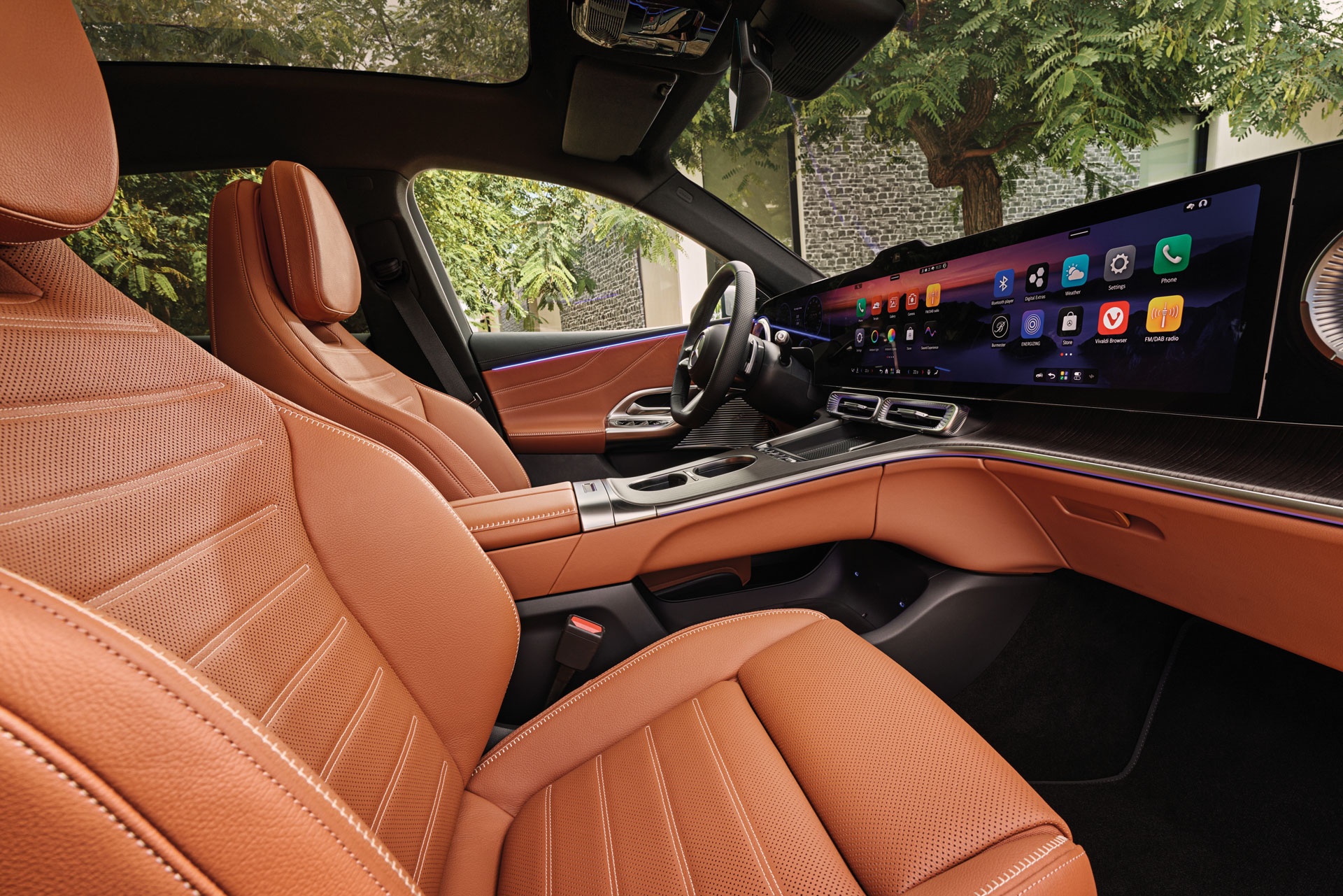
Magnus Östberg, Chief Software Officer at Mercedes-Benz, has spent five years working on a new generation of ‘software-defined vehicles,’ equipped with systems designed to radically enhance drivers’ in-car productivity. As the first models featuring the new integrated software — including Teams and ChatGPT — begin rolling out onto the streets, he tells Signal what the process has taught him and what driving might look like for all of us in the near future…
The new advertisement for Mercedes’ 2026 CLA model features the car driving through a fantasy landscape of silk-draped skyscrapers and synchronized dancers, to a soundtrack by Eurythmics. The song? ‘Sweet dreams (Are made of this).’
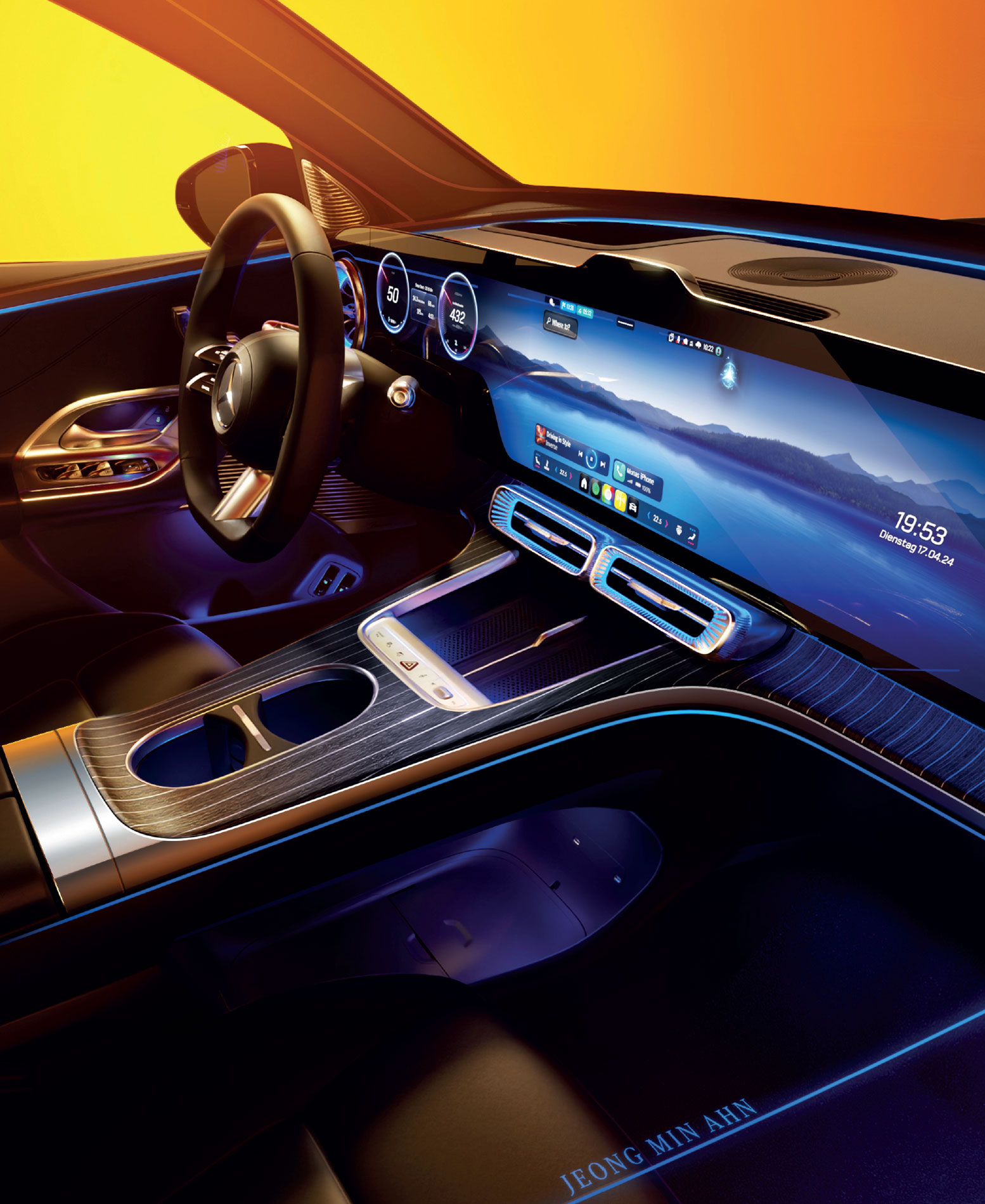
The software fueling these dreams was brought into reality through the work of Magnus Östberg and his team. It was they who integrated ChatGPT into the CLA’s system through Microsoft’s Azure OpenAI Service, making it possible, with a quick ‘Hey, Mercedes!’ to chat with your car about your destination, get an overview of your day or request a briefing on the client you are about to meet. They also, for the first time ever, enabled use of the interior camera for Teams video calls, meaning you can dial in to meetings and be seen by your team as you cruise along the highway (your own screen shuts off as you begin driving, to avoid distraction).
In another unprecedented move, Mercedes integrated Microsoft’s Intune app and device-management tool to create “the ultimate secure workplace on wheels,” giving drivers access to the same range of programs and data that they have on their office devices. “These tools have been constantly helpful to me in my own productivity,” says Östberg. “So much so that I now find it difficult to drive the older generation vehicles without them. It’s a totally different type of experience.”
All of this is just a first step in a broader program that will see the boundaries between car and office broken down, creating what Östberg and his team refer to as ‘the third workspace.’
Microsoft 365 Copilot will be the next system to be integrated into Mercedes cars, enabling its customers to continue work seamlessly after they step into the driver’s seat, and opening up new horizons in productivity. Here’s what Östberg and his team have learned so far…
People want to talk with their car
“We were the first car manufacturer to have a beta version of ChatGPT in a vehicle, and we learned very quickly that people have a desire just to have a conversation with their car,” says Östberg. In beta testing at Mercedes, voice assistant usage surged by 600 percent among cars equipped with ChatGPT that were able to sustain a conversation. But that’s not all that drivers want. “They have a need to actually perform tasks in the real world,” says Östberg. “They want to say to the car, ‘Hey, find me a restaurant there!’ or ‘Find me the opening hours for this location!’ or ‘Take me to these activities!’ Our conclusion has been that there is not going to be just one AI solution or one model that can solve all the needs of humans. There is going to be a need for a collaboration and an orchestration of AI models in order to perform these different tasks.”
Constant feedback is the lifeblood of the new era
The Mercedes models equipped with the new technology that have hit the streets so far are the CLA, the GLB, the all-electric GLC and, soon, the flagship S-Class. “[The GLC] is one of the most exciting ones at the moment because it has enormous range and the reviews from the press have been amazing,” says Östberg. “So we’re all very excited and proud when we drive it. And we’re really looking forward to seeing how the entire customer base embraces this new digitally enhanced GLC.”
Live data from the cars themselves is crucial in shaping this new phase of development. “The biggest learning has been that rolling out these new technologies in cars is going to be a collaboration,” says Östberg, stressing that the most important partnership is with those driving the car. “We have put in place a constant feedback loop from our customers, to find out what they actually do with the technology versus what they say they want to do with it. Our work is really driven by customer usage data at the moment. If we see that there is an overwhelming majority that wants to have a certain capability — exploring the web through AI while driving, for example — then it needs to happen.”
Your car will be part of your digital ecosystem
So what’s different about stepping into one of these models? “What drivers will experience is that now they can fully bring their digital ecosystem into their vehicles,” says Östberg. “So for example, that means connecting to Microsoft Teams or to their social media or streaming accounts.” The question the team has always asked themselves, says Östberg, is “How can we give you access to all the types of features that you previously only had on mobile devices or your laptop?”
The new tools are being rolled out alongside autonomous driving components. “There’s a high cognitive load you have driving in an urban environment or trying to figure out which is your exit on the highway,” says Östberg. “By having this system that is lowering that stress level, you are basically giving a higher level of relief and comfort to the drivers.” AI messaging tools can help reduce stress further still. “You could imagine a lot of features. Say I’m late for my upcoming meeting, the AI could send a message of apology with my new ETA without me taking my eyes off the road,” says Östberg.

Hardware remains crucial
‘Software-defined vehicles’ are those in which features and performance are managed and updated primarily through software rather than hardware. When those vehicles are electric, hardware seems at first glance to be even less important, with no internal combustion engines or gear boxes to worry about. As manufacturers across the world put ever more resources into developing EVs, one might therefore assume that hardware would take a back seat and that software would become the main point of difference and battleground, particularly with the extraordinary new, AI-powered in-car tools that are now being made available.
Not so, says Östberg. “There are very important physical attributes that are no less important than the software,” he says. “For example, one of the biggest reasons why EVs are not being taken on today the way we thought a couple of years ago is because of what we call ‘range anxiety’ [drivers’ worry that their vehicle will run out of charge mid journey]. We can help mitigate that with software; for example we can inform them of the location of an available charging station, the charging speed and how many people have successfully charged there. There are intelligent driving modes to get the most range out of the battery. But it’s also a lot of physical research and investments that are going to mitigate that both on the infrastructure side as well as on the battery chemistry side.”
‘Software-defined vehicles’ bring upheaval
“In the past, every piece of software came to the manufacturing line as one unit, where it was then married together [permanently] with the hardware,” says Östberg. “But now we have separated this flow so you can continuously update the vehicle regardless of where it is — on its way to the dealers, in a customer’s hands or even in those of a second owner of the vehicle. That is the biggest thing about a software-defined vehicle, that separation. And this has meant the biggest change at Mercedes, to everything from the legal contracts with our partners to the factory layout. It’s a major transformation of the company.”
Going through this transformation took a lot of hard work and thought, says Östberg, reflecting on the lessons learned over the last five years of development in the run-up to the rollout of the new ‘software-defined vehicles.’ “I think having a common language that the company can get around is paramount,” he says. There were also major questions to be answered. “What are the new quality measures to be able to release software continuously in an organization?” says Östberg. “What does it mean for manufacturing? What does it mean to offer after-sales services?”
We’ve only just begun
The software-defined vehicles currently driving along a road near you are just the first wave, and Östberg and his team have got a grand roadmap for where things will go in future. “In a couple of years from now, not too far away, we’re definitely going to have multimodal inputs,” he says. “So, of course, we have been talking about the voice being the input and the output of the AI models, but you will also have the pictures from inside the vehicle looking at you as well as the video feeds outside, looking at the world around you.”
These inputs will open up new opportunities. “You can imagine that you could absolutely start to have a conversation where the AI models take input from what you are doing, your facial impression, what you are wearing and the context in the car. You could even hold up a picture and say, ‘Hey, take me here!’” says Östberg. “The AI model is going to take into account not only what you’re saying, but the context of what you see in front of you to generate curated visual cues that are going to help you make better decisions.” Things will go to the next level, Östberg believes, when you are able to deploy fully automated driving, opening up still more possibilities for in-car productivity.
Change has to be managed carefully
There is a temptation to bring in a huge raft of new updates to the in-car experience rapidly, but Östberg says this change has to be managed carefully so as not to overwhelm or disorientate drivers. “We’re making sure that this looks and feels like a Mercedes, a brand which our customer base enjoys and selects over other experiences,” he says. To emphasize the continuity with previous models, the phrase ‘Welcome home’ has been selected as one of Mercedes’s key brand messages — alongside the cue that sweet dreams are made of this. “A new brand that’s a greenfield can decide to go into extreme directions,” says Östberg. “But we are a 140-year-old company that has a brand reputation and experience to live up to. We are shaping this transformation into a Mercedes experience.”
This is a digital version of a feature from Issue 4 of Signal magazine. To explore the full issue, view the complete flip book here.