Before there were dollars or digital wallets, there was barter
Salt, spices, seashells – objects that carried value because communities agreed they mattered. These were the original currencies, the fabric of early economies.

Even then, the underlying currency wasn’t physical at all – it was trust. Every transaction, every relationship, every decision rested on it. And unlike any physical or digital currency, trust is impossible to mint, slow to build, fast to lose. In a world of accelerating growth and fragmented media, trust has become both scarcer and more essential.
By many measures, trust in critical global institutions is at an all-time low – business, government, higher education, the fourth estate, judicial systems, political parties, all have experienced steady declines. At the same time, media fragmentation makes it even harder to either build or regain trust at scale, with outside stakeholders or employees. In an era where anyone can hear about you, your company, your organization from nearly any place and any medium, how do we protect reputation, and create trust? No one organization is going to solve the trust problem, but there are some ways that we at Microsoft have found useful to address it.
1. Be consistently clear. Trust is (as always) built with consistency, transparency and authenticity, to all audiences. Externally, this means being relentlessly clear not just about what you are doing, but why, and how you are measuring it – if you don’t declare, others will pick metrics for you. And remember that (as Hobbes said) a foolish consistency is the hobgoblin of small minds – which means that it is always okay to change as the world changes, but key to that is acknowledging the change and the why behind it. Internally, this involves treating employees as a key audience – increasing the tempo of communication with them, and ensuring that what is said internally is the same as what is said externally. Any gap is dangerous.
2. Operate the channels that matter. In a world where the first version of “what happened” can come from a forum or a thread, control the means of communication – not to dominate the conversation, but to make sure your facts and context are available, accessible, and authoritative. Build the capabilities before you need them; when trust leaks, you don’t want to discover a gap. This means owned channels, inclusive of a rich investor relations and media site, but also the ability to have a company voice anywhere customers live – in online forums like Reddit, and across all social platforms.
3. Enable your people as credible voices. Finally, in a low trust environment compounded by fragmented media, your employees and those closest to the company are the ones that will be most trusted. We’ve all been in a situation where we’ve heard something about a company and then reality checked it with someone who works there. This means we need the ability (and permission!) to mobilize our employees as advocates.
We have tried to combine all these elements in the magazine that you hold in your hands. Inside you will find clarity, authenticity and transparency from credible voices delivered in a channel we feel matters more than ever: print. Enjoy issue three of Signal.
Frank X. Shaw,
Chief Communications Officer,
Microsoft
This is a digital version of the opening letter from Issue 3 of Signal magazine. To explore the full issue, view the complete flip book here.

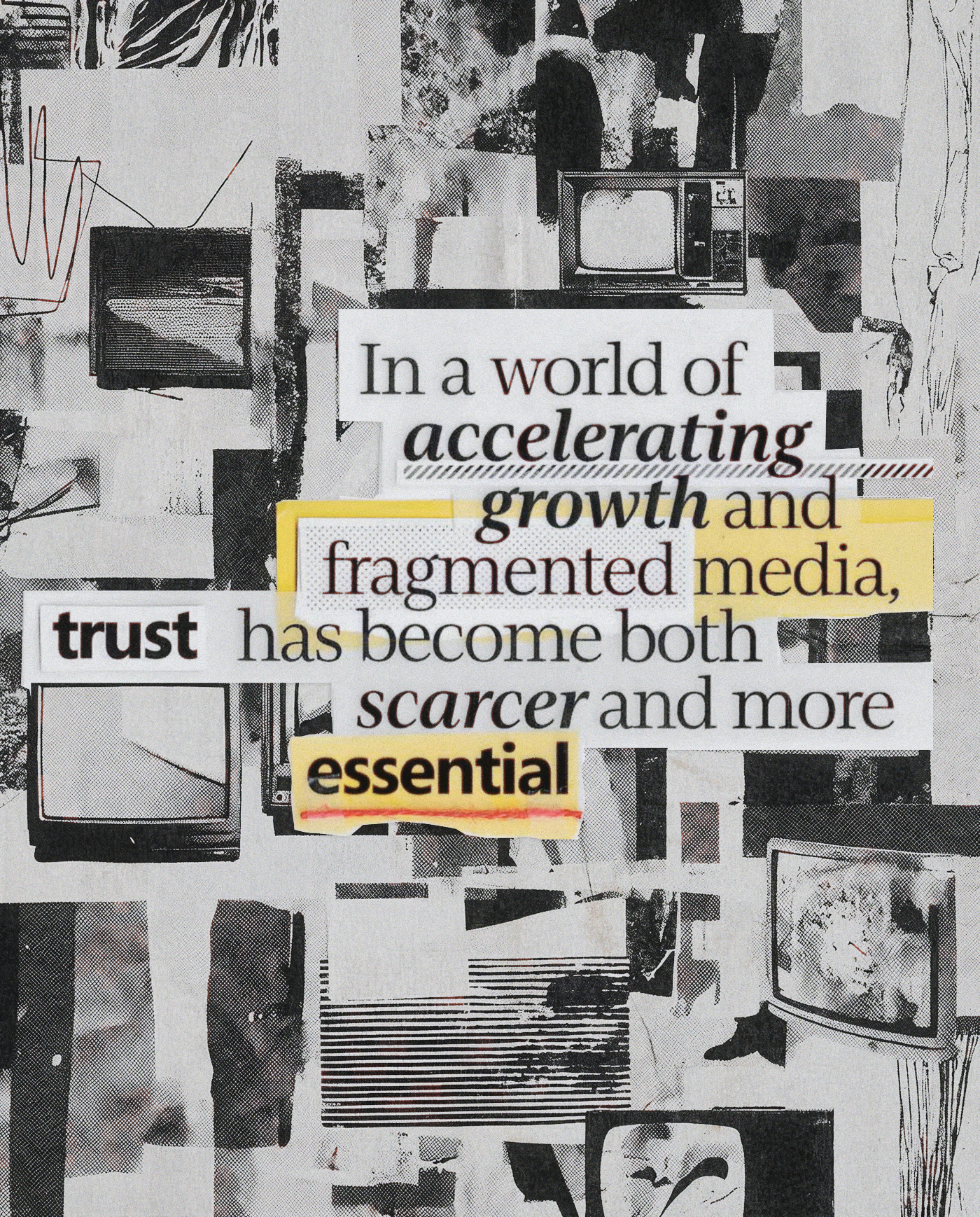
Trevor Noah’s reasons to be cheerful
The Emmy award-winning comedian and author reveals the things he is most optimistic about for 2026
Trevor Noah is a busy man. Since wrapping up his seven-year run as host of The Daily Show in 2022, the South African comedian, author and philanthropist has founded his own production company, released a Netflix comedy special and won the Erasmus prize, the first comic to do so since Charlie Chaplin in 1965.
In 2024, he published his first children’s book, Into the Uncut Grass, a follow-up to his bestselling memoir Born a Crime. He continues to run the Trevor Noah Foundation, a youth development initiative he founded in 2018, which partners with Microsoft to expand AI-driven learning opportunities in under-served schools across South Africa. And he’s showing no signs of slowing down. “2026 is going to be a really busy year for me,” he says. “I’m going to be launching my next world tour and doing a bunch of stuff around the World Cup with YouTube. And we’re constantly expanding the Trevor Noah Foundation.” He attributes his energy levels to his positive outlook.
“There’s always cause for optimism,” he says. “Optimism is a necessary component of the human experience… When we were hunting for animals, you had to be optimistic that you would find one, and today, if you’re going to be building technology that’s going to shape the future, you’ve got to be equally optimistic. The world always moves forward.” Here are eight things Noah is excited about in the year ahead.

1. The chance to push philanthropy further “Our mission and style of tackling problems [at the Trevor Noah Foundation] have definitely changed over the years. We have learned that the things that we thought learners and teachers would want did not necessarily line up with what they actually needed. We wanted to give people, say, fancy tech labs and many of them were just saying ‘We actually need gates that lock’ or ‘We need a fence so that wild animals can’t come in’. So we’ve gotten a lot better at listening to the needs of the community.
We’ve just launched an innovators’ fund, finding people with innovative ideas in and around Africa, and then helping fund those ideas and projects to assist with everyday problems. We’re particularly interested in ideas around education, development and construction, anything that overlaps in the Venn diagram of improving infrastructure and communities.
In terms of long-term goals, we try to pilot programs and pass along those that show success to the government [to develop further], because we can’t scale like a government can. We want to create programs and ideas that last long after we’ve left a community or enable them to do things beyond us. We ask, how do they make more money? How do they create new opportunities? How do they create entire ecosystems? The people that will have fascinating ideas on how to change the community are from the community itself.”
2. A revolution in healthcare “There’s a lot of focus on AI but, for me, we speak about it a little too broadly. There’s one side of AI that’s all speculation, and then there are others where we’ve already struck gold, and I don’t think we’re spending enough time in those departments. Healthcare is one of them. I went to Johns Hopkins University and saw how they’ve been able to improve the diagnosis and treatment of breast cancer in patients through large language models which are looking through scans and predicting whether or not somebody’s going to have breast cancer, sometimes five years sooner than a doctor would. That is also decreasing how many women have to have biopsies unnecessarily. It’s not just the missed positives [that are being addressed]; it’s all the false positives or the possible positives that lead to negative outcomes in people’s health.
There’s another AI program where doctors can dictate their notes and have them written up automatically. So much of the work that’s in healthcare right now, especially in the US, is just in administration and it’s not helping anybody, it’s just everyone covering their butts and making sure that everything is done in triplicate. If we get systems that take care of it, that improves lives here and now.
3. A return to context “People are starting to remember the value of context. If I’m in a room with people, the context is maintained and the veracity of what we’re speaking about is really held securely. It’s very hard for people to lose context. So, when I’m online, I’ve tried to pivot a little more to long-form as the context is more important than ever before. There was once a mad dash to have everything be as short as possible; our record was six seconds when it was [defunct social media app] Vine, but now for myself and for many people, there’s a new direction. We’re saying, ‘Let’s stretch this out, let’s have a longer conversation, let’s have something that breathes so that as much context is maintained as possible.’”
4. A rethink in education “Education is another one of those areas where there’s an opportunity because there is no place I’ve been where there are enough teachers for the learners. There is no world I’ve seen in which every student has an equal opportunity to as much education as they need. I think that the place that AI is already at, especially in a closed system, can provide infinite resources with an LLM that’s trained on all the textbooks and all the information that the kids and teachers need contained within it: lesson plans, marking, student-specific instruction, guidance.
I don’t see a downside, because education has been stagnant for such a long time and so many learners are coming out of school lacking the skills and the tools that they need in the modern world and teachers have borne the brunt of this. They’re up against it. They’re at school trying to teach, and they’re going home and then marking papers until midnight. Then, they’ve got to come in and do it all again. So, AI in education is a massive opportunity, and the risk is contained because you’re doing it within one sphere and always under the supervision of a teacher. It has a wonderful amplifying potential that we sorely need in education all over the world.”
5. Increased understanding of AI “I think people should learn as much as they can about the tech, and not just by reading but by doing. I’ve enjoyed building my own agents and would suggest everyone gives it a try. I’m actually shocked at how many CEOs I speak to who are shaping their entire companies in and around AI, and then when I ask them if they’ve used it personally, the answer is no. Maybe some of them have done a cursory search using one of the LLMs, but none of them have actually dug into it. And I always say to them, ‘If you don’t take the time to try to understand this thing, how can you shape your organization around it?’
Building agents has helped me understand that an LLM has its limitations. It is fantastic at processing insane amounts of data, but it really is limited when it comes to its multimodal inputs and outputs. That’s where humans still have a really interesting edge over technology, in that we’re good at collecting inconsistent, dirty information across different spheres and somehow making it make sense. Our organizations aren’t as clean as we’d like to believe in terms of information flowing from one side to another and neither is the world. And in the same way that self-driving cars have shown how difficult it actually is to drive, we take for granted how easily we transfer information and make use of it in the world.”
6. An evolving job market “There are a lot of AI evangelists who would have us believe that every job is going and everything will be taken over. From everything I’ve seen this isn’t the case – all AI has really done is promote us to being managers of our own work. Everyone still has to supervise the work. So, your legal AI is only as good as the lawyer who knows how to supervise it and understand whether or not the cases it’s citing are actually real. Your coding AI is only as good as the software engineer who looks at it and can say, ‘This is good code’. Because, at the end of the day, the output is meant for humans, and so humans are still going to have to judge it in some way, shape or form. So, I do think there’ll be an evolution, definitely, of how people work and what they do. But I don’t think we’re at this critical point that a lot of people are talking about with AI. I think right now the tool is more interesting than this omnipresent, all-knowing work machine [that some present it as being].”
7. An opportunity for inclusion “A lot of people in very powerful positions underestimate how much knowledge and information is stored in the people they are trying to help. That’s the shift that we need to see in how we think we can change the world. If we can shift the way we think about solutions – whether it’s in policy, philanthropy or technology – from top-down to bottom-up, we can find ourselves making massive leaps forward. No matter what it is we’re building, it’s important to remember that the answers can often lie with the people, the communities, the countries, the places where the problem actually lies. Just because the problem is there doesn’t mean the solution is not there as well. It just means they may not have access to the tools that can help them to solve it.”
8. The World Cup “The World Cup is definitely a cause for optimism. It is not a perfect event, but it’s something that I don’t take for granted. We’re living in a world where fewer and fewer things bring people together into the same space to resonate at the same frequency. We now live in a world where we’ve created an audience of one, where my ‘for you’ page is totally different to yours. The upside of that is that everyone can enjoy whatever niche they want to be in. The downside is that we’re living in different realities, and when people live in different realities, it’s a lot harder for them to see their similarities.
That’s why something like the World Cup, and any sports event really, is such a powerful tool, a whole group of people coming into one space together to share the same story, the same experience. It brings the whole world together too, in a way that is sorely needed. How often does Haiti get to interact with the United States in a level way? Despite where you’ve come from and what your fortunes are supposed to be, when that first whistle is blown, anything is possible. It’s really the stuff of dreams. So, I’m genuinely excited about the World Cup because I think it’s going to bring a lot of people into America, and it’s going to bring America to a lot of people in a different way.”
This is a digital version of a sample feature from Issue 3 of Signal magazine. To explore the full issue, view the complete flip book here.


“We’ve learned how we can push the frontier”
A briefing on the work of Microsoft’s Climate Innovation Fund so far – and where it’s going in the future
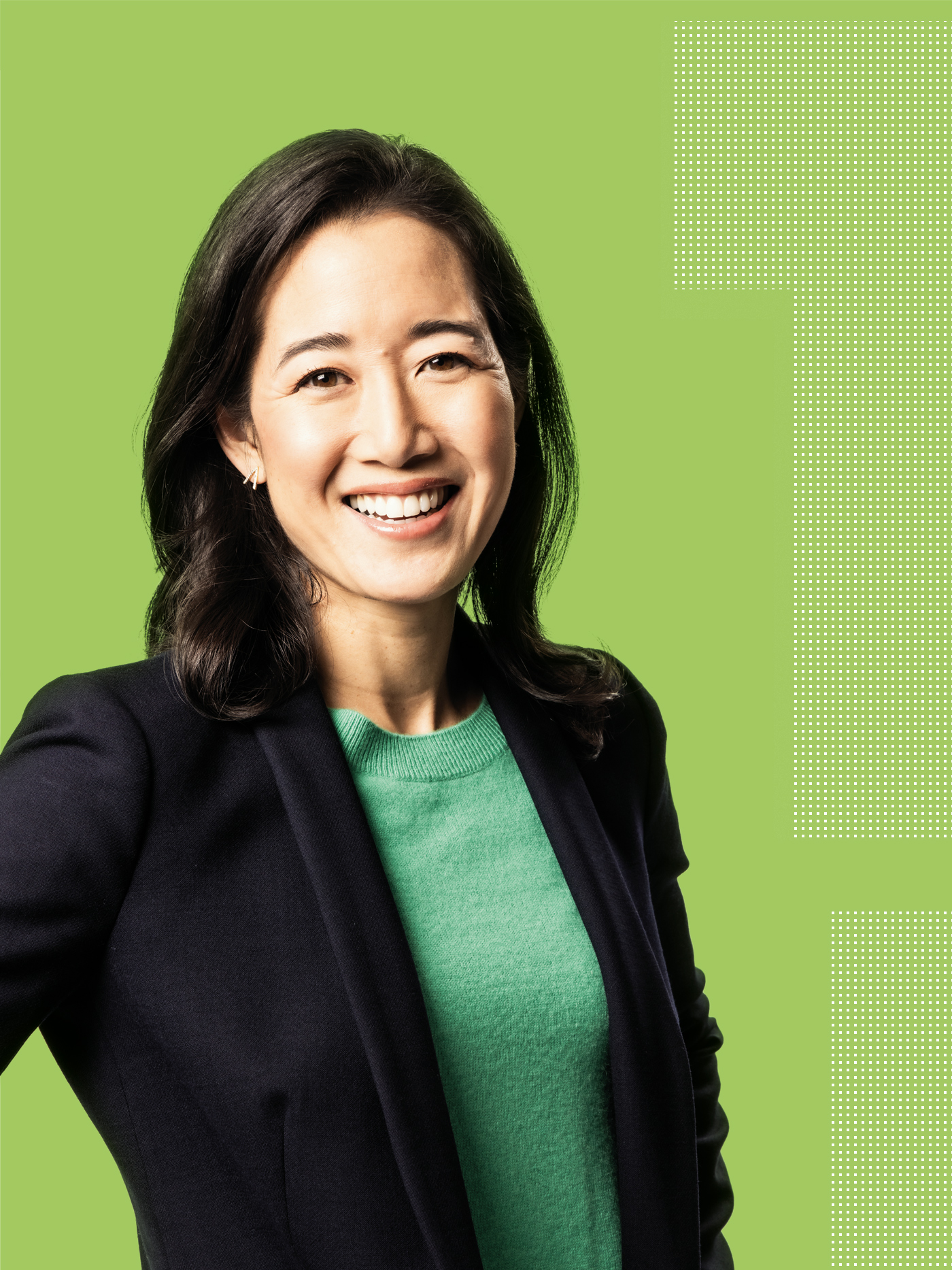
Melanie Nakagawa joined Microsoft as Chief Sustainability Officer in 2023 and as part of her duties she took up responsibility for the company’s $1 billion Climate Innovation Fund (CIF). In her previous roles she was in private equity, government and non-profits, bridging technology, finance and innovation. We asked her for the lowdown on the fund – and how corporations can help in the battle against climate change…
Why was Microsoft’s Climate Innovation Fund set up?
Melanie Nakagawa: When Microsoft launched its sustainability commitments to become carbon negative, water positive, and zero waste by 2030, we realized that there were some technologies and solutions that did not exist at scale yet but would need to be broadly available by 2030. The Climate Innovation Fund was set up to build the solutions the world needs for the market of the future.
How do you decide which investments to make?
MN: As a global technology leader, Microsoft sees an incredible array of new technologies as they emerge in the market. We identify the sustainable innovations with the highest climate impact potential at the edge of commercial adoption, and we match the right type of capital and partnership to bring those solutions to market at scale
What are some key things you have learned in the first five years of the fund?
MN: We’ve learned how we can push the frontier by validating emerging technologies. For example, Microsoft negotiated a ten-year offtake agreement [a deal to buy future product at set terms] with a carbon capture company called Climeworks to draw down around 10,000 tons of carbon dioxide from the atmosphere and store it safely underground. The deal, signed in 2022, was one of the largest long-term direct air capture contracts signed at that time. And then through the CIF, Microsoft provided first-of-a-kind project financing for Climeworks’ Orca plant in Iceland, the first commercial direct-air capture facility. We’ve also learned how we can act as a bridge to mainstream capital so that early-stage projects can scale. An example of this is Stegra, a low carbon green steel business, which we helped secure project financing. We’ve also learned the role that AI can play to accelerate and optimize systems with speed and innovation, and we have a handful of companies in the portfolio that are AI-first.
Tell me about a project the fund has invested in that you’re particularly proud of…
MN: Something that’s becoming increasingly relevant for companies is how to reduce their emissions from air travel. Through the fund we invested in a company called Twelve, whose flagship product is a drop-in power-to-liquid sustainable aviation fuel (SAF) made using renewable electricity, water and carbon dioxide. We invested to support the scale-up of its Moses Lake Washington facility, and it also helped lead to an SAF offtake for Microsoft.
I think that the way the offtake was put together is really useful for other corporations as a model because we structured it in a manner called ‘book and claim accounting’. That enables Microsoft to report lower emissions from using sustainable aviation fuel, but without requiring a physical delivery.
We don’t own airplanes so what we ended up doing was partnering with Alaska Airlines, a Washington state-headquartered business. When business travel happens, Microsoft has paid for the sustainable aviation fuel, Alaska is able to fly with that fuel and Twelve gets the investment to continue to scale and grow their business. Everybody benefits.
You have worked both within government and within the corporate world. What advantages do corporations have in making progress on tackling climate change?
MN: One of the things I’ve learned from the various hats that I’ve worn is that it actually takes all actors to make change – it requires governments, corporations, technology and finance. The role that corporations play is first and foremost to act with speed and agility, rather than being beholden to political cycles, and to respond quickly to emerging risks and opportunities. They can also influence their own value chain, how they embed sustainability into how they procure, influencing emission reductions across thousands of suppliers. And of course corporations have the opportunity to build and drive markets by building the ecosystem for innovation.
Are there particular pieces of advice that you give to CEOs and CSOs who are looking to multiply the effect of their spending on climate sustainability?
MN: We’re seeing how AI can have a transformative effect in accelerating solutions across nearly every industry, and if you look at the CIF investments in AI-driven companies, they show how data automation and advanced analytics can open up emerging pathways for decarbonization, resilience and market growth. So what we often tell others and many of our customers and partners is that the pace of progress has to increase.
This is an incredible moment for corporate leaders, investors and innovators to thoughtfully integrate AI into their strategies and use its potential to support the transition to lower carbon solutions, cleaner energy opportunities and more resilient and affordable solutions.
What are some of the most interesting innovations coming down the track in the next five years?
MN: As we look ahead five years to 2030, we see promising new technologies at the frontier of energy storage and generation, concrete and steel production, aviation fuel, carbon removal, and electronic waste recycling – all of which apply to our own global operations.
Tied to this, I am also passionate about how we bring more first-time co-investors into these technology innovations, especially those supported by the CIF. So far we’ve been able to catalyze $12 billion in follow-on financing from the over $800 million we’ve allocated through the fund. So far for every dollar we’ve allocated, a $15 follow-on has been attracted. If we can do this for those tech innovations I mentioned, we will be able to accelerate the pace and scale of important solutions.
What keeps you moving and motivated in your work?
MN: One of the key draws for me to join Microsoft a few years ago was the CIF, the notion that we are able to deploy and allocate Microsoft resources including our AI capabilities and know-how into the companies that are building the future. I get really enthused about the direct investments we’re making to bring on new supply in energy, fuels, carbon removal and advanced materials.
It’s great to know that ideas that were just a science project five or ten years ago are now commercial scale, mainstream products and projects that are being used by millions. And then there’s the opportunity to show the real meaning of strategic partnerships that deliver concrete results in unlocking the technologies, capital and talent needed to scale this market faster. It’s an exciting time for Microsoft’s Climate Innovation Fund.
This is a digital version of a sample feature from Issue 3 of Signal magazine. To explore the full issue, view the complete flip book here.

The Davos 10
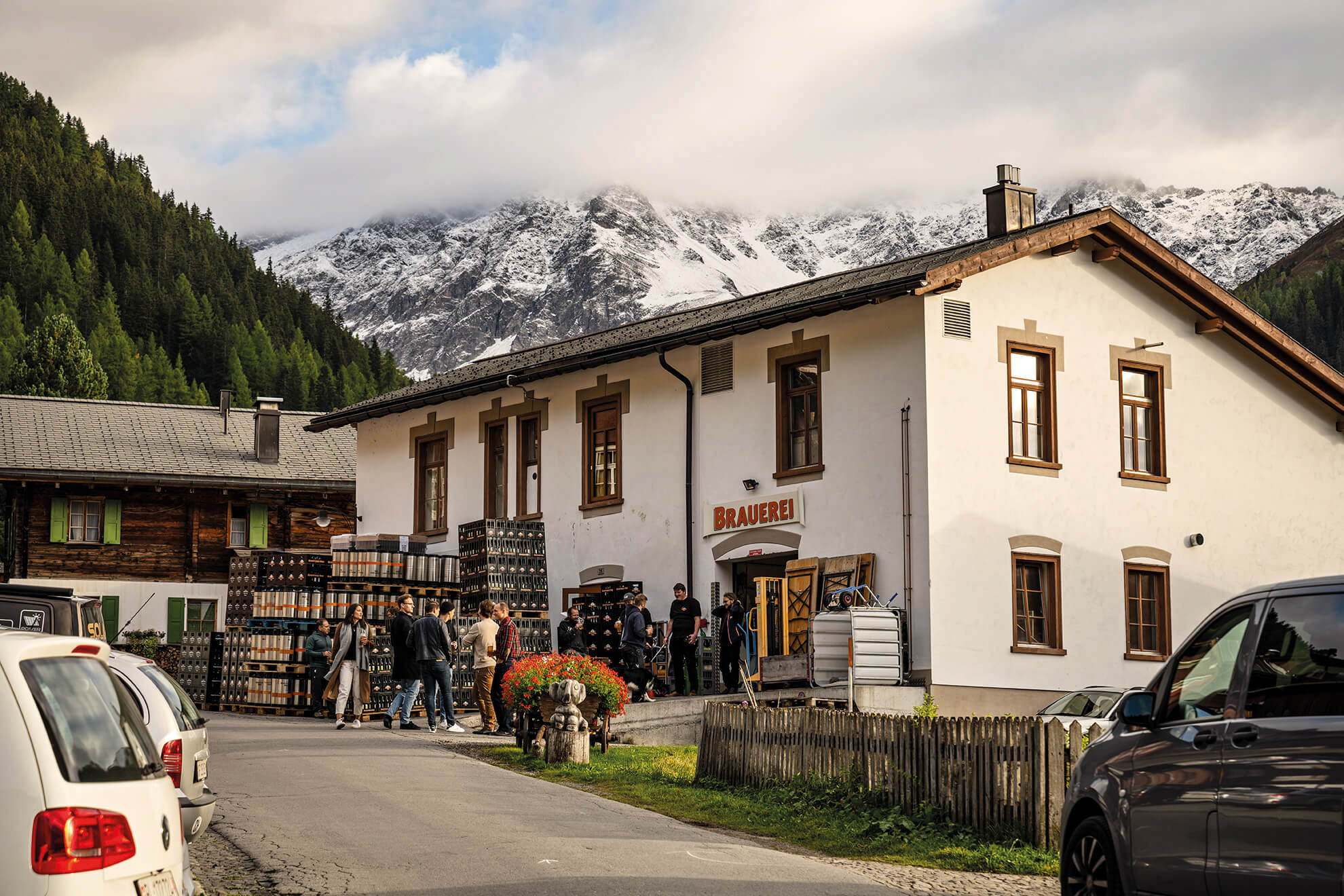
Since 2017, chef Stefanie Hein has been welcoming visitors to LOKAL, her Davos restaurant that celebrates the region and its ingredients. She shares her insider tips for the best places to visit in and around town
1. Gourmet cheese shop Käch sells amazing local, regional and international cheeses and delicacies from across the region. The truffle raclette is not to be missed! If you want to take the flavor home, they offer vacuum packing to ensure your cheese stays fresh for your journey.
2. The small, family-run store Bioladen Davos offers some great organic products. The store plays a key role in the “Ünschi Härdöpfel” initiative, which began in 2019 under Bioladen’s owner Martin Hänggi and brought potato farming back to the Davos mountains after a roughly 70-year hiatus. It has recently expanded to include sustainable spring water from the surrounding mountains.
3. Tucked away opposite the Parsenn funicular, Café Weber is a fourthgeneration, family-run bakery-café that has been a Davos staple since 1903. It’s known for its breads – the sourdough is exceptional – and pastries such as the Bündner Nusstorte (a traditional nut-filled cake). It also offers the best brunch in town.
4. Located at Promenade 109 in Davos Platz, Vreni’s Teekanne is a unique tea boutique. Owner Vreni Federici and her daughter Carmen warmly welcome visitors to chat about their travels to tea plantations and share the stories behind the rare and exotic brews they bring back to Switzerland.
5. Perched high above Davos, Kessler’s Kulm is a hotel, spa and restaurants that is the ultimate spot for panoramic Alpine views. It sits at Wolfgang Pass, making it a natural pitstop for skiers tackling the long red run. They refuel on mountain classics including fondue or enjoy a well-earned drink on the picturesque terrace before continuing their journey. It also has a rooftop spa which overlooks the Landwasser Valley
6. The area has two great microbreweries. Monsteiner, in the heart of the Walser Village of Monstein, was established more than 20 years ago and produces 30,000 liters of beer each year. Visitors can book tours and tastings to learn about the brewing process and sample their signature beers along with local charcuterie and cheeses. Meanwhile Davoser Craft Beer, founded in 2018, brings bold flavors to the local beer scene. Brewmaster Hannes Gutschmidt, a renowned connoisseur, ensures every batch retains its characteristic punch. Davoser has an annual output of about 40,000 liters and offers tours and tastings for those keen to dive into the art of craft brewing.

7. Mountain restaurant Chalet Güggel is a Davos classic, perched high on the slopes of Jakobshorn with wonderful views over the Alps. Accessible by foot or via the Jakobshorn cable car, it’s a favorite for hikers and skiers. Try the roast chicken – so good, it gave the restaurant its name!
8. The beautiful Waldhotel, with sweeping views across the valley, is close to everything yet feels a world apart, making it the perfect getaway.
9. Go Vertical is my insider tip for high-end ski and bike gear and the place to book brilliant mountain guides and avalanche courses. It also hosts the Backcountry Weeks Festival, a four-day event every January that brings together freeriders and backcountry enthusiasts from across the country.
10. A visit to Sertig Valley is a must. Go for lunch at one of the village’s superb restaurants, including Bergführer, set in a 450-year-old traditional house with a stunning terrace overlooking the valley. Chef Nina Eyer is known for reinventing simple, traditional dishes – such as mountain guide soup, a carrot-ginger broth finished with sunflower seeds – with the utmost dedication and her meals are a foodie’s delight. Walserhuus Sertig, meanwhile, is more than 100 years old and offers breathtaking views and classic Swiss cuisine, with a particular expertise in game. Don’t miss the wine cellar for a perfect pairing. After lunch, take the short walk to the waterfall at the end of the valley for some of the best views in the world!
This is a digital version of a sample feature from Issue 3 of Signal magazine. To explore the full issue, view the complete flip book here.

The Father of AI
Signal visits the Eternal City to talk with Father Paolo Benanti about the Rome Call for Ethics in AI, the joys of vibe-coding and the prospects of a new Renaissance
Rome is in the midst of a torrential downpour. Tourists in €2 rain ponchos scurry for cover in the caffès that line the Via Cavour, whose pavements have become makeshift tributaries of the Tiber. Water cascades down the steep steps of Via Magnanapoli, where an enterprising restaurant displays AI images of Pope Francis digging into a bowl of the house spaghetti. Those taking shelter inside will see further unlikely photographic endorsements from Charlie Chaplin, Marilyn Monroe and a series of medieval knights enjoying a nice carbonara.
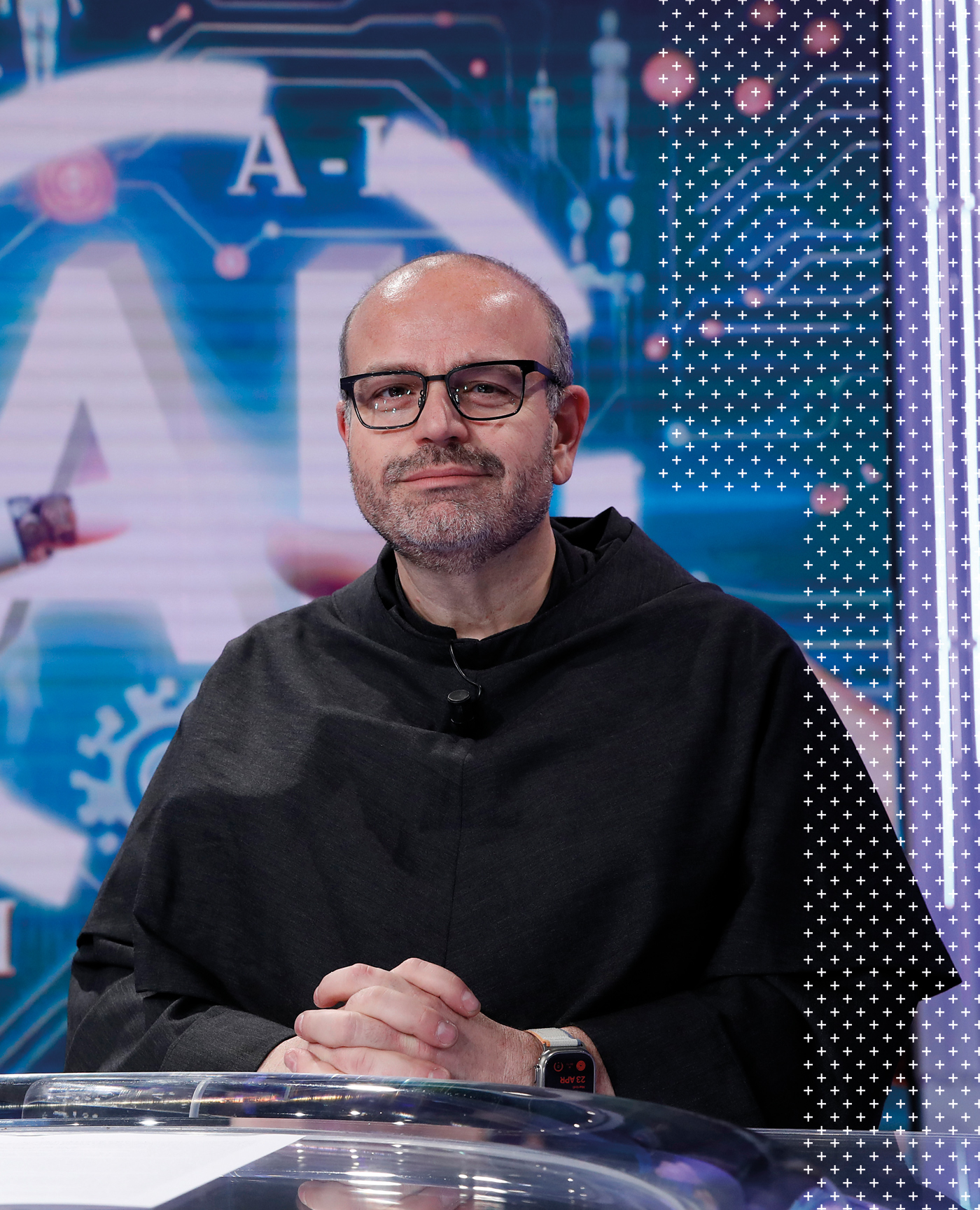
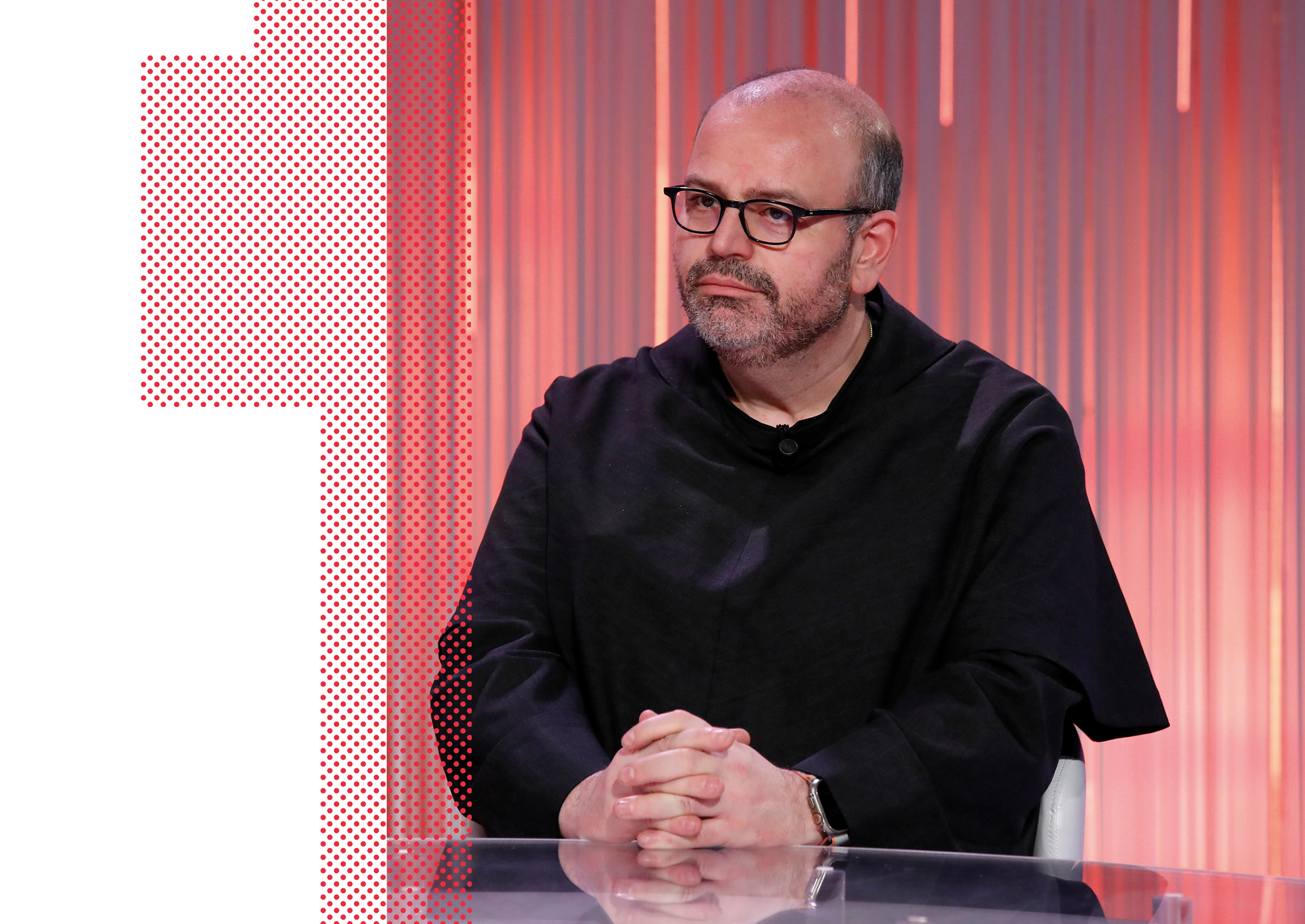
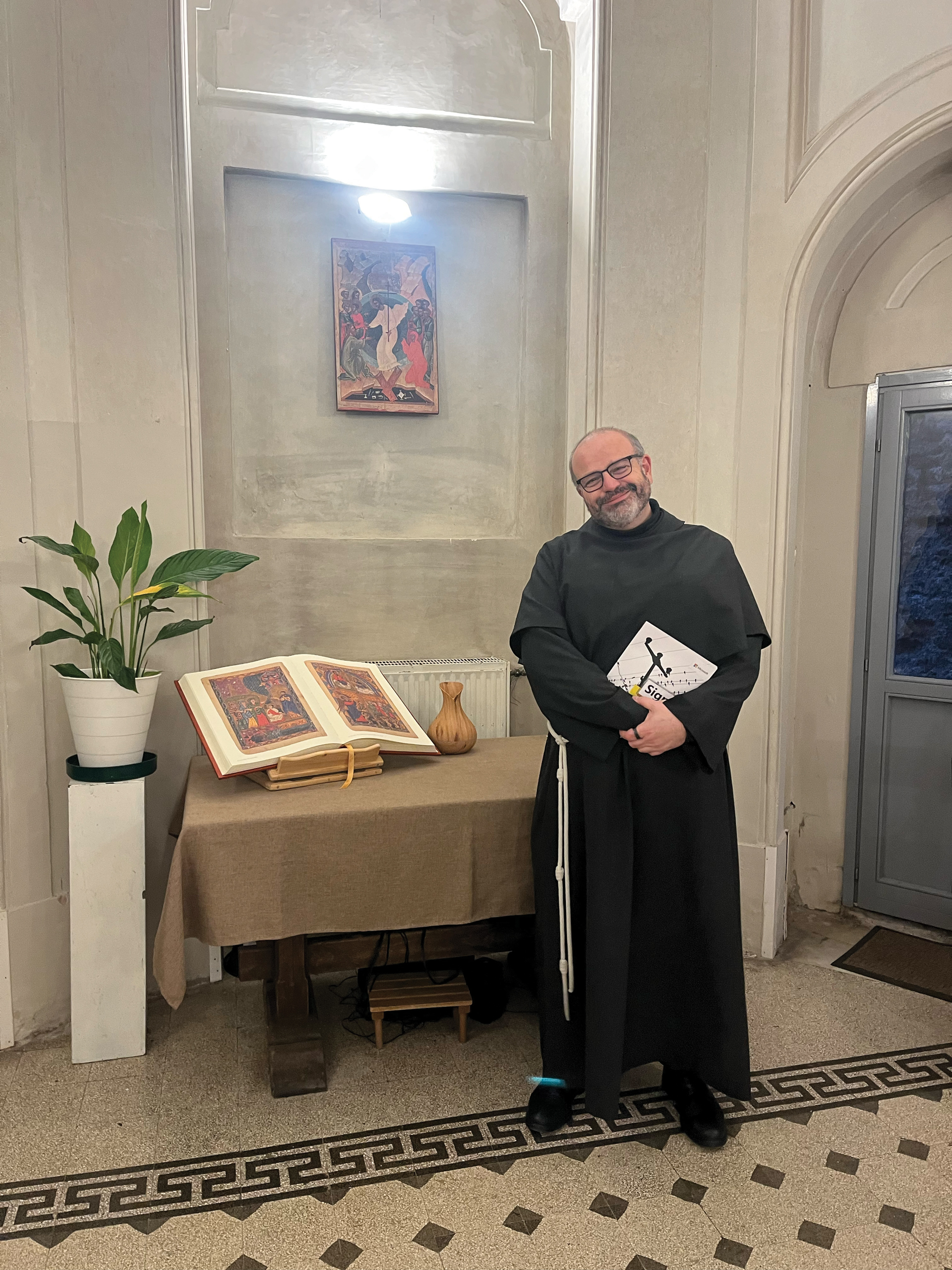
Just down the road meanwhile, in a quiet corner of a Franciscan monastery, we are snug, dry, and discussing some less frivolous uses of artificial intelligence. My host is Paolo Benanti, priest, author, professor of moral theology, tech advisor to the Vatican and one of the driving forces behind the influential Rome Call for AI Ethics. Before he found his vocation, however, he began training to be an engineer. “I studied on the other side of the street from here, at La Sapienza University,” he says. “I took the classes, but I didn’t finish my course because I found what I was looking for in the order. I said, ‘Okay, engineering, machines, computers, it’s all in my past.’”
But tech turned out to be harder to kick than he had thought. After completing his six years of religious education to join the order, Benanti was offered the opportunity by the other friars to undertake further studies. By then he had realized which subject most excited him. “I wanted to reconcile the two sides of the street, to mix philosophy and technology,” he says. This novel idea wasn’t very warmly received at first. “Can you imagine the faces of people in the church, looking at me in 2007 and asking “Why would you want to do this?’” he asks. Benanti managed to convince them and started a PhD focusing on the ethics of neurotechnology, brain implants and artificial intelligence. “The idea that 18 years later the first thing the new pope [Leo XIV] would do is to identify AI as a key topic for the church… let’s say that there was a little bit of transformation in that time,” he says with a grin. “AI is not only transforming society, it has also transformed the perceptions of the church.”
In 2017, having completed his PhD and begun lecturing at university alongside his religious devotions, Benanti met Pier Luigi Dal Pino, Microsoft’s Senior Regional Director of Government Affairs for Western Europe. “We started to talk about how AI is coming, and we found a lot of overlap between Microsoft’s perspective, my philosophical and ethical perspective and the interests of the Holy See,” he says. “We looked at each other and said, ‘Let’s try to do something together!’ And this is where Microsoft and academia and the Vatican started working on something that became the Rome Call for AI Ethics.”
The Call enshrines six principles designed to promote an ethical approach to the development of frontier AI systems – transparency, inclusion, accountability, impartiality, reliability, and security & privacy. It was signed by representatives of the Pontifical Academy for Life, Microsoft, IBM, the UN’s Food and Agriculture Organization and the Italian Ministry of Innovation on 28th February 2020. “It was a huge event with 2,000 people,” says Benanti. Thanks to the pandemic, it would be the last such gathering that year. “We signed and just a few days later, Rome went into lockdown.
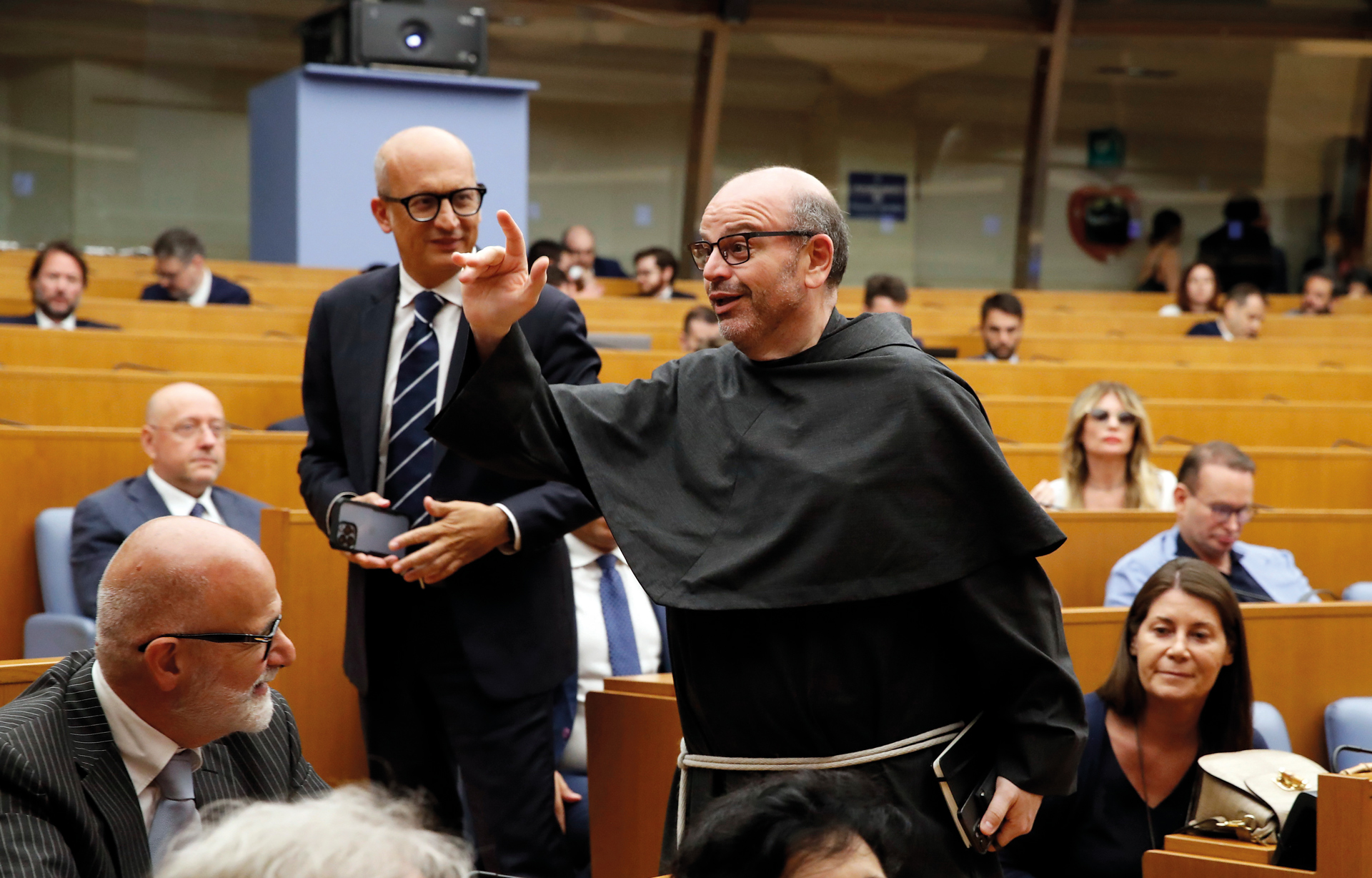
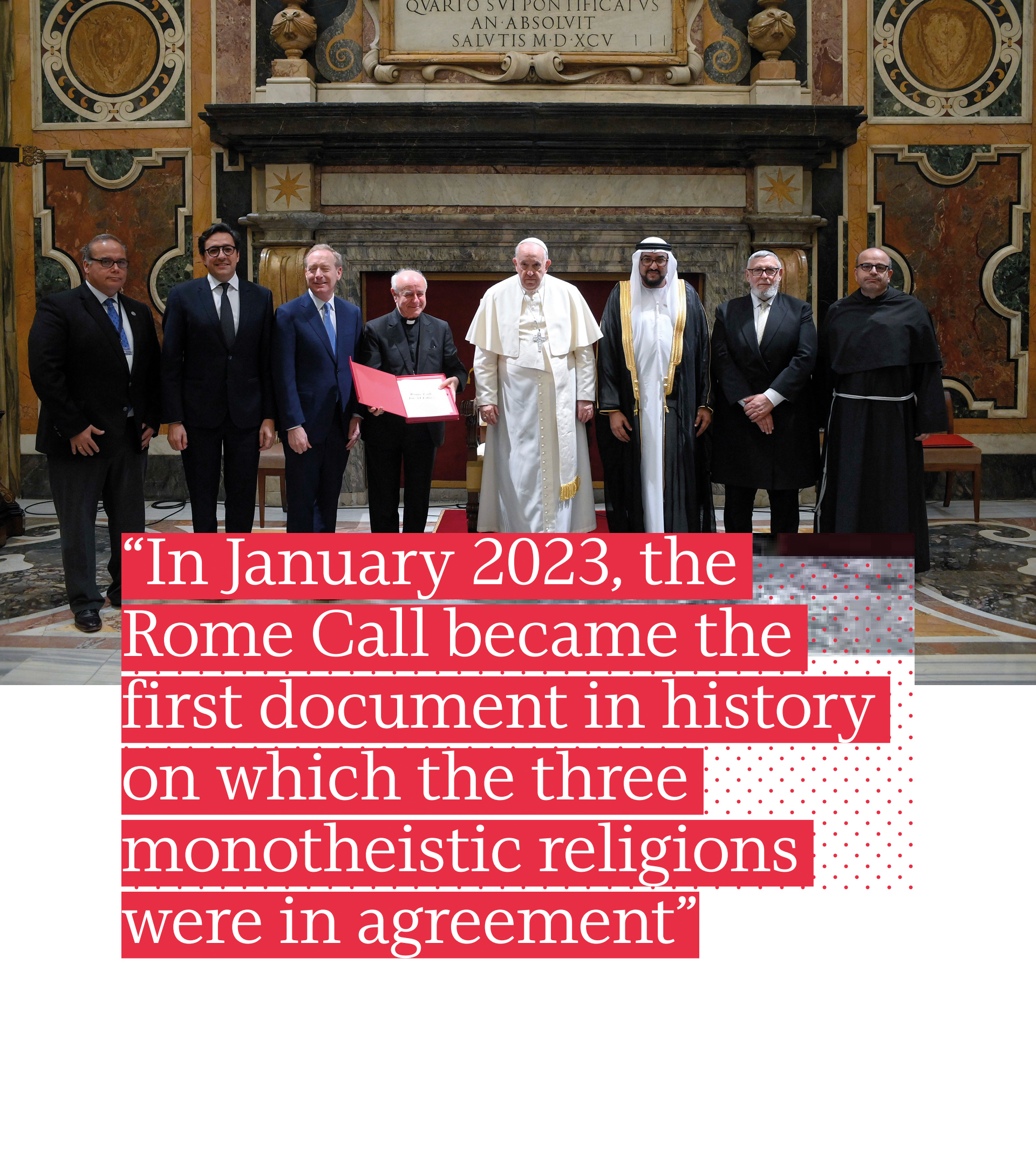
Covid-19 put plans to gain more supporters on ice for a couple of years. “But after a dialog with [Microsoft Vice Chair and President] Brad Smith we started again in 2022,” says Benanti. “The power of this Call is that it is for everyone. Its real success would be to reach the day on which it is [so widely accepted that] it is not needed anymore.” As a next step, the group set their sights on gaining broad cultural and religious support. “We were able to obtain positive feedback from leaders of Judaism and Islam,” says Benanti. “In January 2023, the Rome Call became the first document in history on which the three monotheistic religions were in agreement.”
At the signing by Jewish and Muslim leaders, Benanti made a keynote speech. “In the manmachine relationship, the true expert and bearer of values is man,” he told the assembled dignitaries. “Human dignity and rights point out that man must be protected in the man-machine relationship.”
His comments were backed up by Brad Smith. “We must ensure that AI remains a tool created by humanity for humanity,” he said. “It’s imperative that we guide this work with a strong commitment to high ethical standards and a broad sense of societal responsibility.”
Benanti’s next move, in 2024, was a trip to Hiroshima, where representatives of 21 world religions signed the Call, and Amandeep Singh Gill, the UN Secretary-General’s Envoy on Technology, expressed his approval. “He said ‘You built something that we wanted to build!’” says Benanti with pride.
For all the groundswell of support, however, there is no statutory force to the Rome Call. “It is not a compliance list; we don’t check or mark what people do and don’t do,” says Benanti. “My perspective is that of an ethicist, so in a way I get to pose questions and run away before giving any answers! But the idea of opening up the debate is fundamentally to ask people, ‘What would you like to be remembered for?’ So, to every engineer now working at a tech company, we ask the question of which of two models they prefer, AI versus humans or AI as an enhancement. We want this symbiotic relationship in which the tools are a co-pilot not an autopilot.”
There are some clear practical advantages for organizations that sign up. “We want CEOs to see ethics not as the enemy of business but as something that can give it value,” says Benanti. “These days people want to see an ethical commitment from their company in order to feel that their job has real merit. Signing the Rome Call can be a huge magnet for companies to draw in the best talent.”
Benanti often wears an Apple watch and a smart ring and enthuses about the democratizing force of technology. “We are eight billion people on Earth,” he says. “Something like six billion of us have a smartphone. But only 27 million people are able to code. That means that 99.65 percent of people are excluded. But now I can use natural language, and the AI can translate it into code – and I can take possession of the machine.”
The friar has dabbled in AI-generated code himself. He gestures with delight at a new set of windows in his study. “Welcome to the revenue from my vibe-coding!” he says. “I designed four apps, which were sold on the market and gave us the money to change the windows.” The apps, which include one which helps people use the Zettelkasten brain method to help memorize notes and another for creating booklets for religious celebrations, “give me the ownership of the machine so I don’t have to depend on someone else’s software,” says Benanti. “Imagine we are heading for a future in which we are giving silicon back to people. They will not be customers of silicon anymore, but its owners. That could be a huge evolution, moving from 0.35 percent of the population able to code to 25 percent, much like the revolution we had with the invention of the printing press during the Renaissance when people started being able to read and to study.”
What’s more, Benanti says, “An AI companion could be the best servant for anyone – it could be a way of democratizing privilege, including education, that before was reserved for a small number of people. It could be the tool that allows us to express a better humanity for a much higher number of people.” He does, however, strike a note of caution. “We have to be realistic too, that this has not always happened with big changes in history and it’s not a one way street. In Europe, we reached a higher level of understanding of what it means to be human with the French Revolution. We had these principles – Liberté, Egalité, Fraternité. But then you can see what happened with Nazism and fascism. The fact that it’s not a one way street is exactly why it’s so important to have an ethical debate about this technology. Because AI could be the best tool to give humanity the best ever quality of life – or it could be the worst nightmare that allows a few elites to dominate others.”
As with the Renaissance and later technological leaps forward, Benanti can see AI unleashing new creativity. “If we went to Paris in the 19th century, you would see some artists painting what they saw, point by point, working for a month. Then a strange man came along with a box and a cape, made a click and in five seconds he had captured the same subject of the images as the painting. Did photography kill the painting? No! It democratized the making of images.”
Benanti foresees a role for distinguishing AI products from human creation. “We have to develop tools that allow us to connect a digital asset to its producer,” he says. “If I shoot a picture, I should be able to put on a cryptographical blueprint that connects it with my name, to take responsibility for it. Companies that make AI models can blueprint any AI-generated images as well, so that we have two guardrails – human-produced and AIproduced. It will be like the little lock that you see on a website. It will not guarantee to you that the content of the website is perfect, but would you put your credit card number in a site that does not have the lock? No! People have the right to know if there is a machine or a human being behind the content.”
Benanti draws a further parallel, this time with journalism, drawing on his experience as chair of the Italian government’s Commission on Artificial Intelligence for Information. “You can write something that is not true as a journalist, but if you can connect your name to it, you make a chain of responsibility. What is your professional name? Your area of expertise? Your reputation? We have to do the same things for all digital creations.”

Is there a worry, though, that people, particularly future generations, will cease to care whether cultural artifacts – music, film, photography, writing – have been created by AI or not? “I think that there will be processed creativity and it will be like processed food,” says Benanti. “You have a lot of consumption of Pringles today, but they don’t taste like food made by la mamma!”
On the morning I flew to Rome to meet with Father Benanti, I got talking to the taxi driver on the way to the airport. When he heard that I was going to meet the Vatican’s expert on AI, he told me how rattled he was by recent headlines about the technology undercutting white collar jobs, and asked me to pose the question of what his teenaged daughters should aim for in their education and careers.
Benanti considers the issue carefully. “We are in a transitional time and we cannot give guarantees to anyone,” he says. However, he warns against simply projecting forward based on some of the early indicators of AI-related job losses. “For evolutionary reasons our brains think in a linear fashion and you can have non-linear processes in AI, so it’s not so easy to make predictions and you may make really bad choices if you simply extrapolate recent tendencies in the direction of tomorrow.”
“The key point to make is that we have no other option than to bet on the next generation, and to enable them to be the best version of humanity that they can, which means equipping them with the best reasoning capabilities. Human thinking is likely to be the most highly required resource in the coming years. So it is vital to allow them to develop critical thinking, including ethics.”
In the last years of his reign, Pope Francis spoke out in favor of an ethical approach to AI, sending a powerful message to the delegates at the Hiroshima conference. “I ask you to show the world that we are united in asking for a proactive commitment to protect human dignity in this new era of machines,” he said. The new pope, Leo XIV has also made interventions on the technology, praising its potential in health care and science but also telling schoolchildren in the US that “Using AI responsibly means using it in ways that help you grow – never in ways that distract you from your dignity or your call to holiness.”
“This pope is really open-minded,” says Benanti. “He knows that AI is one of the most transformative things that we have now. He says that he took the name Leo XIV because Leo XIII was the one that opened up the social doctrine of the church with Rerum Novarum [an 1891 encyclical letter which addressed industrial-era issues produced by the adoption of new technology].” While Benanti says we will have to “wait and see” which final policies on AI will be pursued by the new pope, he hopes and believes that they will continue in a direction of being open to all rather than narrowly focused on the Catholic community. “We want to have an alliance of all different people on AI,” he says. “We want to push things in the direction of the biggest good for everyone.”
This is a digital version of a sample feature from Issue 3 of Signal magazine. To explore the full issue, view the complete flip book here.
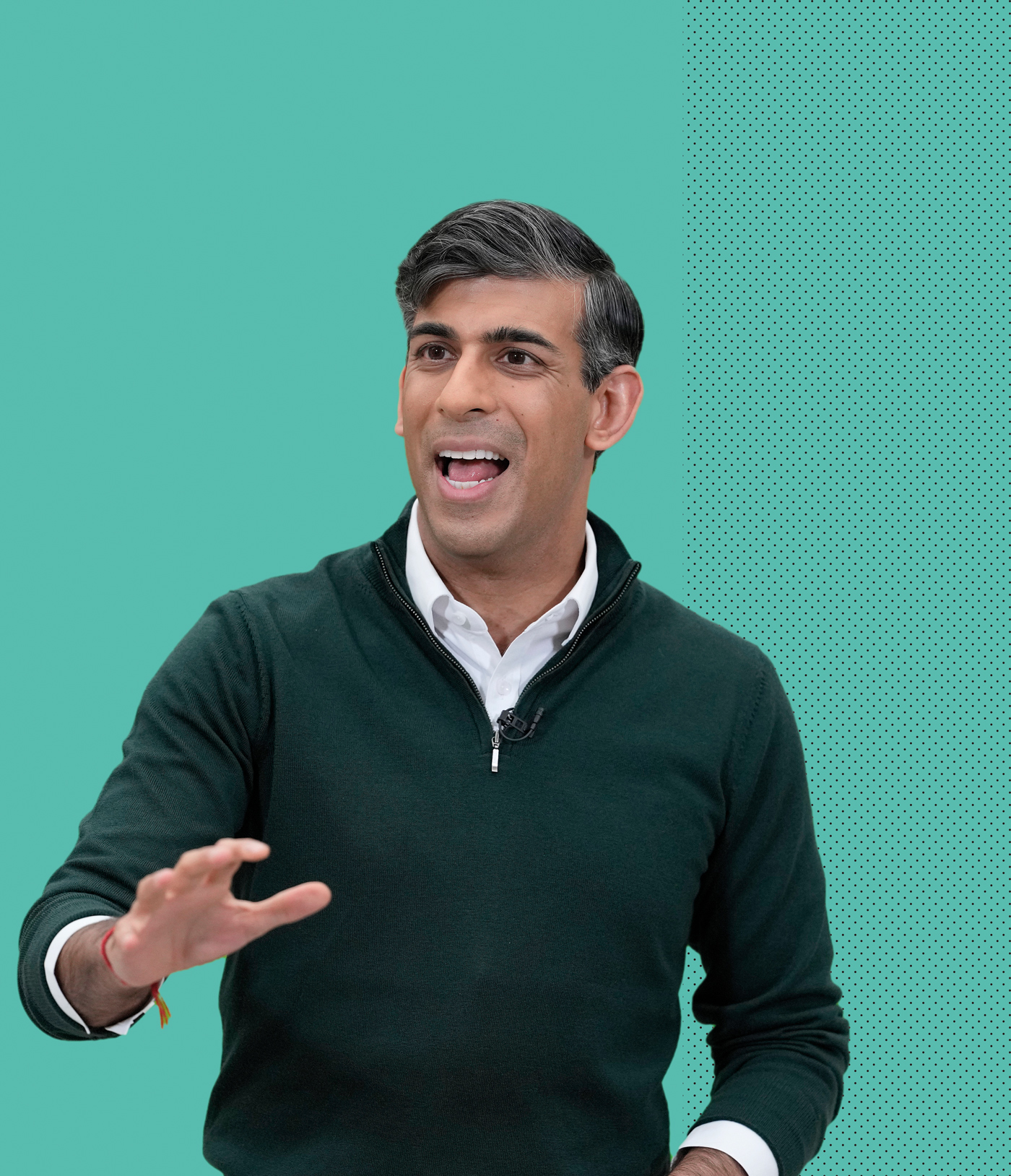
“The leader has to understand, live, breathe and drive AI”
Former British prime minister Rishi Sunak has long been known for his interest in new technology. He tells Signal what he has learned about how leaders can make the most of the AI revolution for their countries and companies
Rishi Sunak was educated at the universities of Oxford and Stanford. He became an analyst at Goldman Sachs and went on to work at hedge funds and co-found an investment company. His election as MP for Richmond and Northallerton in 2015 was followed by a meteoric political ascent. He became chancellor in 2020 and then, two years later, at the age of 42, took up office as the youngest British prime minister in more than 200 years. Since his premiership ended in 2024 he has continued to represent his constituency as MP, worked in academia and launched The Richmond Project, a charity dedicated to improving numeracy in the UK, with his wife Akshata Murty. He has also taken up advisory roles with Goldman Sachs, Microsoft and Anthropic, where he provides strategic perspectives at the intersection of geopolitical trends, technological innovation and the AI revolution.
When did you first start to engage properly with AI?
Rishi Sunak I became UK chancellor in February 2020 and had to put a budget together for a G7 country in three weeks. I thought that would be the hardest thing that I ever had to do in the job, but it turned out to be the easiest because Covid hit a week or two after that and my tenure as chancellor was largely dominated by dealing with the disruptive impact it had on the country. But then in autumn 2021, I had the opportunity to do a big set piece speech at the annual party conference setting out a longer-term vision for the British economy. So I sat down late that summer and started to think about what I wanted to say, having spent the last 18 months firefighting. And that’s when I thought, ‘I want to talk about AI’.
What did you know about it at that stage?
RS: I was very fortunate to have been to Stanford for business school and then lived in California. Because of that experience I had a network of friends who were involved in the technology – in particular Fei-Fei Li, a professor at Stanford Business School, who is known as the godmother of AI. Speaking with them I understood that AI was going to be a general-purpose technology like steam or electricity, a really big deal. So in the conference speech in October 2021, I said that AI is going to happen and it’s going to change everything. It has the potential to transform whole economies and societies. I talked about the hundreds of billions of pounds of economic benefit it could bring to the UK and how I wanted us to take a lead, and I set out some policies to help us achieve that. Looking back now, I’m more convinced than ever about what I said then about the potential of AI.
In October 2022 you became prime minister and a year later you hosted the world’s first global AI Safety Summit at Bletchley Park. How was that experience?
RS: It is something that I’m really proud of. I was able to just rise above a lot of the day-to-day and do something that was more forward-looking, which was something I didn’t manage to do enough when I was prime minister. In 2022 I sat down with Demis Hassabis of DeepMind, Dario Amodei of Anthropic and Sam Altman of OpenAI, which I think was the first time all three of them had been together outside of a congressional hearing. They told me something that really resonated with me, which was how they were being continually surprised by how quickly and consistently AI technology was continuing to improve. They were saying that there are incredible transformational benefits that will come from this, but that like all new technologies, it’s capable of being misused. They were trying to be responsible in educating people like me about this, which is to their credit – I’m grateful to them for that. So that was the genesis of the summit, because there wasn’t a dedicated place on the international calendar for leaders to talk about AI. There was an appreciation among leaders and leading technology companies that it was a worthwhile endeavor and people were pretty energized by the conversations and the set of agreements that came out of Bletchley. In a way, though, the biggest legacy for this summit is that it has continued every year since. I wanted it to become a permanent fixture in the international calendar.
You announced the creation of the AI Safety Institute (AISI) at the same time. What did you want it to achieve?
RS: We wanted to allow for pre-deployment testing [of frontier AI models], to evaluate the risks to national security in domains like cyber, radiation, nuclear and bio. The companies creating those models have been working very co-operatively with the Institute, in part because it is not a regulator, it is a technical body. It’s filled with really smart people who work with our security services and national security teams. They can red-team and test models because of that heritage in a way that the companies themselves can’t alone, in an environment of transparency and collaboration. I think it has been a real addition to our collective security as a result.
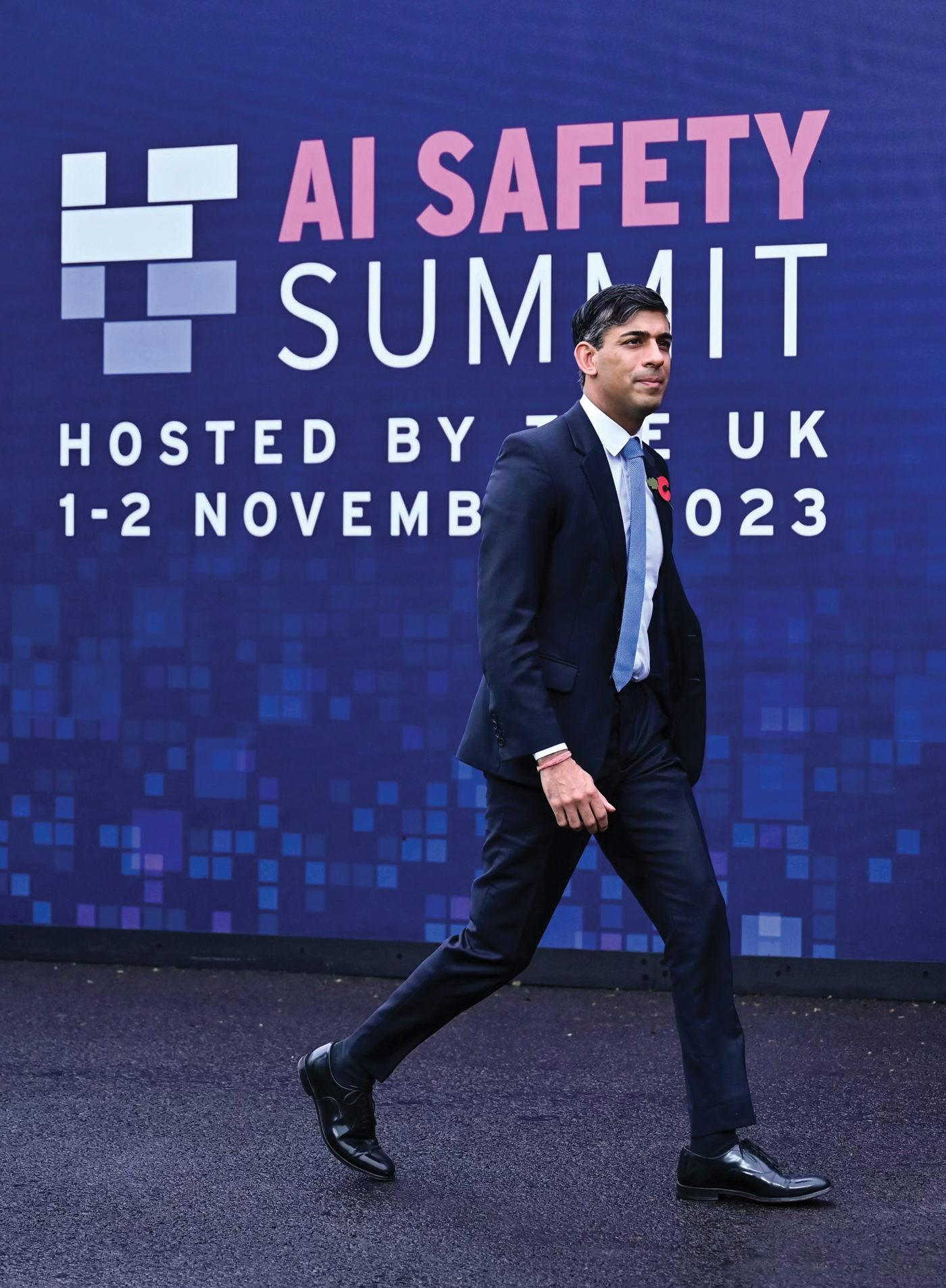
You stepped down as prime minister in July 2024, but you remain the MP for Richmond and Northallerton in Yorkshire. How are you seeing AI being used in your own constituency?
RS: I have a very rural constituency and one of the things I’m interested in is agriculture – I joke that I represent more sheep than people! If you go to a local dairy farm you’ll see these cows wandering around wearing Fitbit-like devices which allow phones to track all sorts of things. It gives them alerts when the cows are at risk of mastitis [inflammation of the udder, caused by an infection], which is obviously very important for dairy cows. So you’re starting to see how it can optimize farming, particularly for smaller-scale family farms, which operate on very thin margins. These small improvements in efficiency can make a real difference, and they have broader applications around the world. The next AI summit in February 2026 is in India, where something like 40 percent of people work in agriculture, much of it very small scale, and being able to demonstrate AI applications in agriculture there will be extremely powerful.
As well as remaining an MP, you have begun working with leading tech companies including Microsoft, for whom you are a senior advisor. What have you learned about how business and political leaders should approach AI technology?
RS: I think that there is increasingly this view that AI can’t be something that is just left to the IT department. The leader has to understand, live, breathe and drive it. In government it is so farreaching in its transformational potential across public service delivery, economic growth and the function of government itself that it has to be driven by the prime minister or the president, from Downing Street, from the White House, from Delhi, wherever it is. Unless it’s coming from the person at the top, this just won’t happen.
It must feel quite daunting for leaders dealing with this, as they’re already trying to do so many things at the same time…
RS: Yes, but that’s the job! I didn’t get into politics to deal with a pandemic, I got into politics because I believe in public service and felt I could contribute, make a difference. But those are the cards I was dealt and those are the cards you have to play. And leaders should actually be thankful, because we’ve got lots of challenges in the West, particularly in Europe, when it comes to economic growth. So in a way you should be pleased to be running a country at a time when this thing has come along which has the potential to really help you and make a massive difference quite quickly. Your life would be far worse if you didn’t have it. And technology has never been more interlinked with national power and national security than it is today so policymakers really don’t have an excuse not to be on top of these things.
How should leaders reassure people about AI?
RS: The fears – around safety, economic displacement and jobs, around kids – are there, the anxiety is there. So political leaders have this extra onus to be candid with their countries about this change that is coming and to lead them through it. You need to show them how this is going to benefit them and their families, how it can be made to work for them, and then provide them with the tools and policies to ensure that they can make good on that. I do slightly worry that we need more focus on that because ultimately people won’t adopt a technology that they are scared of, and if they are scared of it they are much more likely to start arguing for regulatory roadblocks to stymie development and then we won’t get all the benefits. You’ve got to bring your countries, your public with you on this journey. But I think it’s eminently doable.
As AI permeates business, how should people prepare themselves for the new world of work?
RS: I’ve thought about this a lot in the context of my kids, who are 13 and 14 years old and are going to enter this world of work soon. What is clear is that regardless of what field you are in you need to be AI literate. The fastest-growing skill demanded on LinkedIn in the UK and US is AI literacy, and that’s across industries. You won’t necessarily lose your job to AI, but you might lose your job to someone who is proficient at AI. But beyond that, I think there are three things I am thinking about for my kids. The first is that you need to be good at figuring out the ‘Why?’. AI will not be able to replace the critical reasoning question, the ‘Why?’ rather than the ‘What?’ and the ‘How?’ The second thing is that when people enter the workforce they are very quickly going to have to manage teams of AI agents, and that is new because most people in their twenties are not managing anyone else. How do you divide up the tasks? How do you make sure that what you’re getting back is right? How does it fit together? Then the third thing is that there are certain skills which are just human-centric. Interestingly, of the top ten ‘hot skills’ on LinkedIn, two of them relate to AI but the other eight are all human-centered, around what we would typically describe as soft skills – empathy, leadership, conflict resolution, team building, and so on. So there’s a set of very human-oriented horizontal skills I would encourage my kids to be really good at. But again, that’s where the onus is on government to make sure people can equip themselves with the expertise they need to prosper.
Will all the AI prizes go to the nations that create the technology?
RS: I think the lesson from history is that you don’t have to invent the technology to be the beneficiary of it. That is the thesis of Jeffrey Ding in his book, Technology and the Rise of Great Powers. The printing press was invented in Mainz in Germany but it was the Dutch and the English who got the most benefit out of it because they built a ‘diffusion infrastructure’ around it. It’s a mix of complementary inventions, regulatory approaches and economic incentives. For example, both England and the Netherlands had quite liberal censorship rules, which spawned lots of creativity. In England we pioneered copyright law, and that was an incentive for writers to produce things, knowing they would get the economic benefit from them. And then because of the financial markets that existed in both London and Amsterdam, you could hedge paper prices which meant that printing companies could plan more straightforwardly.
The point being that you don’t need to be the US or China, racing at the frontier to develop the latest and greatest model, in order to be a country that is going to benefit from this incredible technology. Leaders and CEOs need to be thinking about the diffusion infrastructure. How do we use this thing, spread it at speed? What are the accompanying policies we need to put in place? Because history tells us we can do that.
Can AI strengthen democracy?
RS: I think it can, for two very specific reasons. One is state capacity. A lot of disenchantment at the moment is because there’s a perception in many Western countries that stuff is just not getting done, everything’s too hard. At its best, AI can transform people’s interaction with everything that the state has to do for them, and I think that will be enormously beneficial. If everyone’s day-today lived experience of interacting with the state is that much quicker, cheaper and more accurate, that will really help. And secondly, the thing that we all need more of is economic growth and for all the reasons we’ve talked about, AI is the only really big thing out there that could transform our growth trajectory over the next five to ten years. More economic growth and rising living standards alongside better state capacity can restore people’s confidence in democracy, which has taken a bit of a knock as of late.
This is a digital version of a sample feature from Issue 3 of Signal magazine. To explore the full issue, view the complete flip book here.

Branching out
Bettina von Hagen runs an innovative forest investment fund, EFM, which has received backing from Microsoft’s CIF. She tells us how her organization is improving the management of forests to unlock their benefits for investors – and the planet
Tell me about your background and how you came to EFM.
Bettina von Hagen: I co ‑founded this company 20 years ago and I’ve been doggedly persistent in the vision we established back then. But if I go further back, I’ve been passionate about forests and biodiversity since a visit to the Galapagos Islands when I was 13. That was a mind ‑blowing experience – seeing island biogeography, evolution, speciation, all of those things made the world fall into place for me studied biology and then returned to the Galapagos for a year, working at a research station as a volunteer and later as a guide on boats. After traveling for a while and working in Europe, I got an MBA from the University of Chicago, went into commercial banking for about six years and realized that I loved finance. I loved making deals, threading the needle and making things possible – but only if it was in pursuit of environmental and social goals.
So banking and I parted company. I found a wonderful nonprofit called Ecotrust, which focuses on using private capital and grant funding to create enterprises that advance environmental and social aims, specifically in the Pacific Northwest’s coastal temperate rainforest. While I was there we created a banking institution, redeveloped a historic building to [green building rating] LEED Gold standards, and eventually came up with our best idea: creating a forest investment fund. That became EFM. Today, EFM is independent from Ecotrust, it’s a privately owned forestland investment company with 14 employees and over $500M under management and advisement.
 Image: Wild Salmon Center
What is EFM set up to do?
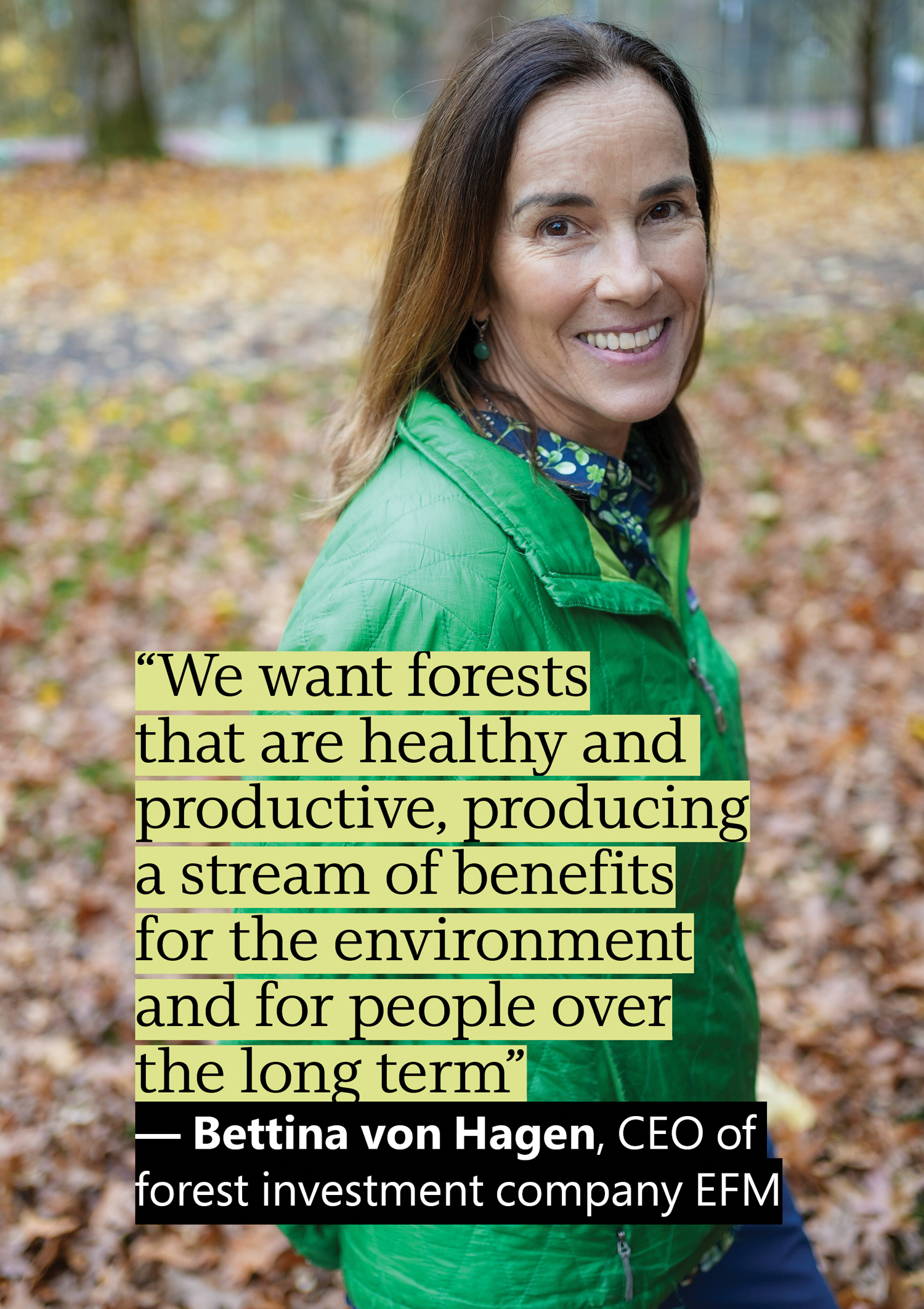
BVH: Our purpose is to acquire forests on behalf of investors and move them toward a desired future condition. That condition is one in which they are financially sound, store more carbon, produce higher ‑quality habitats, protect water, enhance soil and produce benefits for people and communities – with a special emphasis on tribal communities.
We want forests that are healthy and productive, producing a stream of benefits for the environment and for people over the long term. It’s really quite simple: managing forests as if they matter, and as if people matter.
What are the first steps with new acquisitions?
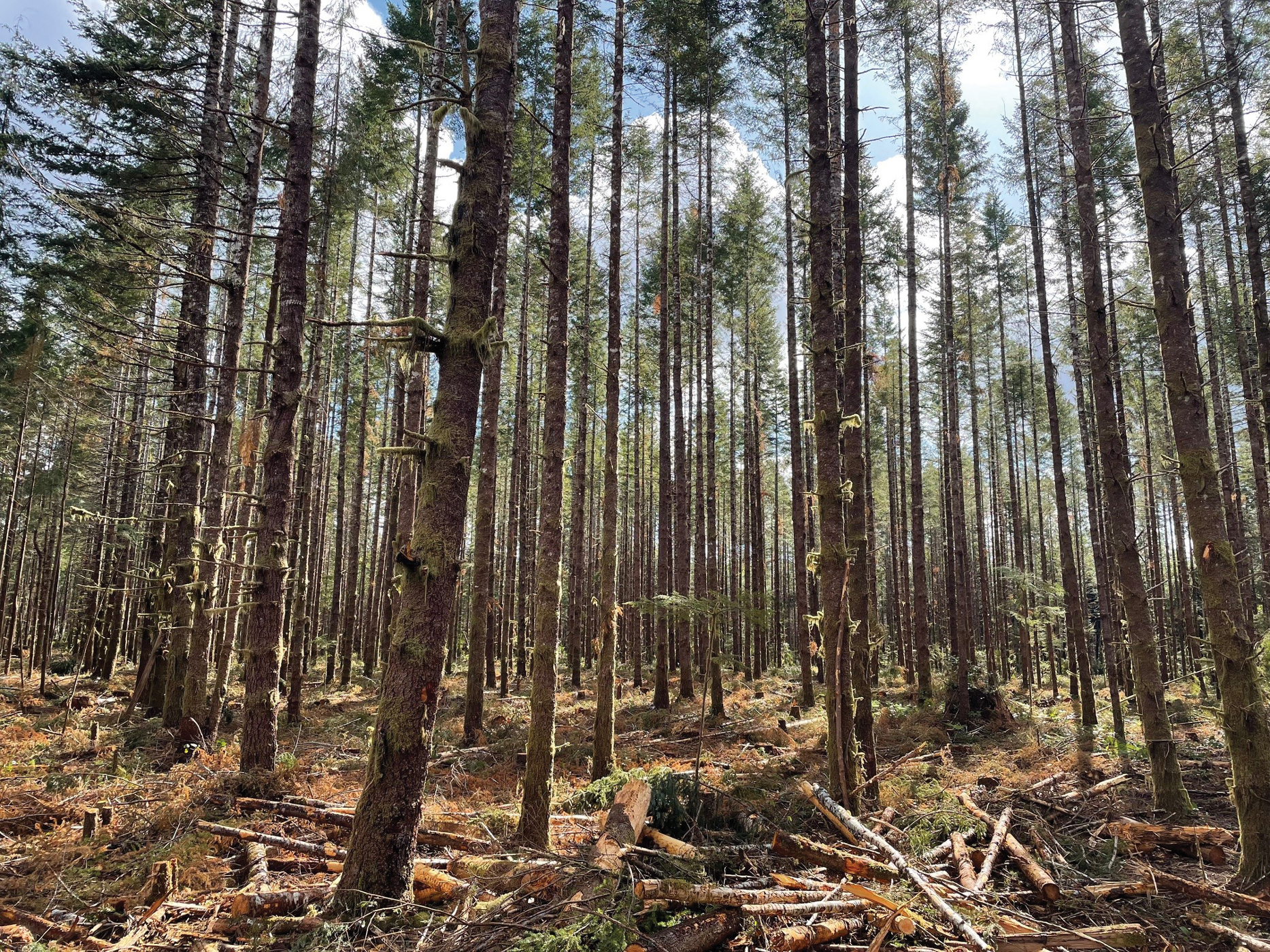
BVH: When we buy a forest property we evaluate what the desired future condition is. It’s always site ‑specific and community ‑specific, but many themes are similar. In a lot of forests, it’s about extending the age of trees before they are felled. In the American West, where we work, trees are very long ‑lived. Conifers like Sitka spruce, western hemlock, Douglas fir and ponderosa pine can live for a thousand years. They are very productive at 70, 80, 90, 100 years old – that’s when they’re at their peak in terms of wood quality and quantity.
But rotation ages have declined considerably over the last decade. Trees are now harvested at 35 to 40 years old – essentially as teenagers, long and skinny and producing just a single saw log. Natural forests with diverse species and age classes have been turned into something resembling plantations. Our intent is to move forests to longer rotations, work on structural complexity – trees of different sizes and heights – and focus on the understory [the vegetation between the forest canopy and the forest floor].
What does that involve?
BVH: One common practice in the region is spraying herbicides and pesticides by helicopter twice during the planting cycle. We don’t do that. No herbicides, no pesticides, except for those needed for persistent invasive species that don’t respond to other controls. We grow trees to much older ages and use thinning [the selective removal of trees to reduce density]. Commercial thinning has almost disappeared because of short rotations, but if you grow trees to 60, 70, 80 years, thinning makes sense again.
That creates healthier forests. Susceptibility to disease and fire comes from single ‑species, single ‑age plantations. Diversified forests are more resilient. Forest health is a primary driver, but productivity is also significant. We’re doing this in a commercial context, for investors, aiming to provide good returns. By growing trees older, you produce more valuable products, more volume per acre, at lower cost.

How do you make money out of forests?
BVH: The fundamental thing is that trees grow and forests are appreciating assets. Depending on site productivity and age, trees can grow three, six or even ten percent per year. That’s unusual compared to other assets. Forests don’t need annual harvests like agriculture. You can delay harvests for years, and the trees just get more valuable. That gives flexibility to time harvests for markets. If the market is poor one year, you can hold on – as long as your capital structure doesn’t require heavy cash payments. That flexibility also makes forests excellent for carbon strategies. You can extend rotations for 10, 20, 30 years, making forests more valuable while timing harvests for timber markets and carbon markets.
At EFM, we’ve entered into ten ‑year carbon contracts with Microsoft and others, selling carbon credits from our projects. So monetization comes from timber sales, carbon sales and capital appreciation when selling appreciated properties.
But how do you prove the value you’re adding in terms of CO2 removal?
BVH: The answer is additionality. All forests store carbon, and for Northwest tree species, carbon content is well understood – you just have to measure a tree’s height, diameter and taper to make the calculation. The carbon being transacted (through carbon credits) represents emissions reductions or storage that go above and beyond what would occur under standard business practices and existing regulations.
If a forest is clear ‑cut every 40 years, which is common practice, it doesn’t store additional carbon and wouldn’t qualify under rigorous carbon methodologies. Additionality is key, especially for buyers like Microsoft who want high ‑quality credits.
One recent innovation is dynamic baselines. A dynamic baseline looks at what is above and beyond common practices not just at the start of a project but periodically during it. If business practices or regulations change, the baseline changes too. That way, additionality is tested throughout the project to ensure it’s truly adding carbon beyond what would exist without it.
How do you evaluate millions of trees?
BVH: Forestry has long carried out inventories for timber; now we also do so for carbon. It’s statistical. You select plots based on a random sampling design, measure them, and extrapolate to the forest as a whole.
Technology like drones, LIDAR [a system which works on the principle of radar, but uses light from a laser] and aerial images are being developed, but carbon methodologies haven’t yet accepted them. So right now it’s all done on physical sampling. Teams establish plots with known locations, randomly selected. Independent third ‑party verifiers remeasure those plots to ensure the carbon volume being transacted is actually there. It’s complex work. Plots can be on steep slopes, across rivers, anywhere. Inventory teams and verifiers have to reach and measure them.
What happens if there’s a massive wildfire? Is that like a financial crash?
BVH: Yes. Fires, disease, wind – all can happen. That’s addressed through permanence, another key criterion. Carbon projects contribute credits to a buffer pool. If you produce, say, 100,000 credits a year, you put a portion into the buffer, depending on your project’s risk. The Registry manages it. If there’s an unintentional reversal – a fire – the environment is made whole by retiring credits from the buffer. Verifiers assess the fire’s impact, measure lost carbon and retire the appropriate credits.
Tell me about the investors in EFM.
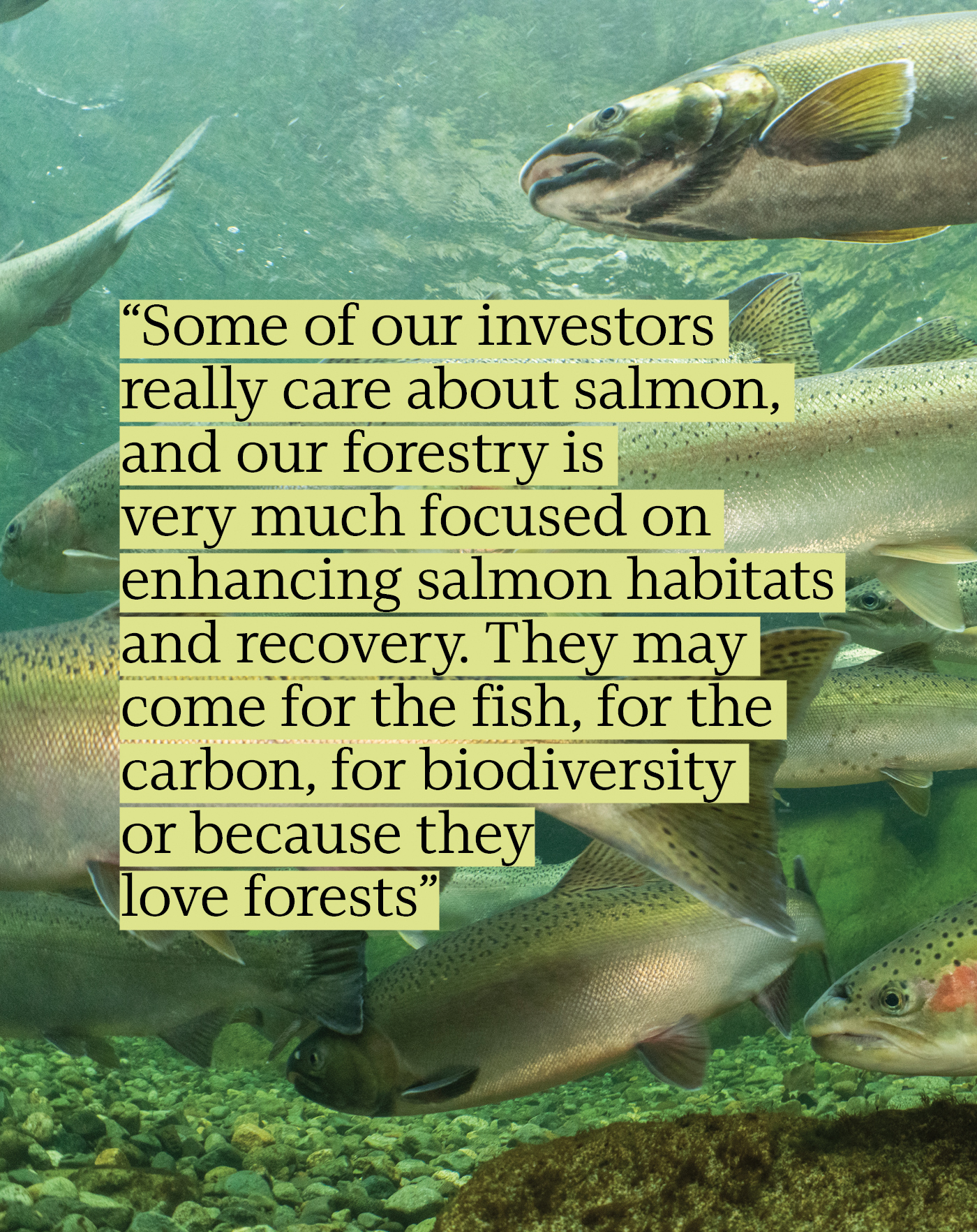
BVH: They are all financial investors, but are motivated by their stakeholders to consider sound investments that also deliver strong social and environmental impacts. They care about the rate of return and about forestry’s role in their portfolio based on usual financial considerations. But they also care about impact – for example, some really care about salmon, and our forestry is very much focused on enhancing salmon habitats and recovery. They may come for the fish, for the carbon, for biodiversity or because they love forests. They all share our belief that superior financial returns are best achieved by creating environmental and social impact alongside economic value.
What was the last big forest that you took on?
BVH: The last big property that we purchased is actually the one that Microsoft participated in. It’s 68,000 acres of coastal temperate rainforest in the Olympic Peninsula, an absolutely breathtaking property. The Olympic Peninsula is west of Seattle, a three-million-acre landmass that is the furthest western point in the continental US. It is dominated by an almost million-acre national park that has glacial peaks, world-class rivers and old-growth forests that descend to the Pacific Ocean to the west. There is a wildlife refuge along the coast, which is full of rocks and sea stacks that harbor millions of seabirds and orcas and otters. The land that we purchased has been commercial forest land for 80 years and it is phenomenally well situated for the type of forest management that we plan to implement, which is to increase the rotation age of the trees, to create more structural complexity and work on restoration of the rivers. The Olympic rainforest stores more carbon than almost any other terrestrial ecosystem, because there is an absence of fire.
Microsoft’s backing for the project was absolutely instrumental. As well as the ten-year offtake agreement they made with us, their backing gave investors a lot of confidence around the financial performance of this forest and was instrumental for us in bringing other investors to the table.
What motivates you personally in this work?
BVH: It’s the intermingling of the natural and the financial. It’s a fascinating Venn diagram. For me, forests are about health, productivity, resilience and long‑term benefits for people and the environment. I can’t wait to get up each day and get more capital to acquire more forests and move them on that path. I think it is part of the equation of how we are going to prosper on this planet.
This is a digital version of a sample feature from Issue 3 of Signal magazine. To explore the full issue, view the complete flip book here.