Skip to main content Official Microsoft Blog Microsoft Source Asia Canada Europe, Middle East and Africa Latin America Top News on LinkedIn The Monthly Tech-In For Press
Skip to content

Researchers to study AI’s impact on work and economy

The AI Economy Institute has named a new global cohort of researchers to study how AI is changing the way companies and the broader economy work. This year’s fellows will examine how leading organizations are adopting AI and what that means for jobs, skills, productivity and economic growth. The research marks a shift from earlier studies on education and career pathways, with a goal this year to generate evidence that can help policymakers, businesses and institutions navigate a rapidly evolving AI economy.

Abstract illustration of glowing data points and flowing digital pathways on a blue background.

Introducing Microsoft Frontier Company

The pace of AI adoption is moving incredibly fast. Organizations have moved beyond AI experimentation and are using the new technology to transform business, concentrating on delivering measurable business outcomes and demonstrating a return on their AI investments, while ensuring their intelligence is amplified and their IP is protected.

Today, Microsoft is announcing Microsoft Frontier Company, a new operating business focused on delivering Frontier Transformation through AI for customers around the world. It will provide a unique combination of skills inclusive of deep industry knowledge, change management and continuous improvement experience and enterprise-grade AI engineering expertise.

Abstract illustration showing industrial automation, medical imaging, urban buildings, and retail storefronts connected within a digital, gradient-themed design.

AI offers new clues about the brain

Even though AI can predict how the brain will respond to language with remarkable accuracy, it’s been far less useful trying to explain why. In a new paper in Nature Neuroscience, Microsoft researchers and academic collaborators describe a method they developed that turns those AI predictions into testable scientific theories and evaluates them through follow-up experiments. The approach validated known brain functions, distinguished similar brain regions and uncovered previously unmapped areas linked to specific concepts.

White icons representing the brain, speech, understanding and search on a purple-blue gradient background.

America at 250, looking back and ahead

As the United States marks its 250th anniversary, Microsoft is reflecting on the choices that shaped the country, the progress those choices made possible and the responsibility to think seriously about the future.

The new America 250 video series explores pivotal moments in U.S. history that continue to shape innovation and what comes next.

Historic clock tower decorated with patriotic bunting, framed by trees against a clear blue sky.

New AI-powered library lets people meet Theodore Roosevelt in a whole new way 

He led the Rough Riders, became the youngest U.S. president and inspired the teddy bear — but Theodore Roosevelt probably never imagined anything like this. His new presidential library will give visitors a fresh peek into history and even let them chat with a lifelike version of himself.

Located in Medora, North Dakota, the unassuming building is covered in native grasses, with skylights providing most of the light. But in addition to the expected re-creations of the president’s home and White House, the Theodore Roosevelt Presidential Library, opening to the public on July 4, is designed as a “living library” powered by AI.

Theodore Roosevelt avatar at Theodore Roosevelt Presidential Library

Microsoft extends technology support for Ukraine

Microsoft will continue to provide Ukraine with free cloud services to government institutions, educational establishments and regional authorities through the end of 2027. The announcement extends a program that since 2022 has helped Ukraine keep essential public services running during the war, from social benefits and tax collection to business and land registries, by moving critical systems to cloud infrastructure across Europe.

People seated at a table in discussion, with a large Ukrainian flag displayed on a screen in the background.

The quantum future may arrive sooner than we thought

What was once seen as a distant security challenge may be arriving faster than expected. Citing advances in quantum computing, Microsoft is accelerating its timeline for post-quantum cryptography, or new encryption designed to remain secure in the era of quantum computing. The company now has a goal of transitioning products and services by 2029. Microsoft says the biggest hurdle likely will not be choosing new algorithms but rather untangling the cryptography already embedded across modern systems.

People sit around a conference table in a glass-walled meeting room, working on laptops and discussing information displayed on a large screen, with world clocks mounted on the wood-paneled wall behind them.

A new weapon reshapes DOOM combat

More than 30 years after DOOM first redefined the shooter genre, XBOX’s latest expansion is speeding things up again. Arriving July 7, Revelations introduces the Chain Spear, a versatile new weapon that adds grappling, aerial movement and new combat techniques to DOOM: The Dark Ages. The expansion also includes a story campaign, new arenas and 10 to 12 hours of new content.

First-person view from DOOM: The Dark Ages showing a player wielding a glowing green weapon and firearm inside a dark, gothic hall lined with towering columns and a suspended demonic creature.

What 300 technical experts say about AI agents 

Generating reports, writing boilerplate code and monitoring systems are among the tasks technical experts are most comfortable handing to AI agents, according to a new global survey of 300 AI, data and cloud leaders. The 2026 Agent Confidence Index, developed by Microsoft and MIT Technology Review Insights, found an average confidence score of 64 out of 100 across 101 tasksMicrosoft is sharing the findings at this week’s AI Engineering World’s Fair. 

tech graphic

How Microsoft has cut water use in datacenters

As datacenters that power cloud and AI services become more essential, communities are paying closer attention to how this infrastructure affects local resources, particularly water. Microsoft has long prioritized water stewardship and last year reached a milestone toward its 2030 goal, replenishing more water than it used globally. Advances in cooling technology have improved water efficiency in the company’s datacenters by nearly 90% since the early 2000s, and a new datacenter design introduced in 2024 consumes zero water for cooling during operations. Read on for more about how it works.

Aerial view of a large data center complex with rows of cooling units and surrounding farmland

AI steps up to meet finance’s high bar

New technology tends to reach developers first and is often followed by finance departments, where it must meet a higher standard, with every number traceable and trusted. Microsoft says Copilot in Excel is being tested against that reality to work like a trusted analyst, embedded in day-to-day finance work. With new features like reusable skills, data connections and clearer audit trails, the aim is to help teams spend less time rebuilding analyses and more time making decisions.

Copilot in Excel “skills” interface alongside user working on a laptop

Everyone got Copilot. Chaos and creativity ensued

When market research firm Kantar handed Copilot licenses to every employee, chaos and creativity erupted. Andy Doyle, the company’s chief people and agent officer, joins the WorkLab podcast to share how a wave of maverick experimentation led to the creation of more than 15,000 AI agents and an “agent factory” that’s reshaping the enterprise. He explains how the experiment pushed leaders  to rethink control, scale and what’s possible when you let employees drive transformation.  

Two people seated at a table, speaking into microphones in a podcast-style interview setting.

Report finds AI common in schools as focus shifts

Artificial intelligence is already common in schools, with most students and educators using it in some form. But a new Microsoft report suggests the focus is shifting, with many calling for more training and clearer guidelines to ensure it supports real learning, not just faster work. New tools in Microsoft 365 Education aim to help, combining lesson planning, assignments and study aids designed to encourage deeper thinking.

Two students sitting at desks in a classroom, working together on a laptop.

Microsoft shifts cybercrime strategy to supply chain

Microsoft is shifting its cybercrime strategy , focusing on the infrastructure behind attacks rather than isolated threats. In a case unsealed Wednesday, the company said it simultaneously targeted two widely used malware tools, Amadey and StealC, after AI-assisted analysis showed they rely on shared systems. The tools, often deployed together to access devices and steal sensitive data, were linked to more than 140,000 cyberattacks in just the first two weeks of May. Working with Europol and industry partners, Microsoft said it has since cut off criminal control of 18,000 computers to disrupt the broader “assembly line” that enables cyberattacks to scale. 

Digital display of a world map formed by glowing data dots in a blue-toned room.

Wisconsin datacenter opens ahead of schedule

Microsoft’s first datacenter in Mount Pleasant, Wisconsin, is now fully operational, ahead of schedule. The facility has about 550 full-time employees on-site and is continuing to hire more staff as it builds a second facility adjacent to the first. The company estimates it will spend $4.7 billion locally on construction between 2024 and 2028. Read more about the datacenters and Microsoft’s investments in the area.

Aerial view of a large industrial facility with multiple buildings, equipment yards, and a parking lot.

New Azure agent aims to make AI systems easier to monitor 

Microsoft has introduced a new agent to help organizations make sense of failures in increasingly complex AI systems. As applications, models, APIs and infrastructure become more interconnected, failures are harder to trace and no longer happen in isolation. The new Azure Copilot Observability Agent correlates signals across systems to help teams monitor performance and resolve issues more quickly.

Two people working at a desk with dual monitors and a laptop, reviewing and writing code.

Microsoft plans new Texas datacenter to power AI demand

Microsoft is planning one of the largest capacity expansions in its history with a new datacenter campus in Pecos, Texas, expected to add about 2 gigawatts to meet growing customer demand. The multibillion-dollar investment over the next five to seven years reflects both immediate infrastructure needs and the future trajectory of AI and advanced computing. Microsoft said the project will support more than 6,000 construction jobs and create hundreds of permanent roles once the campus is operational. 

Aerial view of a large industrial facility at sunrise, with rows of white-roofed buildings set against a desert landscape and distant mountains.

4 ways companies can turn AI into meaningful results

As AI moves from experimentation into implementation, some companies are struggling to translate early momentum into broad business impact beyond isolated use cases. A new e-book from Microsoft explores why progress may stall and outlines four key areas where organizations are focusing to get more value from AI.

Generating response  Copilot said: Microsoft cover image titled “Four Paths to Business Value with AI,” with abstract pastel shapes on a pink gradient background.

In Australia, workers embrace AI faster than their bosses

Though Australian workers are quickly adopting AI, many organizations aren’t redesigning work fast enough to keep up. New data from Microsoft’s 2026 Work Trend Index suggests culture and leadership — not technology — are now the biggest barriers to AI in the workplace. The findings point to a growing gap between how employees work and how quickly leadership and operating models are evolving to support this shift.

Three people collaborate at a table, reviewing a laptop together.

A new standard aims to help AI find tools on its own

Right now, people have to manually find and connect tools to make AI useful, then keep everything up-to-date themselves. That may work with a few tools, but it gets too complex as more companies and developers create their own. Microsoft and partners like Cisco, Google, Nvidia and others are introducing a new open standard called Agentic Resource Discovery (ARD). It creates a shared, secure way for AI tools to be published and found, so AI systems can automatically discover and use relevant capabilities.

Copilot said: Light green graphic with grid background and dotted text reading “Agentic Resource Discovery.”

As attacks scale with AI, companies turn to unified identity security

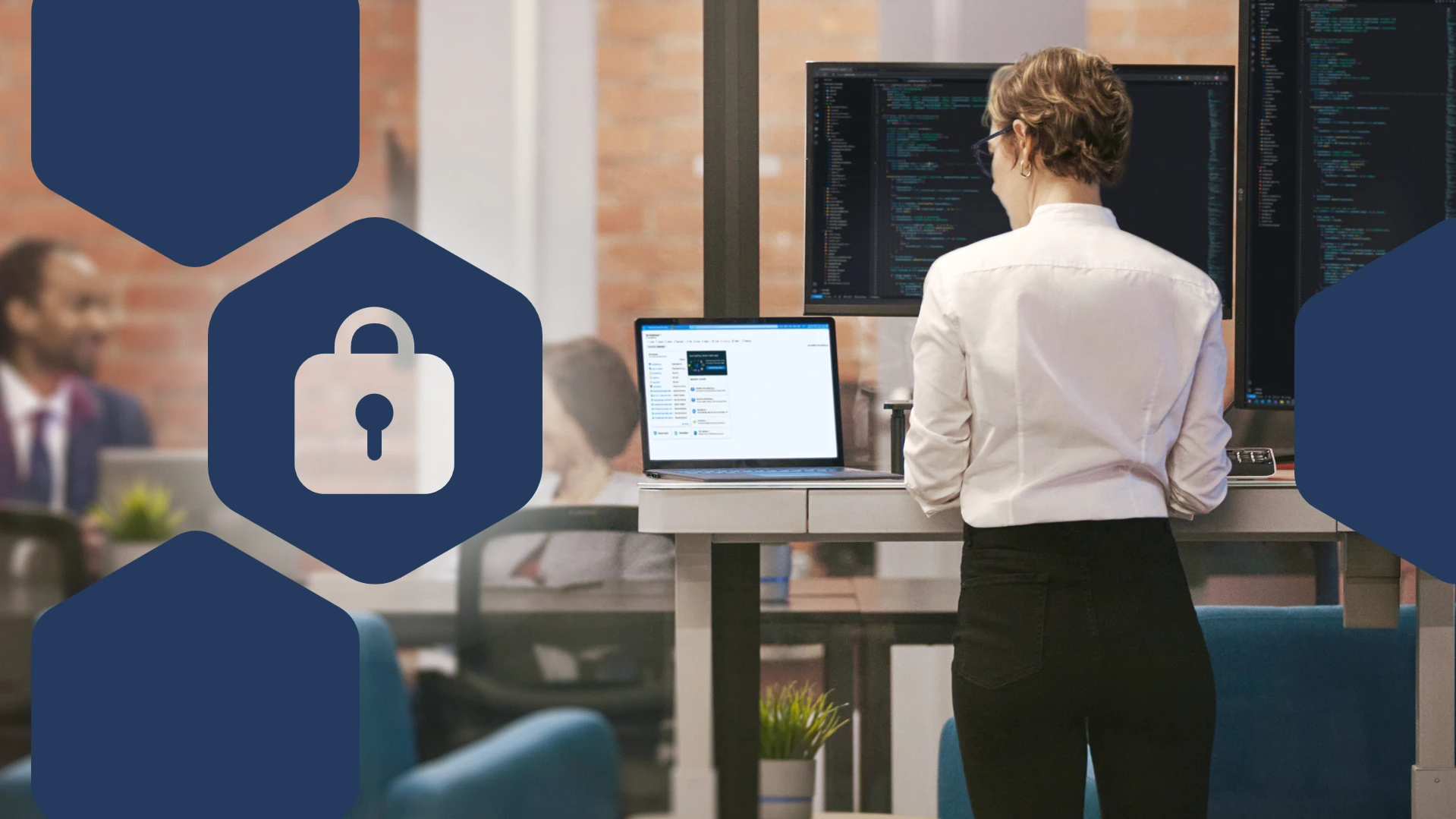
AI is helping cyberattacks move faster and scale more easily. But even as methods evolve, stolen identity is still one of the most common entry points. Attackers don’t need to break down every defense, just to exploit the right one. Organizations are reshaping security in response, turning to more connected approaches to better prevent, detect and respond to identity threats. Read more about how Microsoft is working to end security fragmentation in the age of AI.

Person at desk using a tablet with dual monitors showing data dashboards and email interface.

Microsoft and Y Combinator expand support for AI startups

Microsoft and Y Combinator (YC) are expanding their partnership to give founders building on Azure access to Microsoft Foundry and the same AI infrastructure YC uses internally. The move reflects a shift in how AI startups are built, with advanced systems and computing power needed from the beginning. Through Microsoft for Startups, founders can also get credits, technical guidance and go‑to‑market support to help move their products toward enterprise use.

Y Combinator and Microsoft logos alongside Microsoft for Startups branding.

How AI can help doctors hear what matters

Doctor visits often feel rushed, with attention split between patient and screen, leaving many unheard. The problem is especially acute for women, whose symptoms are more likely to be dismissed or misdiagnosed. A new perspective from Kearney and Microsoft, part of their [w]Health initiative, suggests better care starts with listening — and that AI tools like Dragon Copilot can help give clinicians the time and space to shift more toward human connection.

Clinician reviews tablet with patient in exam room.

Copilot Cowork is now available to take on complex tasks

Microsoft’s Copilot Cowork is now generally available worldwide, bringing AI that can take on complex, multi-step tasks from start to finish. In one example, an engineering team used Cowork to edit batch‑job spreadsheets and generate dependency flow charts after every change, automating work that had required careful manual effort. Read more on how organizations can put Copilot Cowork to work.

Copilot Cowork interface in a browser, showing task options and AI model menu.

New Surface devices boost speed and battery life

Microsoft rolled out its latest Surface devices Tuesday, powered by Qualcomm’s new Snapdragon X2 chips. The new Surface Pro and Surface Laptop deliver more than 50% faster graphics performance than the previous generation and longer battery life to keep up with everything from creative work to running local AI models. The devices are available starting today.

Copilot said: Two Microsoft Surface laptops in green and copper, opened and angled toward each other against a gray background.

AI success hinges on intelligence and trust

Success with AI comes down to two things: intelligence and trust, writes Judson Althoff, CEO of Microsoft Commercial Business. Companies want AI to strengthen their expertise, not extract it, and for it to be secure and worth the cost. Microsoft’s approach focuses on using multiple models, turning company data into useful context, and giving organizations control over performance, spend and outcomes to deliver real results.

Abstract flowing shapes in soft gradients of orange, pink, and purple.

New book shows how leaders can build trust when everything is changing

A few years into her time as a technology leader, Julie Averill started asking herself a question she couldn’t shake: What is this actually for? As CIO at lululemon and REI, the work was clear on paper, but her real impact showed up somewhere else.
In her new book, “Chief Impact Officer,” she unpacks that shift — and what it takes to build trust with your team when technology is changing fast.

How an AI-infused app delivers data-driven results to Turkish farmers

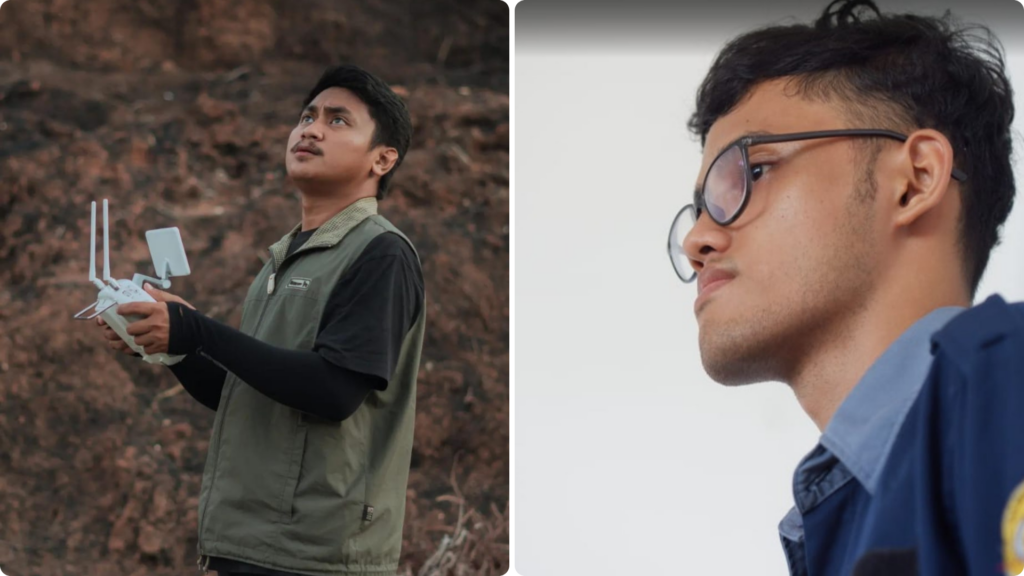
Her neighbors thought she was a bit eccentric when she started planting blueberries in pots in rural western Türkiye, but Pinar Ünsal persisted, using her training as an engineer to focus on data-driven farming.  Today, her thriving harvest is powered by an AI-enriched app built on Microsoft Azure — delivering crop insights from real-time satellite imagery, hyperlocal weather reports and real-time data that help her grow smarter, save time and manage risk.

Close-up of a hand holding a blueberry branch with small white blossoms.

Microsoft shares new data on email security performance

What happens after a malicious email lands might matter more than expected. A year of production data and real-world benchmarking from Microsoft suggests email security doesn’t stop at the inbox. The report finds that post-delivery detection and cleanup are playing a growing role, even in layered setups designed to block threats before they arrive. Read on about a shift in how protection works in practice.

Team meeting in conference room with laptops and security dashboard on screen.

Satya Nadella: A frontier without an ecosystem is not stable

Microsoft Chairman and CEO Satya Nadella shares thoughts on the future of the firm in an AI-driven economy, and why every company will need to compound the loop between their human capital and token capital. Read his post.

English (United States)
Your Privacy Choices Opt-Out Icon Your Privacy Choices
Consumer Health Privacy Sitemap Contact Microsoft Privacy Manage cookies Terms of use Trademarks Safety & eco Recycling About our ads