Official Microsoft Blog Microsoft Source Asia Canada Europe, Middle East and Africa Latin America Top News on LinkedIn The Monthly Tech-In For Press
Skip to content

Learn what’s next for AI and tech at Microsoft Build 2026

It’s almost time for Microsoft Build, the company’s big annual developer’s conference taking place this year in San Francisco. Join us virtually at 9:30 a.m. PT on Tues., June 2, to follow our live blog and learn more about Microsoft’s latest updates in AI‑powered tools and platforms for developers and beyond. Then stay tuned for more news, photos, videos and other updates throughout the day.

It’s almost time for Microsoft Build, the company’s big annual developer’s conference taking place this year in San Francisco. Join us virtually at 9:30 a.m. PT on Tues., June 2, to follow our live blog and learn more about Microsoft’s latest updates in AI‑powered tools and platforms for developers and beyond. Then stay tuned for more news, photos, videos and other updates throughout the day.
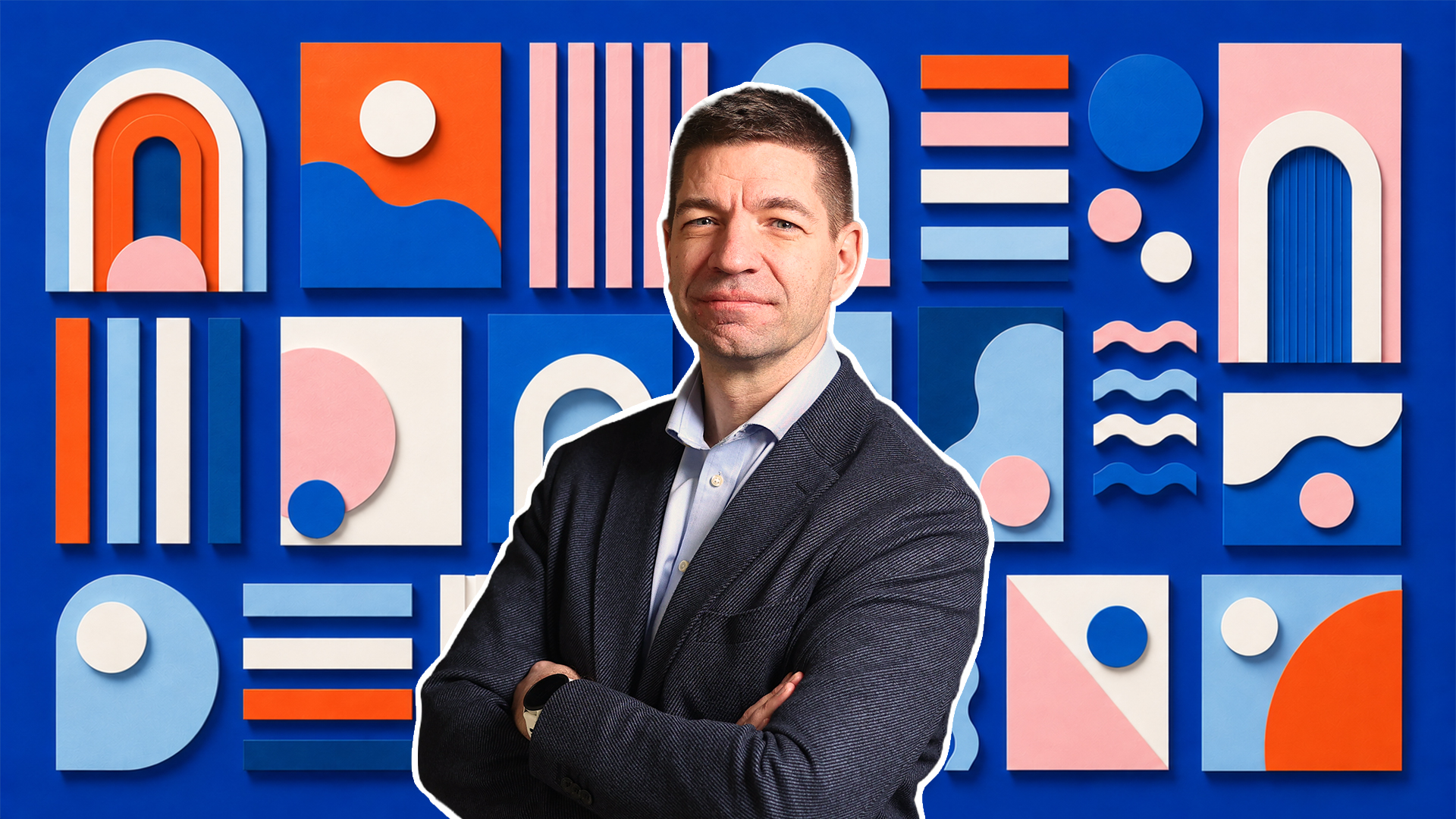
Using Copilot to ensure a human-centric approach to work

At Slovenian insurance giant Triglav, dozens of digital mentors empower employees to find ways to use Copilot and Copilot agents to make their work lives more rewarding; Copilot takes on the mundane tasks, leaving the global company’s thousands of employees to focus on human-centric work. As Klemen Ramoveš, chief digital officer, puts it, “We still believe that people are the key,” he says. “It’s ‘Copilot’— it’s not a pilot, so we need to have a lot of pilots on board.”

Portrait of a person with arms crossed in front of a blue background with colorful geometric shapes.

The Prompt: A just for fun handwriting analysis

It’s nothing scientific, but you can turn your handwriting into a fun little window to your personality. With just a Copilot prompt and writing sample, get basically a horoscope for the way you write your grocery list.

Collage of colorful geometric shapes with a torn-paper label reading ‘The prompt.’

Microsoft adds new measures to curb image-based abuse

As new U.S. protections take effect, Microsoft is expanding its response to non-consensual intimate imagery, including AI-generated content. The company is rolling out simplified reporting tools, broadened detection through image “fingerprints,” and extended enforcement across services. Microsoft is also working with global partners to advocate for stronger laws to help curb the spread of AI-made fake intimate images spread without consent and to respond more quickly to people impacted. 

Person typing on a laptop at a desk, with a digital circuit-style background overlay.

Microsoft unveils an even more precise image model

Microsoft is introducing MAI-Image-2.5, its most advanced image model and the latest in the MAI-Image series. The system more closely follows instructions and renders text more reliably. It also makes sharper and more coherent visuals across styles. Things like scene structure, lighting and spatial relationships are all improved with this update, meaning simple prompts can turn into even more polished images.

Six-image grid: garden path with flowers, green ice cream cup on blue background, close-up of speckled fish scales, bag of chips with loose crisps, older adults sitting outside near a red car, and people casting long shadows on a pink court.

Teaching AI to bridge South Africa’s youth employment gap

Microsoft South Africa and the Youth Employment Service (YES) are expanding a program to train young people in digital skills, addressing persistent unemployment. Recently honored with a Tech Impact Award in Cape Town, the initiative is widening access to tailored learning in artificial intelligence and computer science, helping participants progress from basic knowledge to advanced expertise. The idea is that training will move more young people from learning in an educational setting into pathways to work.

Students raise their hands in a South African classroom.

As AI accelerates, India emerges as a unique global hub

AI is at an inflection point. As the pace of innovation accelerates, builders need more than tools: they need an operating layer that can bring together development, deployment, governance and security. In a new post, Jay Parikh, executive vice president of CoreAI at Microsoft, explains why India is uniquely well-positioned for this moment.

woman walking through a server room aisle holding a tablet.

Experimental AI agent aims for efficiency running on users’ machines

Microsoft Research AI Frontiers is releasing MagenticLite, an experimental agent built for small models. The next step after Magentic‑UI, MagenticLite brings browser and local file workflows into one place. It’s designed to run efficiently on users’ machines and handle a wide range of tasks, and is based on the idea that agent capability comes from how tools are orchestrated and used, not just what the model knows.

Cloud file, workflow diagram, upward chart, and settings gear icons on gradient background.

Bing rolls out AI features for smarter image search

Microsoft is announcing a new Bing search that is powered by AI. Bing Image Search automatically labels and organizes images into clear categories and generates short summaries that explain each group. The added context helps users understand what they’re seeing and decide what to search for next. Read more on how it works and how to opt in.

Magnifying glass over a search bar in front of a laptop with colorful lighting.

XBOX gets its own merch store

Microsoft is opening a new storefront for its gaming worlds. The XBOX Game Studios Shop will sell clothing and collectibles tied to franchises like Halo, Forza and Fable, starting with a small lineup and expanding over time. New items will arrive alongside major game releases, as feedback shapes the experience. The store joins existing brand shops, offering fans another way to carry a piece of those worlds beyond the screen.

Four-panel collage showing Xbox-themed apparel and merchandise: hoodie, plush toy, numbered sweatshirt, and graphic T-shirt

Why AI hits a wall inside some organizations

There’s a growing gap between what AI can do and how companies actually use it, and it’s causing frustration in the business world. But the friction slowing things down may be necessary: the systems that manage data, permissions and workflows are what let AI scale. As Jared Spataro, Microsoft’s chief marketing officer of AI at Work, writes in a new post, progress won’t come from experimentation alone. It will come from structural work that eventually makes the once shiny and new technology fade into the background.

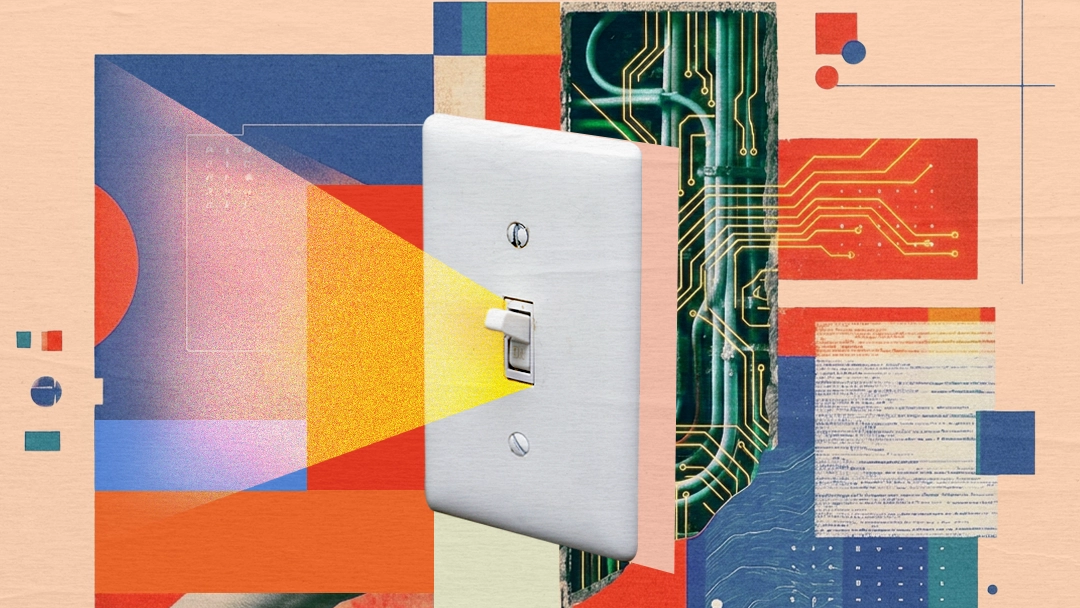
Light switch casting a beam of light through abstract geometric shapes and circuitry layers

2 new open source tools bring safety into agent development

Microsoft is open-sourcing two tools that are part of a broader movement toward engineering-native AI safety. Microsoft RAMPART is a test framework that makes it easy to turn red-team findings and AI incidents into lasting coverage, and Clarity is a structured sounding board that helps teams figure out whether they are building the right thing before they write a single line of code.

Both RAMPART and Clarity are available today as open source projects from Microsoft.

Multi colored tech globe graphic

Adopting AI isn’t the hard part, transforming the work is

Just using AI isn’t necessarily going to transform business. Across industries, leaders are moving beyond experimentation and chatbots to confront a deeper challenge: reshaping work in a way that is truly transformative in the AI era. In a recent interview, Bryan Goode, corporate vice president of Business Applications and Agents at Microsoft, reveals the thought process behind his leadership decisions that are guiding his organization through the seismic shift.

People seated at a table in a meeting, one person speaking while others listen.

Microsoft targets service that made malware look legitimate

Microsoft has filed a legal case against Fox Tempest, an alleged cybercrime service that makes malware look legitimate. Microsoft seized infrastructure, disrupted operations, and linked the service to major ransomware groups. The move targets a growing “as-a-service” model that helps attackers scale, thus aiming to raise costs for cybercriminals and reduce the success of global cyberattacks.

Blue microchip with a shield icon on a circuit board, with abstract network graphics in the background.

XBOX launches Player Voice to track gamer feedback

XBOX is changing the way it looks for community feedback. The gaming brand launched XBOX Player Voice this week, a new place to collect gamer feedback and make it more visible. Players can submit ideas, track when they’re reviewed and follow updates. Not every suggestion will lead to changes, but XBOX says greater visibility will help close the gap between feedback and results.

Green speech bubble reading “Player Voice,” with Xbox logo and headset user icons in the background.

How communities are helping shape AI systems

Ask AI to show “someone at work,” and the results reveal who gets left out — and why that matters. As AI rapidly becomes part of daily life, communities often missing from the tech tools, including people living with disabilities, are helping change how AI systems see them, how those systems are evaluated and who controls the data behind them.

Close-up of mixed human and prosthetic hands stacked together in a circle against a blue sky.

How to build an AI solution with buy-in from your team

Start with a pain point your colleagues are already feeling. This is what Regis Aged Care CIO Imtiaz Bhayat advises, after rolling out a popular AI assistant that helps staff spend more time with residents in Regis care homes across Australia. Read more of his tips on how to bring people along on your AI journey.

Man sitting in a lounge chair using a laptop in a modern office.

At Costa Rican dairy cooperative, agents become coworkers

AI agents are quietly transforming daily work at Dos Pinos, a large Costa Rican dairy cooperative. With about 6,000 employees, Dos Pinos is scaling Copilot-built agents across the business, deploying roughly 80 so far for tasks, like catching packaging errors, automating reporting or legal drafting. It’s all part of a push to embed AI into daily work at scale. Dos Pinos’ creative lead, for instance, built an “AI inspector” in Microsoft Copilot Studio to compare packaging labels against technical sheets and flag regulatory discrepancies before files ship, helping drive errors toward nearly zero and easing team stress.

Worker in a factory filling cartons on a production line with green bins and machinery.

Nonprofit turns around troubled young lives, with a little help from technology

Everything Suarve, an Australian nonprofit, has won accolades for turning young lives around by arming at-risk youth with construction as well as life skills. As the nonprofit grows, it’s turning to Microsoft technology to handle paperwork from managing referrals to securing funding. The end result, says founder Joseph Te Puni-Fromont, is “we have more time to go put back into the young people.”

Person in a colorful bucket hat speaking into a microphone at a radio studio computer setup.

How America’s oldest bank is rebuilding work with AI

One of the world’s oldest and most regulated banks is using AI to reshape how its work gets done. BNY is training thousands of employees to design AI solutions and create governance pipelines so its people can be freed up to do higher-value work. Using Microsoft tools and infrastructure, the bank is reworking its org chart and betting that AI will expand, not replace, human potential.

Hands folding a green origami bird amid colorful paper birds on a yellow background

Copilot comes to Edge Mobile, expands on desktop

Edge now brings Copilot directly into the browser on desktop and, for the first time, mobile. Microsoft announced new capabilities today, including reasoning across multiple open tabs, more relevant answers shaped by browsing history and past chats, and hands-free use with Voice and Vision. A redesigned new tab page and Journeys are now widely available, while Copilot Mode is retired as these features are now built into Edge.

Workplaces in the AI era are always adapting and changing

AI isn’t just changing how people work — it’s changing what their work is. In a conversation on Microsoft’s WorkLab podcast, Katy George, a vice president for workforce transformation, says companies falter when they treat AI as a simple rollout. Real change, she says, comes from redesigning work itself — unlocking new capabilities, reshaping roles and requiring workers to continuously adapt as their roles evolve.

Small group seated in lounge chairs, discussing work with laptops and notebooks in a modern office space.

How AI is enabling the future of industrial work

AI is modernizing the world’s most complex industries, from factory floors to building materials to geotechnical data, by capturing, scaling and democratizing expert knowledge. Examples from Japan, Mexico, New Zealand and Saudi Arabia illustrate the creative ways AI is transforming high-skill workflows in manufacturing and industrial companies.

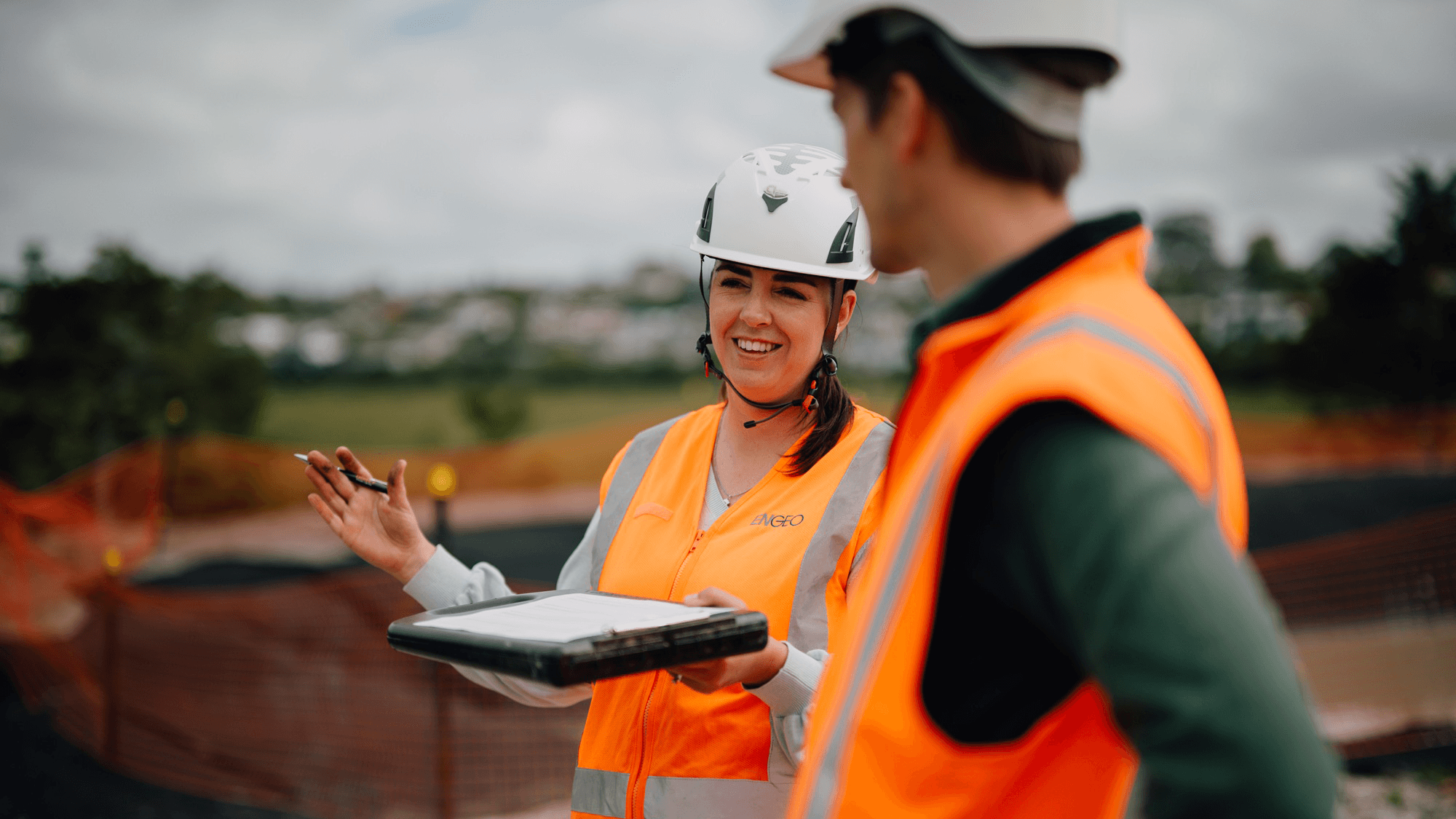
Person in a hard hat and safety vest discussing work with a colleague at a construction site.

Global tech competitions help students prepare for AI future

When two Stanford students saw a social media post about a student innovation competition, they almost scrolled past, assuming they’d have no chance. They decided there was no downside to trying and applied anyway.

Daniel Kim and Arjun Oberoi were soon pitching their project, an AI-powered device for people with low vision, onstage at the Red Bull Basement’s global finals and went on to win last year’s Imagine Cup — two contests supported by Microsoft. They say the experience gave them skills and contacts they’ll carry throughout their careers, especially at a time when AI is making development the easiest part of creating new technology.

A new group of students from around the world is getting ready to compete in this year’s contests in early June.

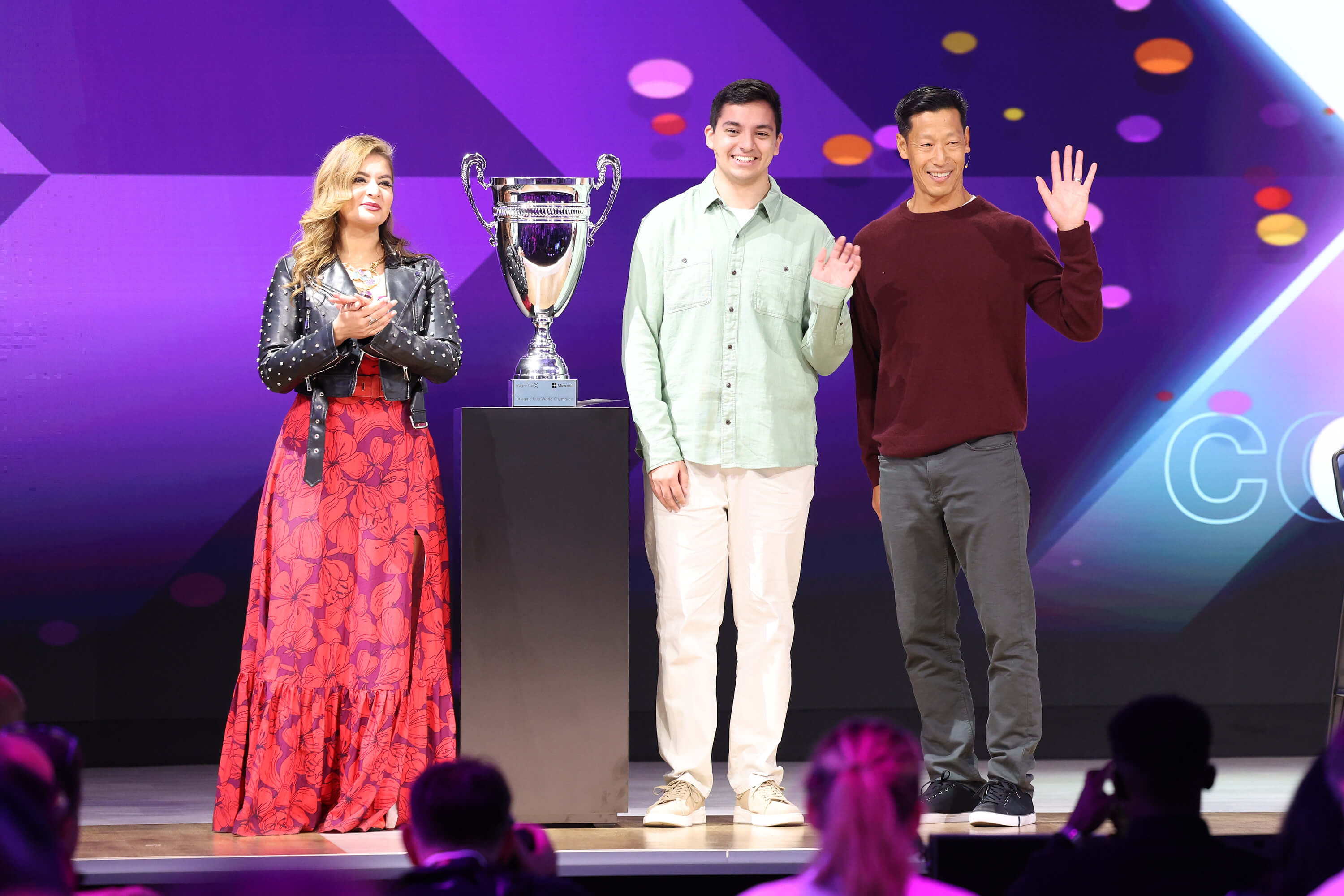
Lead image: Patrick Brown’s CopyFlag, an AI-powered way to help protect creators from people copying their work, was this year’s winner in the Imagine Cup World Championship. (Photo by Dan DeLong)

Mapping US power grid to test real-world energy decisions

Microsoft Research just built and released a large, open dataset that models the U.S. power grid, aiming to give researchers realistic network layouts without relying on proprietary or restricted infrastructure information. The models span 48 states and support detailed, physics-based analysis — like identifying where transmission is constrained, where new demand can be added and how upgrades could improve the system.

Early examples show how the models can reveal practical tradeoffs, like how placing a large datacenter in one location can overload nearby transmission lines while a similar site just 50 miles away can be absorbed without issues. The broader goal is to make it easier to study real-world energy challenges like rising demand and grid congestion while enabling both traditional engineering analysis and newer, AI-driven approaches.

Three white icons—a connected globe, location pin, and light bulb—on a blue‑to‑green gradient background.

Xbox and Discord expand partnership around Game Pass

Xbox and Discord are expanding their partnership. Discord Nitro members will now get a starter edition of Xbox Game Pass, giving eligible members a new way to discover and play games, while Discord rewards will be added to Xbox Game Pass subscriptions. Discord has also rolled out updates that make it easier to discover and jump into games included with Game Pass. When users see a friend playing something they want to try, whether in their game stream or Discord game activity, they can click “Play” and select “Xbox Game Pass” to check it out.

Promotional collage showing Xbox Game Pass and Discord Nitro with various colorful game scenes and characters.

GPT-5.5 Instant comes to Microsoft 365 Copilot

OpenAI’s GPT-5.5 Instant is now available in Microsoft 365 Copilot and Copilot Studio. GPT-5.5 Instant improves the quality of everyday work tasks and is designed to deliver more accurate and concise responses. It also features improved performance on image analysis and STEM-related tasks and reduces unnecessary follow-up questions.

Screenshot of Microsoft 365 Copilot chat interface with model options menu open on the right, set against a colorful gradient background.

The 4 patterns reshaping human‑agent collaboration

As the way we work changes amid the AI era, one industry is ahead of the curve. Software engineering is experiencing a broad shift: AI isn’t just boosting productivity, it’s reorganizing how work gets done. Four human‑agent patterns have emerged as capabilities grew and responsibilities shifted— writing, reviewing, delegating and orchestrating. Those patterns are now spreading across knowledge work in general. But as other industries shift, the key will be matching the work to the right patterns.

Yes, World Passkey Day is real

It’s World Passkey Day! Yes, that’s evidently a thing, and yes, we were just as surprised as you are. But it’s actually a chance to reflect on how we can reduce our reliance on passwords and other cyberattack-prone methods by adopting passkeys. Unlike traditional sign-on options, passkeys are device‑based cryptographic keys, so there’s no shared secret to steal or reuse — even in a breach. They’re built to be phishing‑resistant and tied to user’s devices, making common attacks like fake logins and credential theft largely ineffective. Now, Microsoft is expanding passkey adoption across the digital ecosystem.

Person using a laptop with a glowing, abstract digital overlay.

Global AI use rises, with gaps widening

Microsoft released its latest Global AI Diffusion Report today. The global adoption of artificial intelligence continued to rise in the first quarter of 2026. During the quarter, AI usage increased from 16.3% to 17.8% of the world’s working age population. At the top of Microsoft’s National AI Leaderboard, the UAE continued to lead global AI diffusion at 70.1%. The United States finally started to move up the national rankings, though only from 24th to 21st based on a 31.3% usage rate by the working age population. Dive into the full report to see how adoption varies by region and sector.

Abstract blue and purple waves with glowing particles and soft light effects.
English (United States)
Your Privacy Choices Opt-Out Icon Your Privacy Choices
Consumer Health Privacy Sitemap Contact Microsoft Privacy Manage cookies Terms of use Trademarks Safety & eco Recycling About our ads